Download our free Monitoring Fundamentals Tutorial.
An introduction to Monitoring Fundamentals strictly from the perspective of telecom network alarm management.
1-800-693-0351
Have a specific question? Ask our team of expert engineers and get a specific answer!
Sign up for the next DPS Factory Training!
Whether you're new to our equipment or you've used it for years, DPS factory training is the best way to get more from your monitoring.
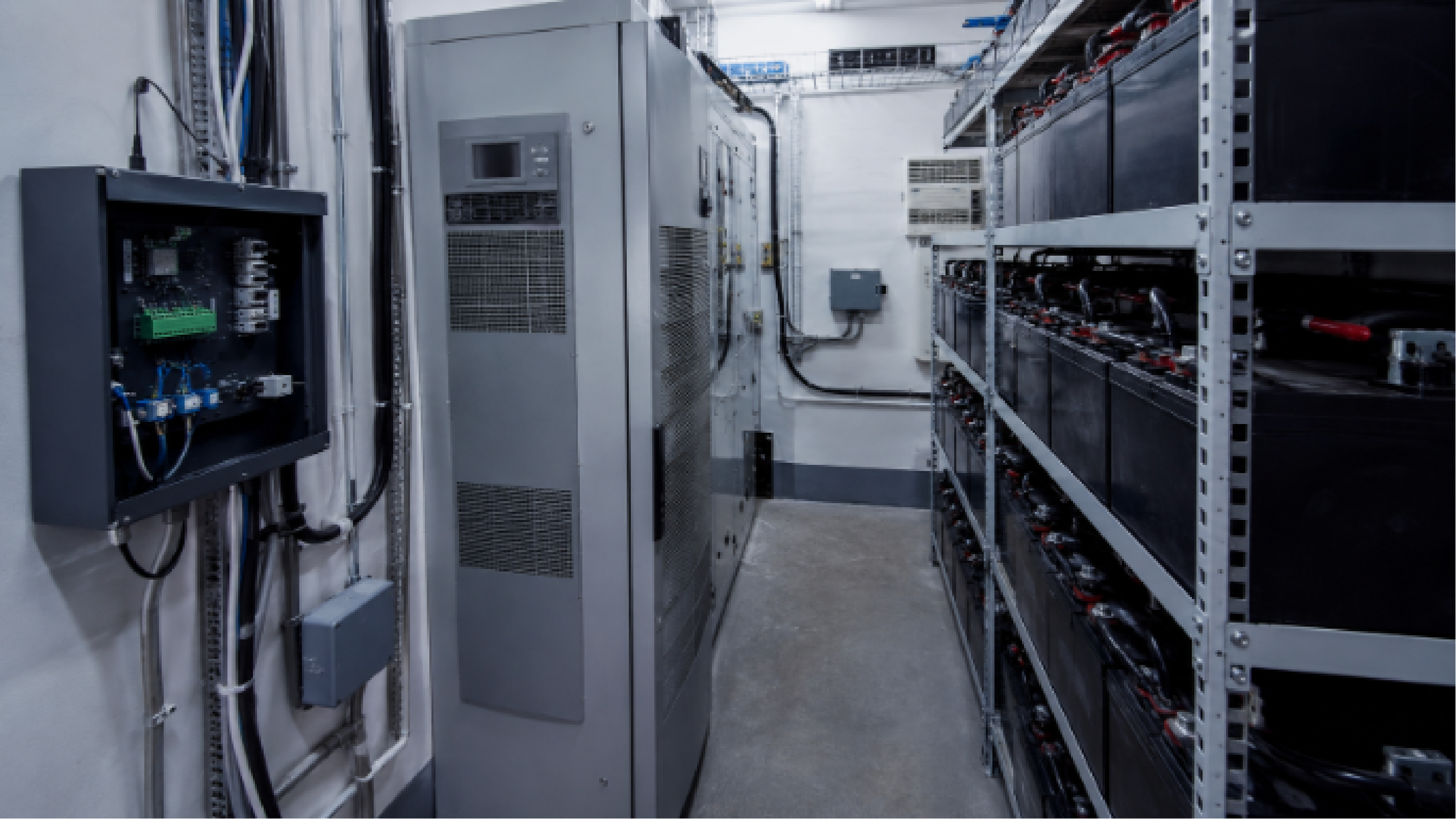
Reserve Your Seat TodayWhen commercial power drops at a tower site or substation, the battery plant becomes the only thing keeping the site online. Continuous voltage monitoring catches undercharge, overcharge, and rectifier failure before damage spreads to switch cards, radio gear, or the cells themselves. We've helped 1,500+ organizations build that visibility into their sites.
Talk to an Engineer | 800-693-0351
Designing remote monitoring equipment in Fresno, California since 1986. ISO 9001 certified. 172,800+ devices deployed across 1,500+ organizations.
A lead-acid battery string at a remote site can be running fine one week and on its way to permanent damage the next. The early signs are voltage-based: float voltage drifting, charge cycles missing, individual cells falling out of average range. Without continuous monitoring, those signs typically go unnoticed until a commercial power outage forces the battery into discharge and the string can't carry the load.
Rectifier overcharge damages cells. When a rectifier fails high, the output voltage can climb above what the battery string can absorb. Cells overcharge, gas, and may permanently fail.
Undercharge shortens battery life. Float voltage that runs low looks normal day-to-day, but the string never reaches full charge. Service life can drop by years before the next outage exposes the problem.
Commercial power loss goes undetected. If the site loses utility power and your monitoring doesn't catch it, the battery plant runs down a clock you can't see.
Generator backup may fail to start. A backup generator that doesn't start when commercial power drops gives you only as much runtime as the batteries hold. You typically need both AC source status and battery state at once.
Site visits are slow and expensive. Tower sites and substations can be hours from your NOC. Discovering a battery problem on a routine visit instead of in real time can mean hours or days of damage already done.
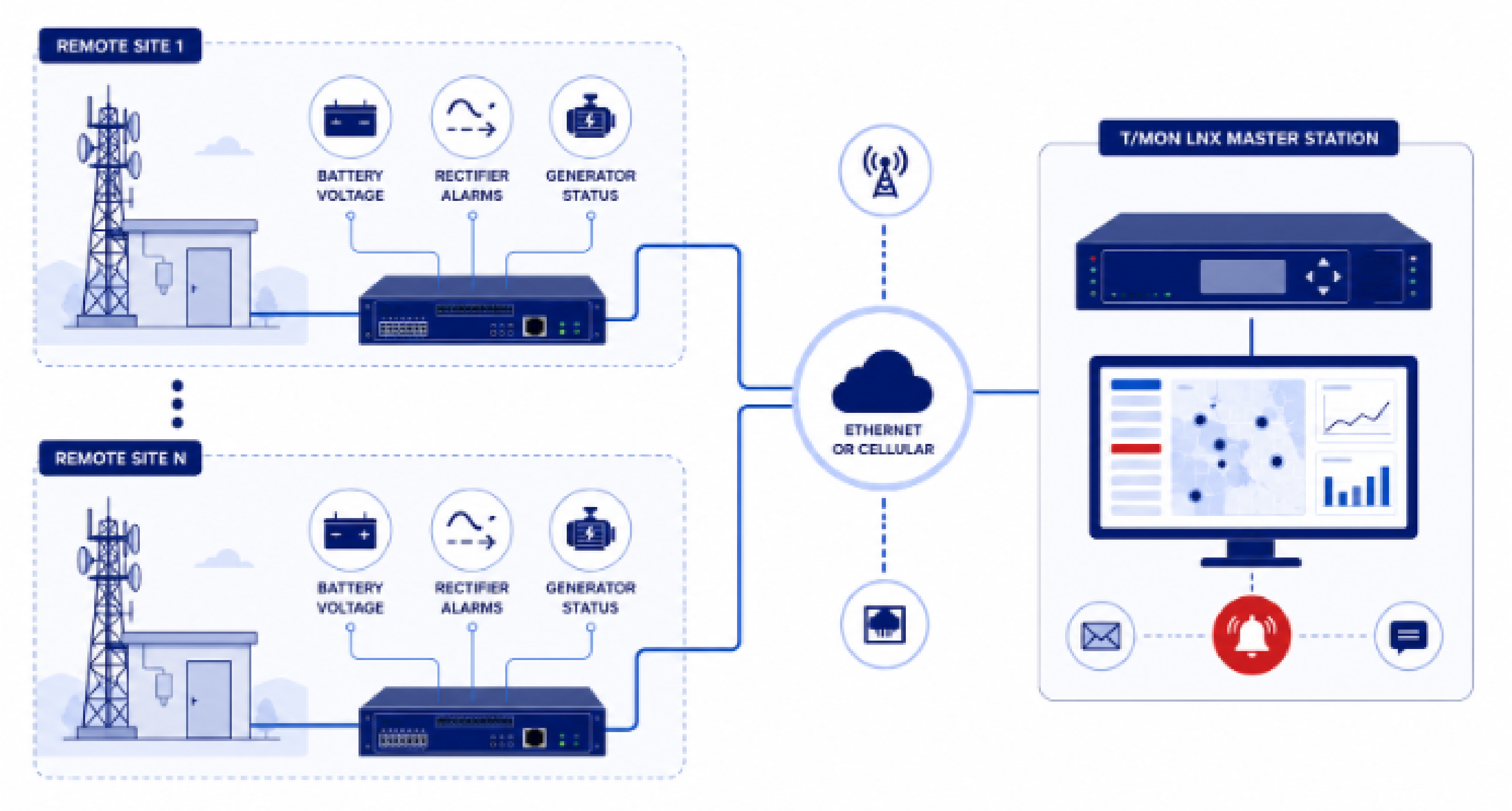
A typical deployment puts a NetGuardian RTU at each site, wired into the battery plant voltage taps and the rectifier alarm contacts. The RTU reads voltage continuously, watches rectifier and generator status, and reports alarms when readings cross your defined thresholds. Sites report back to a T/Mon LNX master station or your existing SNMP manager, giving the NOC a single screen for every battery plant on the network.
Talk to an Engineer | 800-693-0351
Battery plants don't fail in one mode. Voltage drift, individual cell failure, charge mode confusion, and rectifier output anomalies each show up differently. The monitoring needs to catch all of them.
Continuous battery voltage reading. Analog inputs on NetGuardian RTUs read battery plant voltage in real time. You set thresholds for low-voltage warning, low-voltage critical, and high-voltage alarms, and a notification fires the moment any reading crosses the line.
Per-cell voltage and temperature tracking. The BVM 48 G2 monitors up to 48 cells for both voltage and temperature. Cells that drift from average by more than the percentage you set trigger their own alarms, separate from string-level thresholds.
Rectifier and generator status. Rectifier alarm contacts wire into the RTU's discrete inputs. Generator outputs over Modbus, SNMP, or contact closure can be polled from the same unit, giving you AC source status alongside battery voltage.
Threshold-based notifications and routing. When a reading crosses a configured threshold, the RTU sends notifications by SNMP trap, email, or text. Different alert types can be routed to different staff, so a battery alarm reaches whoever handles power systems rather than the whole on-call list.
Trending data and historical reports. Battery problems often build over weeks. The T/Mon LNX retains alarm history and renders trends, which can show you a slow voltage drift before it becomes a critical alarm.
Most battery monitoring deployments start with one of three NetGuardian RTUs depending on site size, paired with the BVM 48 G2 when per-cell visibility is needed and the T/Mon LNX when the network spans more than a handful of sites.

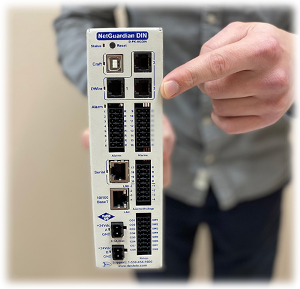
The flagship general-purpose RTU at most DPS sites. Reads battery and rectifier voltages, watches generator and HVAC alarms, and reports up via SNMP, DNP3, or DCP.
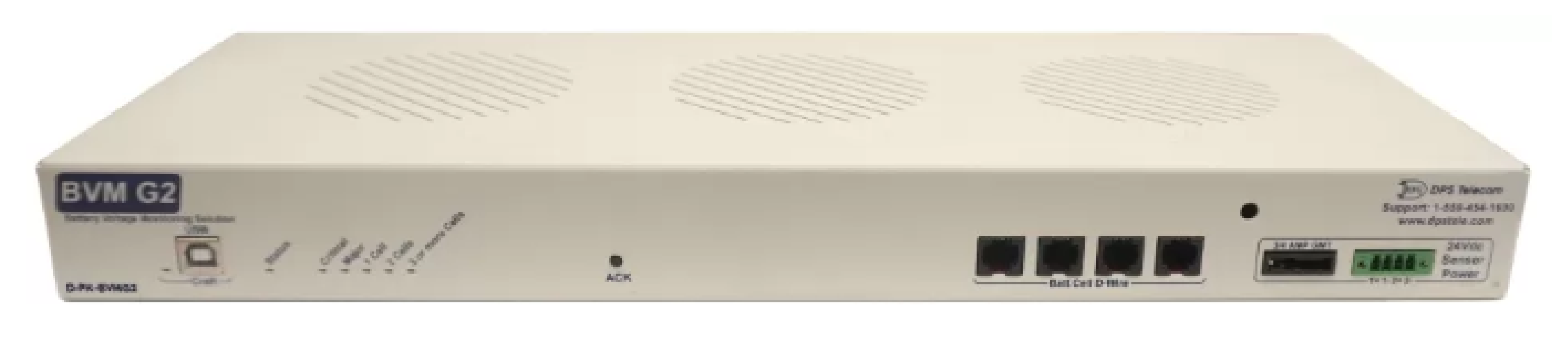
The dedicated battery cell monitor for sites that need per-cell visibility. Watches voltage and temperature on every jar in the string and reports anomalies via SNMP.
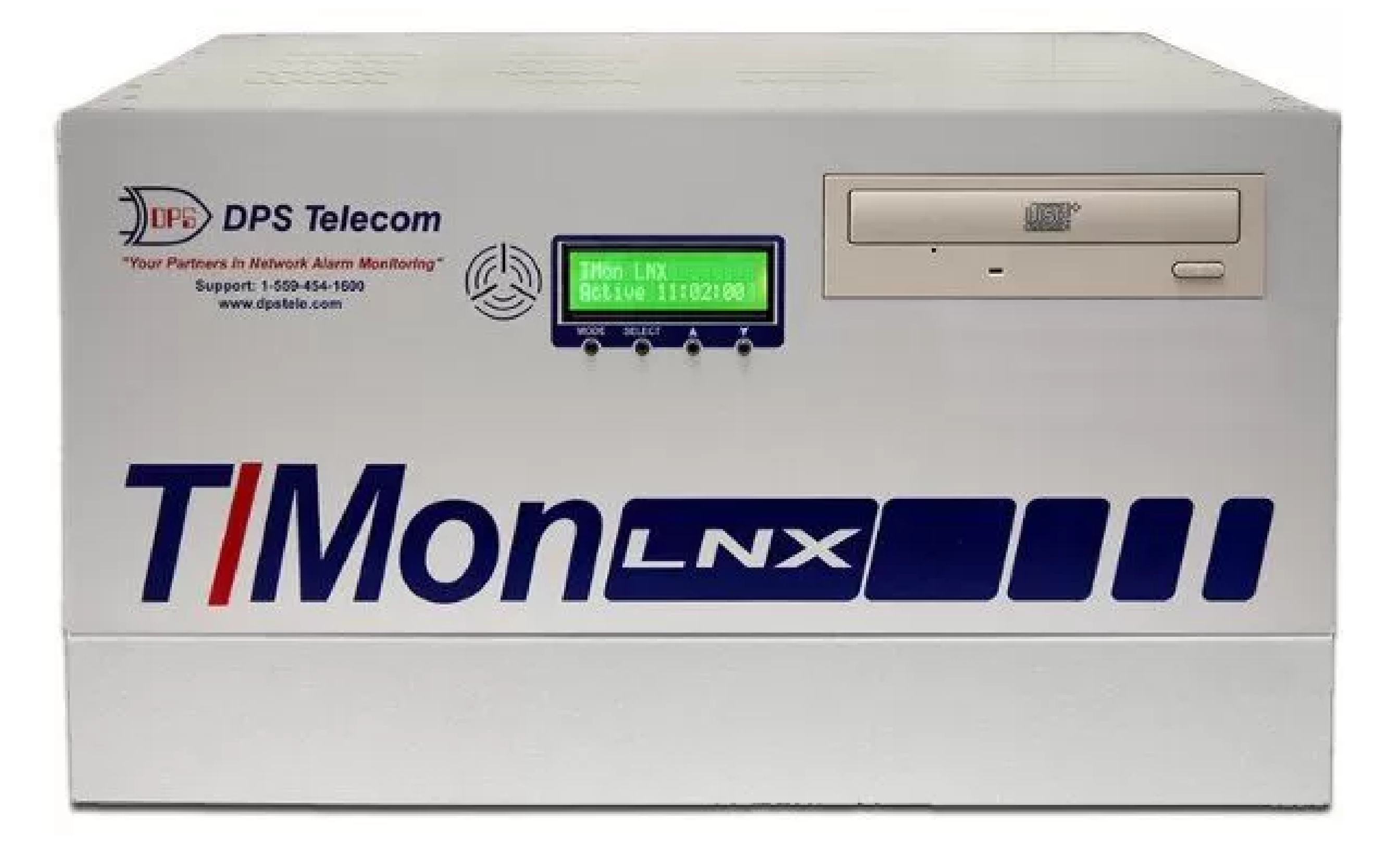
The master station that aggregates alarms from every NetGuardian and BVM across the network into a single screen, with trending, derived alarms, and dispatch routing.
Battery plants rarely live in a vacuum. Most sites have rectifiers, generators, UPS units, and master stations from different manufacturers across different generations. Our T/Mon LNX mediates legacy and proprietary protocols to standard SNMP, bringing older gear under the same monitoring umbrella as new equipment. NetGuardian RTUs can also report directly to your existing SNMP manager when T/Mon isn't part of the picture.
Supported protocols and transports include:
Telecom carriers and cell sites. Tower sites, central offices, and remote cabinets backed by 24-cell or 48-cell battery plants. Battery monitoring typically deploys alongside generator and HVAC monitoring, which is covered in more depth on our remote cell tower monitoring page.
Electric utility substations. Substation battery rooms supporting protection relays and SCADA gear. NERC CIP environments where DNP3 reporting and audit logging matter. See the broader scope of our energy and utility remote monitoring systems for the rest of what we cover at substations.
Rural telecom cooperatives and small ISPs. Smaller telcos with widely distributed remote cabinets, often serving territories where weather and distance multiply the cost of unplanned site visits. Our rural telco remote monitoring page covers the patterns that come up most often at this scale.
Custom engineering on the same hardware. About 80% of deployments use an off-the-shelf NetGuardian. The other 20% need a tweak, like a different form factor or an added analog. We build those at the same factory, on the same firmware, without forking the product line.
Free lifetime technical support. When you call support, you reach the engineers who designed your equipment, not a call center reading from scripts. Support is included for the life of the product, not a renewable contract.
30-day loaner and money-back guarantee. Try the equipment at one of your sites for 30 days. If it doesn't fit, send it back for a full refund. The 2-year warranty and free lifetime tech support apply once you keep it.
Made in Fresno, California since 1986. We design, manufacture, and support our hardware in the United States. That means tight control over the supply chain, faster turnaround on custom builds, and easier sourcing for clients with domestic procurement requirements.
Talk to an Engineer | 800-693-0351
Central Utah Telephone, Rural Telecom Low Voltage and No Alarms Caused Major Switch Damage
After lightning blew the rectifiers at a brand-new site, Central Utah Telephone's switch ran on batteries for 18 hours before anyone noticed. The low voltage damaged switch cards costing $5,000 each. Network Operations Manager Kevin Arthur said adequate alarm monitoring would have caught the problem before the major damage occurred.
"There are a few, basic things we want to monitor, whether the cabinets have commercial power, if the battery voltage in those cabinets is getting low, or if it just completely shuts off."
Eric Kahler, West River Cooperative Telephone
Most -48V plants typically float around 54V, with common thresholds set around 51V for a low-voltage warning, 46V for a low-voltage critical, and above 56V for a high-voltage alarm. Your battery manufacturer's spec sheet is the right primary source for site-specific values.
Yes. NetGuardian RTUs report SNMP to any standard manager, including SolarWinds, Castle Rock, and IBM OpenView, so you can add battery visibility without changing your NOC software.
String monitoring reads total plant voltage and catches gross failures. Per-cell monitoring tracks individual jar voltage and temperature, which can spot a single weak cell before it pulls the whole string down.
Yes. NetGuardian RTUs support Ethernet, cellular via external gateway, satellite via external gateway, fiber, T1, serial, and dialup transport, so most remote sites typically have an option that fits.
Hardware is configured before it ships. On-site installation for a single RTU at one site typically takes a half-day or less, depending on how many alarm and analog points need to be wired in.
Tell us about your battery plants, your rectifier setup, and the sites that worry you most. We'll help you scope an RTU build that fits, with the 30-day loaner program, 2-year warranty, money-back guarantee, and free lifetime tech support all backing the deployment.