Download our free Monitoring Fundamentals Tutorial.
An introduction to Monitoring Fundamentals strictly from the perspective of telecom network alarm management.
1-800-693-0351
Have a specific question? Ask our team of expert engineers and get a specific answer!
Sign up for the next DPS Factory Training!
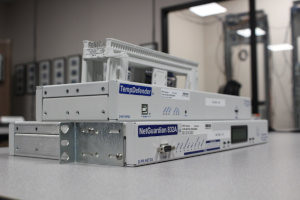
Whether you're new to our equipment or you've used it for years, DPS factory training is the best way to get more from your monitoring.
Reserve Your Seat TodayRunning a rural telephone company means managing sites spread across large service territories with a small team. When a site 30 miles away loses power or a generator fails overnight, you need to know before a truck rolls. That requires a monitoring system built for how independent telephone companies actually operate.
At DPS Telecom, a significant portion of our client base is made up of rural telephone companies, ILECs, RLECs, and small regional carriers. We have been building remote monitoring equipment for this market since 1986, and today more than 1,500 companies rely on our systems to protect their networks.
The infrastructure at a rural telecom site is consistent whether you are running copper, fiber, or a mix of both. Your remote monitoring system needs visibility across all of it.
When any of these conditions goes out of range, your team gets an alarm before the equipment fails. That means faster response, fewer emergency truck rolls, and less unplanned downtime for your clients.
Most rural telephone companies manage between 10 and 100 remote sites. That range fits squarely in the middle of what DPS Telecom equipment handles best.
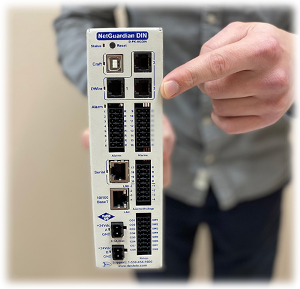
For smaller networks under 10 sites, our NetGuardian RTUs can serve as a standalone solution. Each unit has a web interface you can use to configure email or text alerts, and you can check site status from anywhere without additional software.
For networks larger than 10 sites, we recommend pairing your RTUs with our T/Mon master station. T/Mon collects alarm data from all of your RTUs and remote equipment into a single interface. You can view your network on a geographic map, drill down to individual sites, and manage alarms across your entire territory from one screen.
One of the most common things we hear from rural carriers is that before they had a monitoring system in place, a storm or power event at a remote site left them with no visibility. They had no way to know battery voltage, generator status, or whether the site was even up. That guesswork drives unnecessary truck rolls and puts pressure on small teams that can't afford to spend their time on avoidable site visits.
Independent telephone companies often operate equipment from multiple vendors across multiple generations. Your fiber gear, legacy copper equipment, generators, and rectifiers may all speak different protocols. A monitoring system that only handles SNMP will leave gaps.
DPS equipment supports SNMP (v1, v2c, v3), Modbus RTU/TCP, DNP3, TL1, ASCII, and more than 30 additional protocols. Our T/Mon master station was specifically designed to bring legacy and proprietary protocols under one monitoring umbrella, so you are not forced to replace equipment just to get visibility over it.
If your network uses a protocol we do not currently support, we will develop it. T/Mon supports as many protocols as it does today because clients asked for them.
For more on how our equipment integrates with legacy infrastructure, see our Telecom SCADA Monitoring page.
Rural telephone companies rarely have large NOC staffs. The monitoring system has to work for whoever is on call, including on nights and weekends when a problem shows up.
Our NetGuardian RTUs send automatic alerts via email, text, or voice call when alarms trigger. You can acknowledge an alarm remotely and make a determination before you ever leave the house, including at 2am when a generator trips at a site an hour away.
When you do need help, DPS technical support is staffed by engineers, not call center representatives reading from scripts. You reach someone who understands the product and can work through problems with you directly. That support is available 24/7 and is included with your equipment purchase.
| Network Size | Typical Solution |
|---|---|
| Under 10 sites | NetGuardian RTUs with individual web interfaces and email/text alerts |
| 10-50 sites | NetGuardian RTUs reporting to T/Mon master station |
| 50+ sites | Scalable T/Mon deployment with geographic map view and multi-user access |
RTU pricing starts around $700 for entry-level units and scales to $4,000-$5,000 for high-capacity configurations. T/Mon master station deployments start at approximately $10,000. Every deployment is configured to your specific requirements, and we do not charge NRE fees for custom modifications on qualifying orders.
We offer a 30-day loaner program that lets you evaluate our equipment in your own environment before making a purchasing decision. You pay shipping, and we send you the hardware. If you decide DPS is not the right fit, we offer a money-back guarantee.
Our application engineers will assess your network, recommend the right configuration, and support you through the evaluation at no obligation.