Check out our White Paper Series!
A complete library of helpful advice and survival guides for every aspect of system monitoring and control.
1-800-693-0351
Have a specific question? Ask our team of expert engineers and get a specific answer!
Sign up for the next DPS Factory Training!
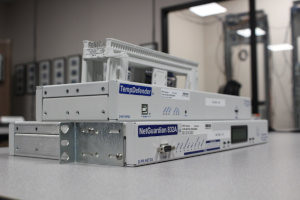
Whether you're new to our equipment or you've used it for years, DPS factory training is the best way to get more from your monitoring.
Reserve Your Seat Today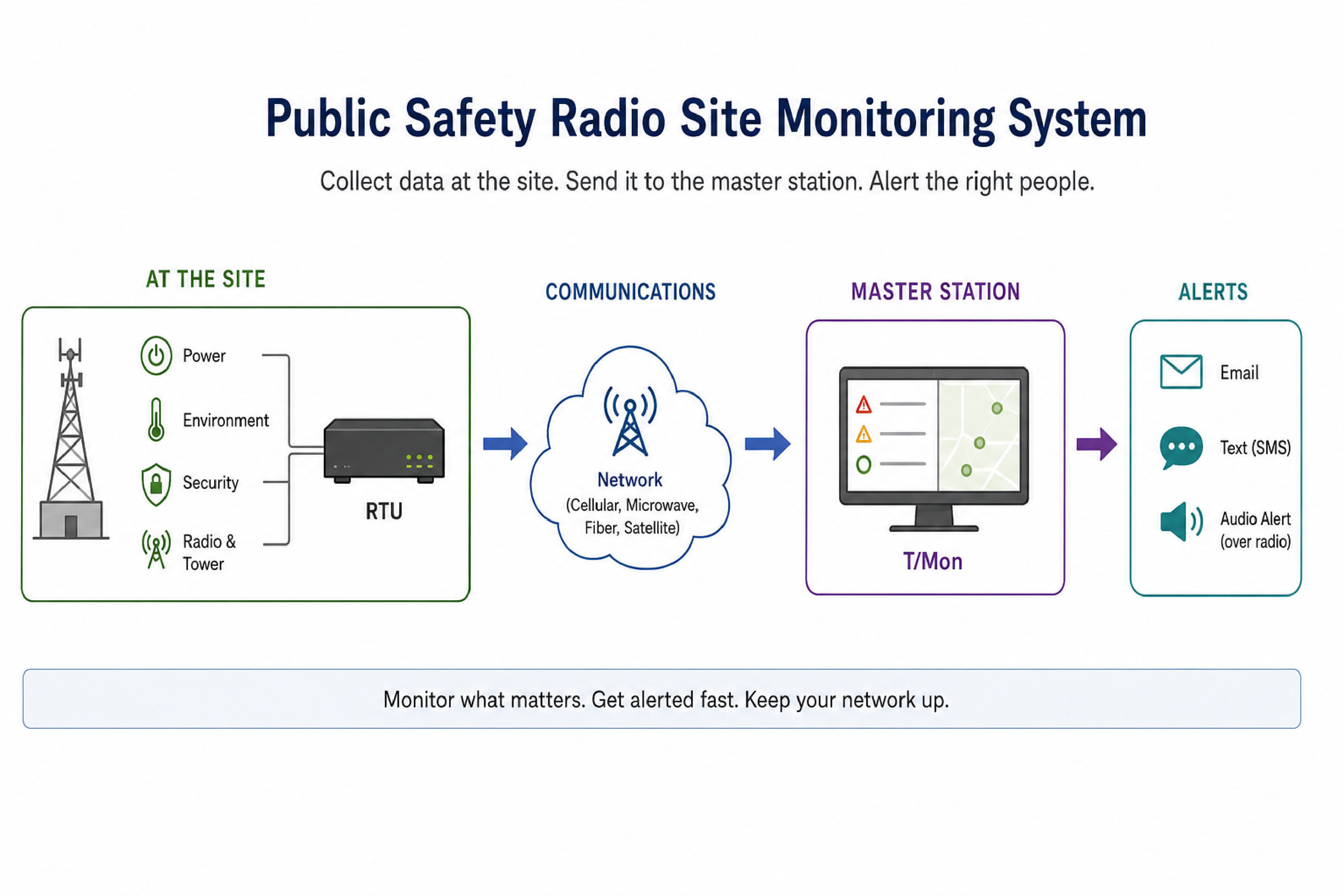
The best monitoring system for a public safety radio site is one sized for the network you actually run, captures radio-specific values on top of the standard support equipment (power, HVAC, environmentals, security), and is built with the assumption that the people responsible for the sites usually have several other jobs at the same time. For a typical county network, that points toward a small-to-mid-size alarm master station, a flexible RTU at each site, and a sensor strategy that covers both the conventional infrastructure and the radio-specific signals.
At DPS Telecom, we've helped public safety operators across the country, including 911 dispatch centers and county tower sites in Steuben County, NY; Lancaster County, PA; and Kitsap County, WA. With more than 172,000 devices deployed across 1,500+ organizations, we've seen the same patterns repeat at county radio sites: most failures are mundane, most sites are unmanned, and most operators are juggling more than one role.
This guide walks through what to monitor at a public safety radio site, how the pieces fit together, and how to right-size the system so it matches the way your team actually works.
A public safety radio site is, mechanically, mostly a backup generator, a battery plant, an HVAC unit, an alarm panel, and a stack of radios sitting in a shelter at the base of a tower. The radio gear gets the attention because it's what the system exists for. Almost everything else (power, environmentals, security, fuel storage) is conventional remote-site infrastructure that looks the same whether you're running a public safety network, a commercial telco network, or a utility SCADA network.
That matters because the monitoring fundamentals carry over. The same RTU, sensor, and master station architecture that's used in county tower monitoring and in tower-light alarming for telco operators applies to a sheriff or fire department's radio sites. The radio-specific signals get layered on top, but the core stack is universal.
Most public safety radio sites are unmanned. Something failing at one of them at 2 AM is the operating reality the monitoring system has to be designed for. The whole point is to make sure the right person knows the right thing fast enough to fix it before it becomes an outage that ties up dispatch.
There's a second-order benefit that's easy to overlook. A good monitoring system can sharply reduce site visits. Kurt Klein, a U.S. Cellular technician quoted in the DPS book 100% Uptime, has described unmanned sites that take three or four hours to reach and occasionally get snowed in. If your alarm system can tell you whether the trip is necessary (and what gear to bring), you avoid drives that turn out to be unnecessary. The same book documents one DPS client whose after-hours call-outs dropped by more than 75% over six years of progressive monitoring improvements. The same dynamic applies to county radio operators chasing tower-site alarms across rural geography, and it's one of the most direct ways to reduce truck roll costs across a distributed network.
The list below is what we typically end up specifying when we sit down with a county to scope a deployment. Some of these are universal to any unmanned site. Others are specific to public safety radio.
The power chain is where the most expensive failures happen. The standard signals to monitor:
The basic battery approach measures aggregate string voltage, which tells you whether the plant as a whole is in range. The advanced approach adds per-cell sensors that catch a single failing cell the string voltage averages out. IEEE 1188 covers the recommended testing and maintenance practice for the VRLA batteries common at these sites, and it generally favors regular inspection that per-cell monitoring effectively automates. Our overview of remote power monitoring covers the architecture we use for battery plants and rectifiers at unmanned sites.
Temperature, humidity, and water intrusion are the workhorse environmental signals. Smoke detectors with relay outputs feed contact closures into an RTU as discrete inputs. Airflow sensing on HVAC vents catches the difference between "the unit is running" and "the unit is running and actually moving air," which is the failure mode that overheats a shelter on a summer afternoon. The same sensor approach applies to any site running critical equipment in an enclosed shelter, and we walk through it in detail in our overview of remote HVAC monitoring.
Door contacts and motion sensors are easy to add and worth having at any unmanned site. Rural locations can attract pests, wildlife, and the occasional unauthorized visitor; intrusion sensors are part of how that's managed. If a site doesn't already have access control, a building access system can be integrated into the same RTU and master station, so badge-in events and door alarms flow through the same workflow as everything else.
This is where public safety radio diverges from a generic remote site. Most modern public safety land mobile radio systems are built around the Project 25 (P25) / TIA-102 standard, maintained by APCO and TIA. The values that matter for the radio side:
If your tower is over 200 feet AGL, FAA Advisory Circular 70/7460-1M covers the marking and lighting requirements. Under 47 CFR § 17.47/§ 17.48, antenna structure owners are required to report any extinguishment or improper functioning of a top steady-burning light, or any failed flashing obstruction light not corrected within 30 minutes, immediately to the FAA, which issues a Notice to Airmen (NOTAM). Owners are also required to retain outage records for two years.
A monitoring system handles this in two ways at once. It can detect the failure within minutes instead of within "next time someone drives past." And it produces the timestamped record the FCC asks for. Tom Cantwell of NJ Transit has described how the RTUs at the organization's microwave towers track FAA-required lighting, providing real-time confirmation when the lights cycle on at night and off in the morning, and an immediate alert if a bulb burns out. That same architecture works for any public safety operator running a tall tower.
Beyond the categories above, the typical site monitoring list also includes:
A workable architecture for a county public safety radio network looks like this:
| Layer | Job | Typical DPS Equipment |
|---|---|---|
| Site RTU | Local aggregation of all alarms and analogs at each site | NetGuardian (for example, the NetGuardian 420) |
| Sensor bus | Bus-powered environmental, propane, vibration, and other sensors | D-Wire sensors |
| Master station | Aggregates all sites, routes alerts, holds the user interface | T/Mon |
| Notification | Email, email-to-SMS, dashboard, optional PTT relay over the radio system | T/Mon notification engine |
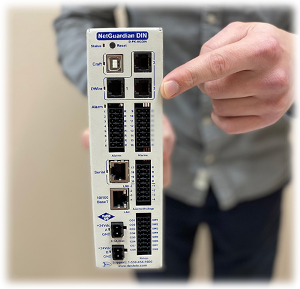
A NetGuardian RTU sits at each site and pulls in everything, such as discrete alarms via dry contacts, analog values like battery string voltage and generator output, and bus-powered sensors over the D-Wire sensor bus. Every modern NetGuardian has a D-Wire port, which means a single RTU can carry temperature, humidity, airflow, vibration, propane level, and other sensors without a separate power supply per sensor; the bus delivers the 5V the sensors need. NetGuardian RTUs support Ethernet, cellular gateway, satellite gateway, fiber, T1, serial, and dialup, which matters when one county has tower sites reached over microwave-backed T1, fiber to the dispatch center, and cellular at a remote tower.
T/Mon is the master station. It's the box dispatch and operations staff actually look at. It collects alarms from every NetGuardian and from any other equipment that speaks one of the protocols T/Mon supports. Network switches at a site, for instance, can send SNMP traps directly to T/Mon and skip the NetGuardian entirely, which is useful in a county that's already running SNMP on its IP layer. T/Mon's multiprotocol alarm monitoring is what makes that direct path possible. From there, T/Mon pushes alerts as text messages via email-to-SMS, as standard emails to desktop workstations, and (for public safety operators) optionally as pre-recorded audio over a PTT relay so an alarm rides the same radios staff already carry.
For a worked example, our writeup on the monitoring system DPS built for a county police and fire radio network walks through a representative site: a NetGuardian, a propane sensor on D-Wire, batteries on analog input, HVAC on a temperature sensor, and switches reporting via SNMP straight to T/Mon.
This is where county operators tend to get oversold. A county network is usually 5 to 20 sites. Steuben County's setup, for instance, runs nine tower sites plus the 911 center. That's a meaningfully different problem from a national tier-1 carrier with thousands of sites, and the master station should reflect it.
For a network in that range, the smaller T/Mon options usually fit best:
Both run the same T/Mon software, so the operator's day-to-day experience is the same as on a full-size unit. The difference is in scale, capacity, and price. A county that's not currently planning to grow past 20 sites usually doesn't need the throughput of a flagship master station, and the savings can be redeployed into better sensors at each site (which is generally where the operational value comes from).
The hardest part of a county public safety monitoring buy is usually not the technology. It's that the person responsible for the radio sites often has another title on the org chart, whether that's county fire chief, sheriff's department comms officer, IT director, or public safety director. We see the pattern often: a 1,000+ foot tower as the tallest structure for miles, a mix of radio brands and supporting equipment accumulated over decades, and one responsible person whose monitoring oversight sits on top of a full-time role.
People in those roles aren't full-time monitoring engineers, and they shouldn't have to be. The practical recommendation is to work with an engineer who can sit down with you, walk through your existing equipment, identify what's worth monitoring, and propose a system sized to match when scoping a system. The cost of that consultation is usually negligible relative to the cost of buying the wrong-sized master station or under-instrumenting a site that turns out to be the one you wished you'd watched more closely.
If you don't already have a direct relationship with a monitoring vendor, the questions to ask any vendor you're evaluating include:
A vendor that can answer those questions specifically, with reference to your actual sites and equipment, is one worth continuing with.
Most county networks run somewhere between 5 and 20 tower sites plus a 911 dispatch center. That's the scale point smaller alarm master stations like T/Mon SLIM or T/Mon MINI are designed for.
Antenna structure owners are required to report any failed top steady-burning light or flashing obstruction light not corrected within 30 minutes immediately to the FAA, which issues a NOTAM. Outage records typically have to be retained for two years.
Each site usually needs a local RTU to aggregate discrete alarms, analog values, and sensor data. The master station collects from the RTUs over the network; it doesn't replace them.
Yes. Most public safety radio equipment exposes alarm contact closures and analog signals that an RTU can read directly, regardless of brand or vintage.
String voltage is the basic approach and catches most plant-level problems. Per-cell monitoring is the upgrade for operators who want early warning of a single failing cell, which the string average can hide.
Pick a system that matches the size of your network, covers both the conventional infrastructure and the radio-specific signals, and comes from a vendor whose engineers will sit down with you and walk through your sites before they sell you anything. For county-scale public safety operators, that usually means a small-to-mid-size alarm master, a flexible RTU at each site, and a sensor strategy built for the equipment you actually have.
If you're putting together a system for a county police, fire, or 911 radio network and want a second set of eyes on the spec, our team can walk you through what we typically recommend at your scale. Our overviews of public safety remote monitoring and emergency communications monitoring cover our approach for tower sites and dispatch centers, respectively.
Talk to an Engineer | 800-693-0351

Andrew Erickson
Andrew Erickson is an Application Engineer at DPS Telecom, a manufacturer of semi-custom remote alarm monitoring systems based in Fresno, California. Andrew brings more than 19 years of experience building site monitoring solutions, developing intuitive user interfaces and documentation, and opt...