Download our free Monitoring Fundamentals Tutorial.
An introduction to Monitoring Fundamentals strictly from the perspective of telecom network alarm management.
1-800-693-0351
Have a specific question? Ask our team of expert engineers and get a specific answer!
Sign up for the next DPS Factory Training!
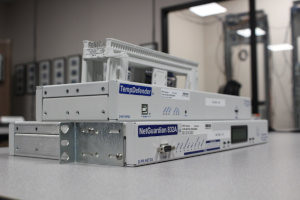
Whether you're new to our equipment or you've used it for years, DPS factory training is the best way to get more from your monitoring.
Reserve Your Seat TodayWhen public safety networks go down, the consequences are immediate. Fire, EMS, and police dispatchers lose communications. 911 centers lose connectivity to field units. The people relying on those systems have no fallback.
Government and public safety operators manage distributed infrastructure: radio tower sites, 911 dispatch centers, and emergency communications networks that must stay online around the clock. Remote monitoring gives your team real-time visibility into every site, so you know about problems before they can become outages.
The specifics vary by agency, but the infrastructure categories are consistent across public safety networks.
| What You're Monitoring | Why It Matters |
|---|---|
| Radio forward/reflected power | 24x7 visibility into the radio equipment that carries police and fire communications |
| Microwave signal fade | Degraded microwave links mean radio sites lose backhaul |
| Generator voltage and fuel levels | Backup power is only reliable if it's being monitored |
| Temperature and humidity | Environmental conditions that damage equipment before anything fails visibly |
| Door contacts and motion sensors | Detect unauthorized access at unmanned tower sites |
| AC/DC power systems | Rectifiers, batteries, and UPS systems at each site |
Fred Marvin of Steuben County Office of Emergency Services describes the operational reality: "Because we operate in a 911 environment, it is better to know early rather than later if something happens. If they're trying to dispatch Fire, EMS, or public safety to an event, and the microwave is down, it means the radios at that site can't be operated either."
Steuben County monitors nine tower sites plus their 911 center, tracking generator voltage, microwave signal fade, door entry alarms, and temperature thresholds from a single system.
A complete government remote monitoring system has two layers:
Remote Telemetry Units (RTUs) are installed at each site: tower locations, dispatch centers, and equipment shelters. They collect alarm data from your equipment and send it back to a central platform over whatever transport is available, including Ethernet, cellular, fiber, T1, or serial.
A central alarm master aggregates data from all your RTUs and presents it in one place. When an alarm condition is detected, the system sends automated notifications via email, text, or other configured channels, so your team can respond without driving to the site first.
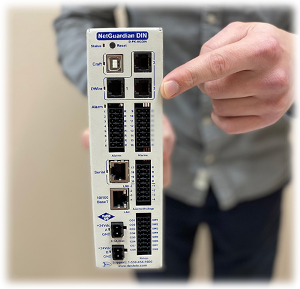
For government deployments, DPS Telecom's NetGuardian RTU family handles site-level data collection, while the T/Mon master station provides centralized alarm management across all locations.
Request a System Design Consultation
Government and public safety networks often include equipment from multiple vendors and different eras. DPS monitoring systems support 30+ protocols, including SNMP (V1, V2, V3 with encryption), DNP3, Modbus, and TL1, so existing equipment doesn't need to be replaced to be monitored.
If you're running a protocol we don't currently support, our engineering team can develop support for it. T/Mon has grown to 30+ protocols specifically because clients needed them.
Government monitoring requirements don't follow business hours. Three design features matter most in public safety environments:
DPS Telecom has been working with government agencies, county emergency services offices, and public safety operators since 1986. We've deployed more than 172,000 devices across over 1,500 organizations, including county governments managing police radio systems, fire department communications networks, and emergency services infrastructure.
Every product is designed, manufactured, and tested at our facility in Fresno, California. Custom configurations are available when standard off-the-shelf options don't fit your site requirements, with no non-recurring engineering fees for most orders over 11 units.
Our engineers are also our technical support team. When you call with a question, you reach someone who can actually answer it.
Learn more about our remote monitoring systems or contact us to discuss your infrastructure.
County governments, emergency services offices, public safety agencies, and transportation authorities are among the organizations that rely on DPS equipment. Common use cases include monitoring radio tower sites, 911 centers, and distributed communications infrastructure.
Yes. DPS systems support 30+ protocols including SNMP, DNP3, Modbus, and TL1. If your equipment uses a protocol not currently supported, our engineering team can develop support for it.
The system can be configured to send automated notifications via email, text, or radio relay. Alerts can include embedded response instructions so technicians know the correct action without needing to escalate every alarm.
Yes. NetGuardian RTUs support Ethernet, cellular (GSM/CDMA via external gateway), satellite (via external gateway), fiber, T1, serial, and dialup, so sites with different connectivity options can all be monitored from the same central platform.
DPS Telecom works directly with government and public safety teams to design monitoring systems around your specific infrastructure. There's no standard package. We start with what you're monitoring, where the sites are, and what equipment is already in place, and build from there.
Contact DPS Telecom or call us at 800-693-0351