Check out our White Paper Series!
A complete library of helpful advice and survival guides for every aspect of system monitoring and control.
1-800-693-0351
Have a specific question? Ask our team of expert engineers and get a specific answer!
Sign up for the next DPS Factory Training!
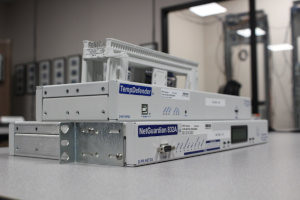
Whether you're new to our equipment or you've used it for years, DPS factory training is the best way to get more from your monitoring.
Reserve Your Seat TodayCounty governments manage some of the most operationally critical communication infrastructure in their regions: police radio systems, fire dispatch networks, emergency services towers, and 911 centers. When one of those sites goes down, the consequences aren't just technical.
DPS Telecom has been building remote monitoring systems for communication tower networks since 1986. We've helped clients manage everything from a handful of tower sites to regional networks spanning dozens of locations, all from a single centralized alarm management system.
Talk to an Engineer | 800-693-0351
A county radio tower site has two layers worth monitoring: the radio equipment itself, and the supporting infrastructure that keeps it running.
The supporting infrastructure is where most problems start, and it's remarkably consistent across sites regardless of vendor or equipment age:
| Category | What We Monitor |
|---|---|
| Power | Generator voltage, battery levels, rectifier status, AC/DC conversion |
| Environmental | Temperature, humidity, water intrusion, smoke detection, airflow |
| Physical Security | Door contacts, motion sensors, access control |
| Equipment Alarms | Discrete contact closures from any vendor's equipment |
| Analog Signals | Microwave signal fade, fuel levels, voltage readings |
"We are monitoring nine tower sites, plus our 911 center. We are getting analog inputs for generator voltage, and microwave signal fade. Discrete alarms might be door entry, or temperature high/low, things like that." - Fred Marvin, Steuben County Office of Emergency Services
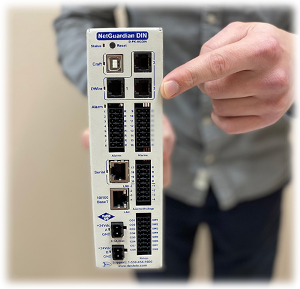
Each tower site gets a NetGuardian RTU (Remote Telemetry Unit). The RTU collects discrete alarms and analog readings from site equipment, then reports everything back to a central alarm master.
For smaller county deployments (under about 10 sites), each RTU can operate independently. You can log into any unit directly, and set up email or text alerts for each site.
For larger networks, a central alarm master station like our T/Mon aggregates alarm data from all sites into a single interface. T/Mon supports 35+ protocols, so it can pull in data from equipment acquired across decades, regardless of manufacturer.
See the NetGuardian RTU Family
When something goes wrong at an unmanned tower site at 2 a.m., your monitoring system needs to reach the right person with enough detail to act on it.
DPS systems support multiple notification paths:
You can build response instructions directly into alerts. For example, a tower light alarm can automatically include the FAA reporting procedure. A generator fuel alarm can include the refueling contractor's contact information. That detail matters when you're dispatching a newer technician who doesn't have that institutional knowledge memorized.
Talk to an Engineer | 800-693-0351
Each truck roll to a remote tower site costs time and budget. With detailed alarm data, your team can make informed decisions before dispatching.
When you know what's wrong before you leave, the right person arrives with the right tools and parts on the first visit. When a problem isn't urgent, you can schedule it alongside other nearby site work rather than making a dedicated trip.
One DPS client reduced after-hours call-outs by over 75% after implementing comprehensive remote monitoring across their network. For county operations managing multiple tower sites, that level of visibility significantly reduces unnecessary dispatches.
Talk to an Engineer | 800-693-0351
County governments typically manage anywhere from 3-4 tower sites to several dozen. Our equipment scales to fit.
Every RTU is configured to your site's specific requirements, including any environmental sensors needed for your sites. If your equipment uses a protocol or interface we don't currently support, our engineers will work through the requirements with you.
View Government Monitoring Solutions
NetGuardian RTUs collect discrete contact closure alarms (door entry, equipment fault signals, smoke detectors) and analog readings (generator voltage, battery levels, temperature, microwave signal strength, fuel levels). They also support protocol-based data collection via Modbus, SNMP, and other standards.
Yes. Our NetGuardian RTUs report via SNMP, DNP3, TL1, and other protocols, so they integrate as remote collection points for third-party management platforms. You don't need to replace your existing system to add DPS RTUs at your tower sites.
There's no practical ceiling. Counties managing fewer than 10 sites typically use RTUs with their built-in web interfaces, while larger networks add a T/Mon master station to consolidate everything into a single view.
Yes. For orders exceeding approximately 11 units, we don't charge NRE (non-recurring engineering) fees, and custom projects typically go from concept to field trial unit in about two months.
Talk to an Engineer | 800-693-0351
We work with county emergency services and public safety communications teams to design monitoring systems around their specific sites, equipment, and operational requirements. There's no one-size-fits-all configuration for county tower networks, and we don't try to force one.
Call us or submit a contact request to start the conversation.