Check out our White Paper Series!
A complete library of helpful advice and survival guides for every aspect of system monitoring and control.
1-800-693-0351
Have a specific question? Ask our team of expert engineers and get a specific answer!
Sign up for the next DPS Factory Training!
Whether you're new to our equipment or you've used it for years, DPS factory training is the best way to get more from your monitoring.
Reserve Your Seat TodayYour fiber huts and outside plant cabinets can sit unmanned for weeks. Fiber service depends on the power, cooling, and security inside those enclosures, and when one of them fails, the equipment rarely tells you. DPS Telecom gives your team continuous visibility into every enclosure, so you can catch trouble before it reaches your subscribers.
Talk to an Engineer | 800-693-0351

Designing and manufacturing remote monitoring in Fresno, California since 1986. 172,800+ devices deployed across 1,500+ organizations. International Organization for Standardization (ISO) 9001 certified.
A fiber hut or outside plant (OSP) cabinet holds the active electronics, power, and splice points that keep a section of your network alive. These sites are usually unmanned and can go weeks between visits. When cooling, power, or security fails inside one, the supporting infrastructure gives out first, and the fiber service can go down with it. Our broader work on fiber network monitoring covers the same failure modes across huts, points of presence (POPs), nodes, and headends.
A remote telemetry unit (RTU) installs inside each hut or cabinet and connects to your sensors and equipment. It reads temperature, humidity, water, power, and door status, then reports any alarm to your network operations center (NOC) over whatever transport the site has. For a handful of sites, the RTU can send email and text alerts on its own. As your footprint grows, our T/Mon master station consolidates every site into one map-based view and routes each alarm to the right person.

Talk to an Engineer | 800-693-0351
Each of these capabilities targets a specific way a fiber hut or cabinet can fail, from environmental threats to power loss to unauthorized access. Alerts can be routed by email or Short Message Service (SMS) text.
| Capability | What it covers |
|---|---|
| Environmental monitoring | D-Wire sensors track temperature, humidity, water intrusion, smoke, and airflow. Airflow sensing catches the difference between a cooling unit that is running and one that is actually moving air. |
| Power and battery monitoring | Watch commercial power, battery voltage, rectifier status, and generator operation, so you can act before a site runs its batteries flat and goes dark. Our remote power monitoring systems cover this layer in more depth. |
| Site security and access | Door contacts and motion sensors can log every entry and flag unauthorized access. A building access system can run through the same RTU and master station. |
| Automatic notification | Alarms route by email or text to the right technician, with escalation if no one responds. Nuisance alarms can be filtered so your team focuses on real problems. |
| Flexible transport | Report from sites with Ethernet, fiber, or T1, and from locations where only cellular is available, using one consistent workflow. |
| Multi-protocol integration | Bring proprietary and older equipment under one umbrella by mediating its protocol into a standard format your management system already understands. |
Fiber sites range from small roadside cabinets to full equipment huts, so the right RTU depends on site size, transport, and input needs. Our guide to choosing the best remote monitoring equipment for fiber networks walks through those decisions in detail.
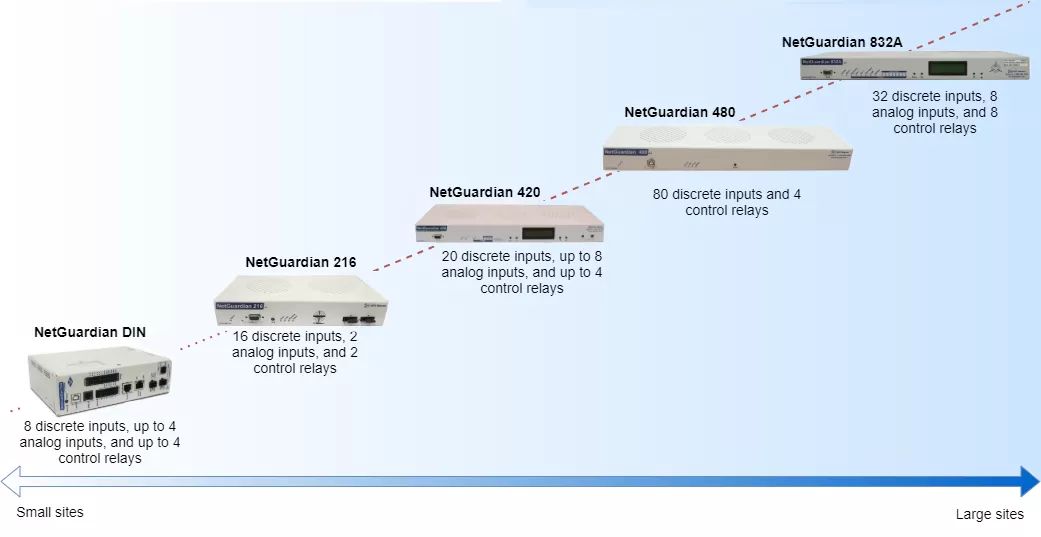
The compact RTU built specifically for fiber-fed enclosures, developed with a client who needed to monitor remote cabinets over fiber transport.
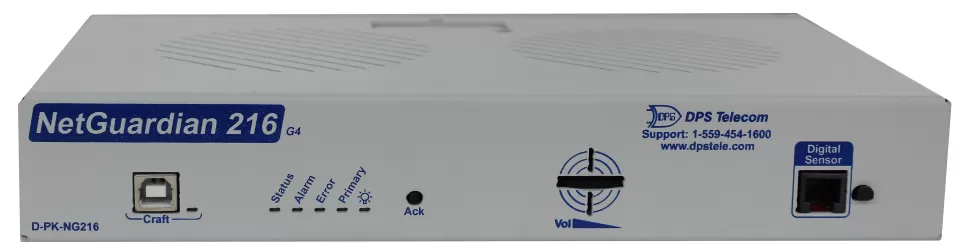
A compact RTU commonly deployed in fiber transport applications, well suited to tight cabinets and smaller huts where the site already has Ethernet.

The full-featured option for larger fiber huts with many alarm points and control needs.
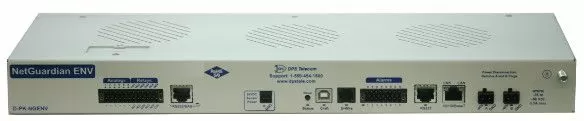
A dedicated environmental monitoring RTU with building access support built in, useful at smaller fiber sites.
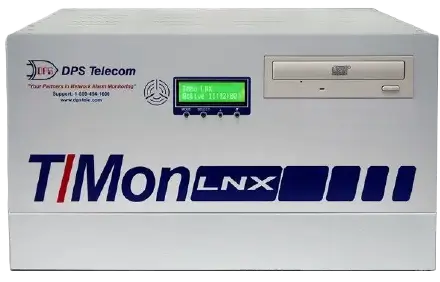
The master station that turns many single-site RTUs into one network view once you scale past a few sites.
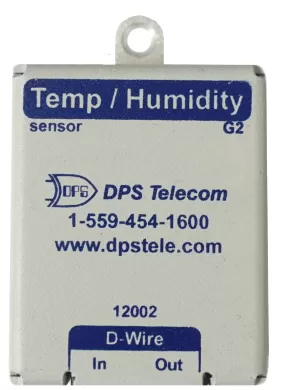
The sensor set that gives your RTU eyes on the conditions most likely to damage fiber gear.
NetGuardian RTUs report using Simple Network Management Protocol (SNMP) v1, v2c, and v3, so they can integrate with any standards-compliant third-party SNMP manager you already run. Where sites include proprietary or older gear, our T/Mon master station mediates protocols such as Distributed Network Protocol 3 (DNP3), Modbus, Transaction Language 1 (TL1), and any number of other formats into one view. The same architecture extends to broader equipment shelter monitoring at your larger sites, and to server room monitoring at your headends and central offices.
Supported transport options:
| Industry | Where it fits |
|---|---|
| Fiber internet service providers (ISPs) and carriers | Regional providers, rural cooperatives, and national carriers monitor huts, points of presence, and nodes. Our work on ISP remote monitoring covers this in more depth. |
| Electric utilities | Utilities and co-ops running fiber alongside power infrastructure can bring both under one platform, as our electric cooperative monitoring work shows. |
| Transportation and intelligent transportation systems (ITS) | Roadside cabinets and ITS sites use DPS RTUs for environmental, power, and access monitoring. |
| Government and municipal broadband | Municipal networks and public agencies monitor distributed cabinets across their service areas, often alongside public safety infrastructure. |
| Reason | What it means for you |
|---|---|
| Custom engineering, no NRE fees | Approximately 80% of monitoring needs can be met with our standard hardware, and the remaining 20% gets custom engineering. We have completed 9,800+ custom builds, with no Non-Recurring Engineering (NRE) fees on most orders over about 11 units. |
| Free lifetime technical support | When you call, you reach the engineers who designed your equipment in Fresno. Technical support is included for the life of the product. |
| Risk-free trial and guarantees | Test equipment in your own cabinets through our 30-day loaner program, paying only shipping. Every unit carries a 2-year hardware warranty and a money-back guarantee. |
| Built to last, made in the USA | Designed, built, and tested in Fresno, California. DPS hardware routinely runs 20+ years in the field, which can keep your total cost of ownership low. |
Talk to an Engineer | 800-693-0351
Consolidated Communications. Consolidated needed an RTU that would work with their fiber transport and still monitor a remote site cabinet. Working with our engineers, they helped develop the NetGuardian 216F fiber interface unit and tested it against a range of fiber interfaces in their own lab.
Southeast Nebraska Communications. During a fiber-to-the-home (FTTH) buildout, SNC used NetGuardian and TempDefender RTUs to take over contact-closure monitoring from an aging central office switch, later adding a T/Mon master station to centralize alarm notifications.
Twin Valley Telephone. A Kansas triple-play provider running a major fiber-to-the-home project used DPS monitoring to reduce windshield time across its exchanges.
Yes. NetGuardian RTUs support cellular through an external gateway, along with Ethernet, fiber, T1, serial, and dialup, so a cellular-only cabinet can report to the same platform as your wired sites.
At minimum, temperature, humidity, water intrusion, commercial power, battery voltage, and door access. These conditions can take a site down and are usually not reported by the equipment itself.
Not necessarily. A NetGuardian can send email and text alerts on its own, and a T/Mon master station is typically worth adding once you are managing around 10 or more sites.
Yes. All NetGuardian RTUs support SNMP v1, v2c, and v3, and can report to any standards-compliant SNMP manager.
Yes. The T/Mon master station mediates proprietary and older protocols into a standard format, so mixed-vendor gear can feed one monitoring view.
For fiber-fed enclosures, the NetGuardian 216F is purpose-built and includes SFP fiber interfaces. For cabinets that already have Ethernet, the NetGuardian 216 G4 is a compact option, and the NetGuardian ENV is a dedicated environmental unit.
Tell us about your fiber huts and outside plant cabinets, and our application engineers can help you match the right RTU, sensors, and master station to your sites. Test the equipment in your own environment with our 30-day loaner program, backed by a 2-year warranty, a money-back guarantee, and free lifetime support.