Check out our White Paper Series!
A complete library of helpful advice and survival guides for every aspect of system monitoring and control.
1-800-693-0351
Have a specific question? Ask our team of expert engineers and get a specific answer!
Sign up for the next DPS Factory Training!
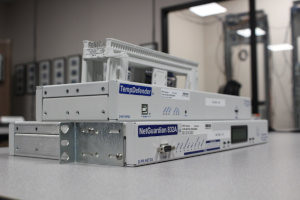
Whether you're new to our equipment or you've used it for years, DPS factory training is the best way to get more from your monitoring.
Reserve Your Seat Today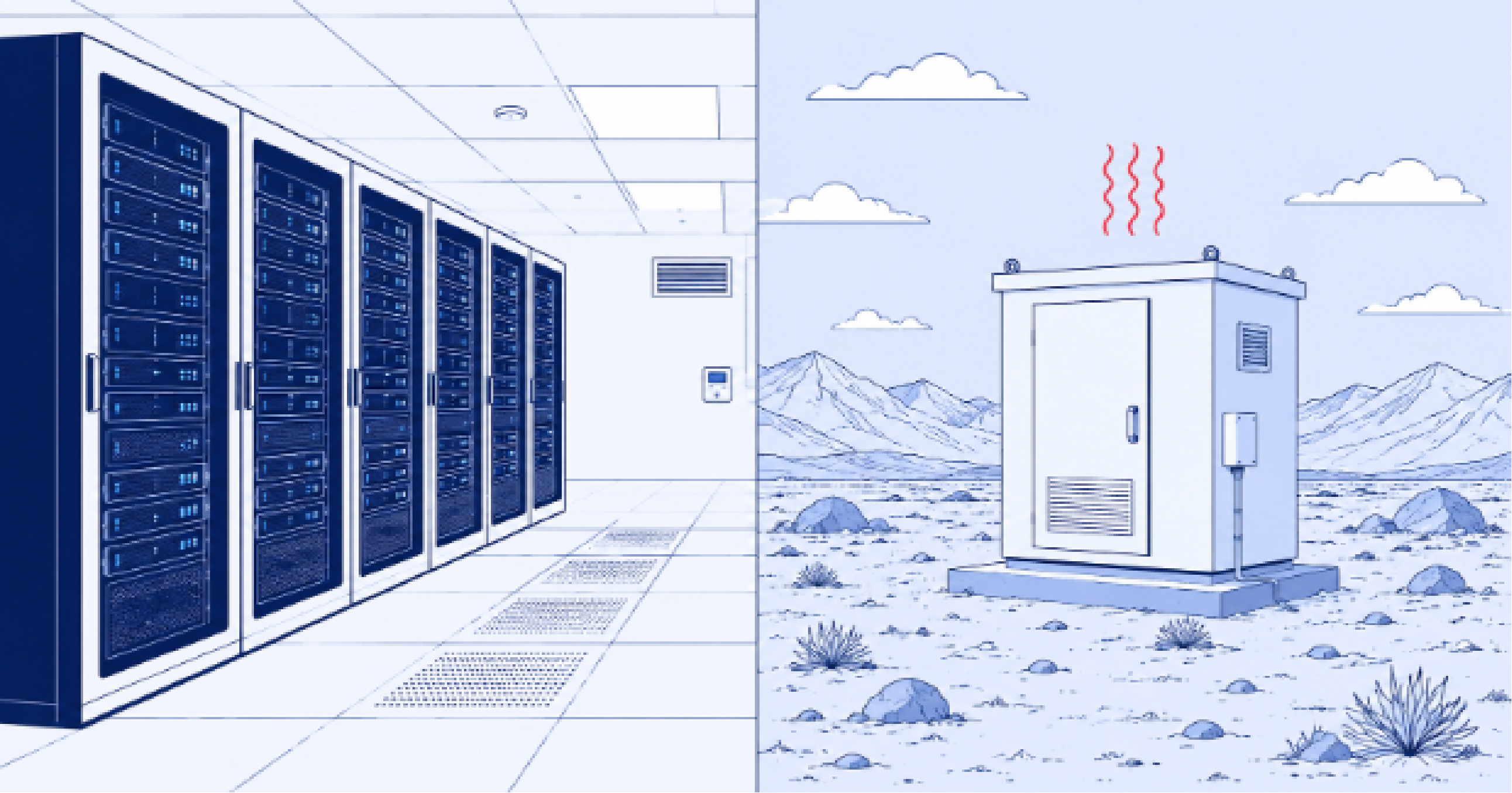
If you're pricing out an environmental monitor for a server room, a network closet, or an unmanned equipment site, the Vertiv Geist Watchdog 100 has probably shown up in your search. The question you're really trying to answer is whether it fits the sites you're protecting, or whether something built for rougher conditions makes more sense. We're DPS Telecom. We've been building remote monitoring gear in Fresno, California since 1986, and more than 172,800 of our devices are deployed worldwide, many of them still running past the 20-year mark at sites people almost never visit. So this is a question we spend a lot of time on.
This article compares the Watchdog 100 against our environmental monitoring lineup, and we're going to hold off on naming a winner. The honest answer depends on the site. A monitor that's ideal in a climate-controlled data center can be the wrong tool inside a metal hut baking on a mountaintop, and vice versa. So we'll work through the comparison one criterion at a time, keep everything about the Watchdog 100 tied to Vertiv's own published specifications, and point out where each approach is the sensible choice. You match that to your own sites.
| Monitor | Built for |
|---|---|
| Vertiv Geist Watchdog 100 | Climate-controlled data centers and server or network closets. A compact, self-contained unit managed over SNMP and a web interface. |
| DPS TempDefender G2 / NetGuardian ENV | Unmanned shelters, cabinets, substations, and towers with wide temperature swings and DC battery power. Hardened RTUs that report into a larger alarm-management system. |
DPS is a strong fit when your sites are unmanned, swing through wide temperatures, run on backup power, or mix protocols and vendors you'd rather see on one screen, and it's worth shortlisting for any remote-infrastructure deployment. If you're covering a clean, climate-controlled room, a compact IT monitor like the Watchdog 100 may be all you need.
The comparison turns on one question. What kind of site are you monitoring? The market splits roughly into two worlds. One is the enterprise information technology (IT) space, meaning climate-controlled data centers and small server closets where the room is engineered to stay comfortable. The other is remote infrastructure: unmanned shelters, utility substations, mountaintop radio sites, and roadside cabinets that swing through wide temperature ranges and run on backup power for days.
The Watchdog 100 is built for the first world. Our TempDefender and NetGuardian environmental monitors are built for the second, and they fit into a larger alarm-management system rather than standing on their own. Keep your own sites in mind as you read, because that's the variable that decides which design is a better match.
The Watchdog 100 is a compact, self-contained environmental monitor designed to tuck into a rack where space is tight. According to Vertiv's published product information, it has on-board sensors for temperature, humidity, and dew point built right into the unit, and it accepts up to eight external sensors through a mix of up to four plug-and-play RJ12 sensors and four dry-contact or 0-5 volt analog ports. It includes a single output relay you can wire to a beacon, a siren, or an auto-dialer.
You manage it through an embedded web interface, and it reports upstream using the Simple Network Management Protocol (SNMP) in versions 1, 2c, and 3, so it drops neatly into an enterprise IT dashboard. Power comes from a universal alternating current (AC) wall adapter, or from Power over Ethernet (PoE) on the PoE model. Vertiv's current installer and user guide lists an operating temperature range of -25°C to 45°C (-4°F to 113°F), and the standard warranty runs three years, extendable to five on registration.
That's a deliberate design choice. The Watchdog 100 is tuned to live inside the tightly controlled envelope of a data center or an office server closet, where 45°C sits comfortably above anything the room should ever reach. That focus is what keeps it small and quick for an IT team to stand up.
Our side of the comparison starts with the direct analogs and then widens out. A Remote Telemetry Unit (RTU) is a device that sits at a remote site, watches equipment and environmental conditions, and reports back to a central system. Our environmental RTUs are engineered for telecom, utility, transportation, and public-safety infrastructure, the kind of sites nobody staffs and few people visit.
The TempDefender G2 is our closest counterpart to an IT-style environmental monitor, built for the physical realities of a shelter or cabinet. It's a one rack unit (1RU) chassis with eight discrete alarm inputs on spring-clamp connectors, eight analog inputs that read from -92 to +92 volts of direct current (DC) or 4-20 milliamps at 1% accuracy, and three control relays. It runs on dual -48 VDC feeds, the standard power in telecom facilities, with a -24 VDC option, and it operates from 0°C to 60°C (32°F to 140°F). For edge IT rooms, the TempDefender IT is a related option.
The NetGuardian ENV is the same idea with two additions that matter at remote sites. It supports HID proxy card readers, so building access control lives in the same box as your environmental monitoring. At a remote site, a propped-open door is itself an environmental problem, since it bleeds away your cooling, which makes folding access control into the monitor a natural fit. The NetGuardian ENV also includes an RS232 serial reach-through port, which lets a technician at the Network Operations Center (NOC) log into a frozen piece of serial gear and reboot it over the network instead of driving out to the site.
The bigger difference is what these units connect to, which we'll get to below. First, the specs side by side.
The table lays the two approaches next to each other. Where a row lists a DPS figure, it reflects the TempDefender G2, with NetGuardian ENV additions noted.
| Feature | Vertiv Geist Watchdog 100 | DPS TempDefender G2 / NetGuardian ENV |
|---|---|---|
| On-board sensors | Temperature, humidity, dew point | Configurable per build; temperature, humidity, airflow, water, and more via sensors and analog inputs |
| External sensor capacity | Up to 8 (4 RJ12 plug-and-play, 4 dry contact / 0-5 VDC) | D-Wire bus up to roughly 16-32 sensors per port, plus 8 discrete and 8 analog inputs on the TempDefender G2 |
| Sensor interfaces | RJ12 plug-and-play, dry contact / analog | D-Wire (RJ-12 daisy-chain), spring-clamp discrete, analog (-92 to +92 VDC or 4-20 mA) |
| Control relays | 1 (normally open / normally closed) | 3 on the TempDefender G2 |
| Alerting methods | Email, text messages (SMS), SNMP traps over the local network | Email and SNMP traps, plus optional out-of-band paths; reports to a central master |
| Protocols | SNMP v1/v2c/v3 and a web interface | SNMP v1/v2/v3, DNP3, Modbus, TL1, and 30+ others |
| Operating temperature | -25°C to 45°C (-4°F to 113°F) | 0°C to 60°C (32°F to 140°F) |
| Power input | AC wall adapter or PoE | Dual -48 VDC standard, -24 VDC option (NetGuardian ENV adds +12/24 VDC and PoE) |
| Form factor | Compact standalone unit (about 1.6 x 8.5 x 2.5 in) | 1RU rack-mount metal chassis |
| Access control / serial reach-through | Not included | HID proxy card readers and RS232 serial reach-through (NetGuardian ENV) |
| Warranty | 3 years standard, extendable to 5 on registration | 2 years standard, extendable with a maintenance agreement |
| Designed to be deployed in | Data centers, server rooms, IT and network closets | Telecom, utility, transportation, and public-safety remote sites, shelters, and edge closets |
The Watchdog 100 figures above were drawn from Vertiv's published product information for the device. They may not capture the full breadth of available models or options, and some details may have changed since we reviewed them.
The Watchdog 100's eight external sensors are a good match for a single room. You plug sensors into the RJ12 ports and wire a few dry contacts, and you're covered.
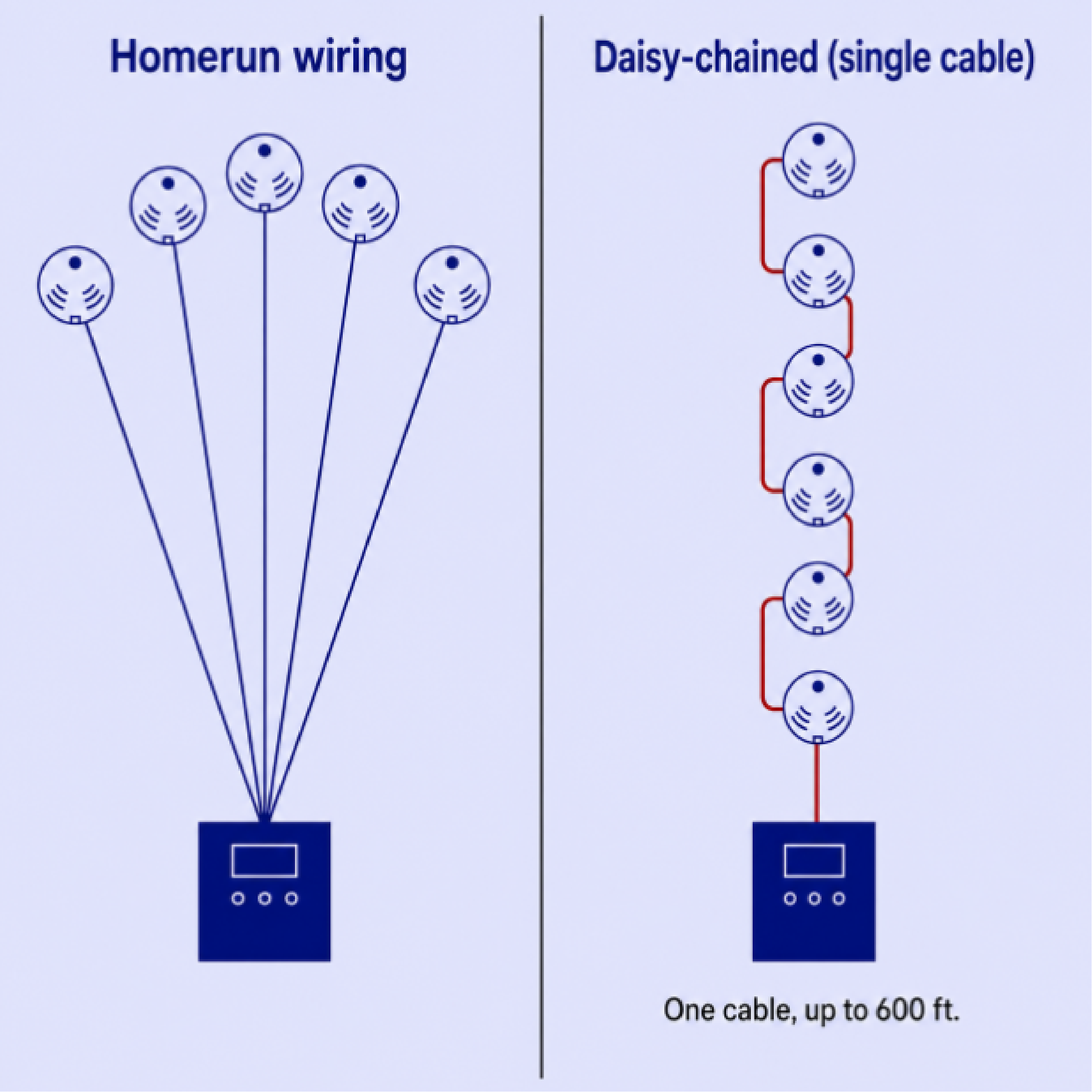
Our units handle expansion differently, which matters once a site grows past one room. Our D-Wire sensors daisy-chain along a single RJ-12 cable that carries both power and data, and that chain can run up to 600 feet from the RTU. So instead of pulling a separate homerun cable back to the box for every sensor, you run one line down a row of racks or through conduit to another floor and hang sensors off it as you go. A single D-Wire chain supports up to 16 sensors, and the TempDefender G2's four ports bring the total to 32, while the RTU's analog inputs stay free for other jobs like fuel-tank level or battery-string voltage. If you're covering multiple rooms or an entire facility rather than one closet, that's a meaningful difference in wiring and labor.
An environmental monitor is only as useful as its ability to reach you when something goes wrong. The Watchdog 100 sends email, SMS, or SNMP traps over the local network. That works well when the network is healthy.
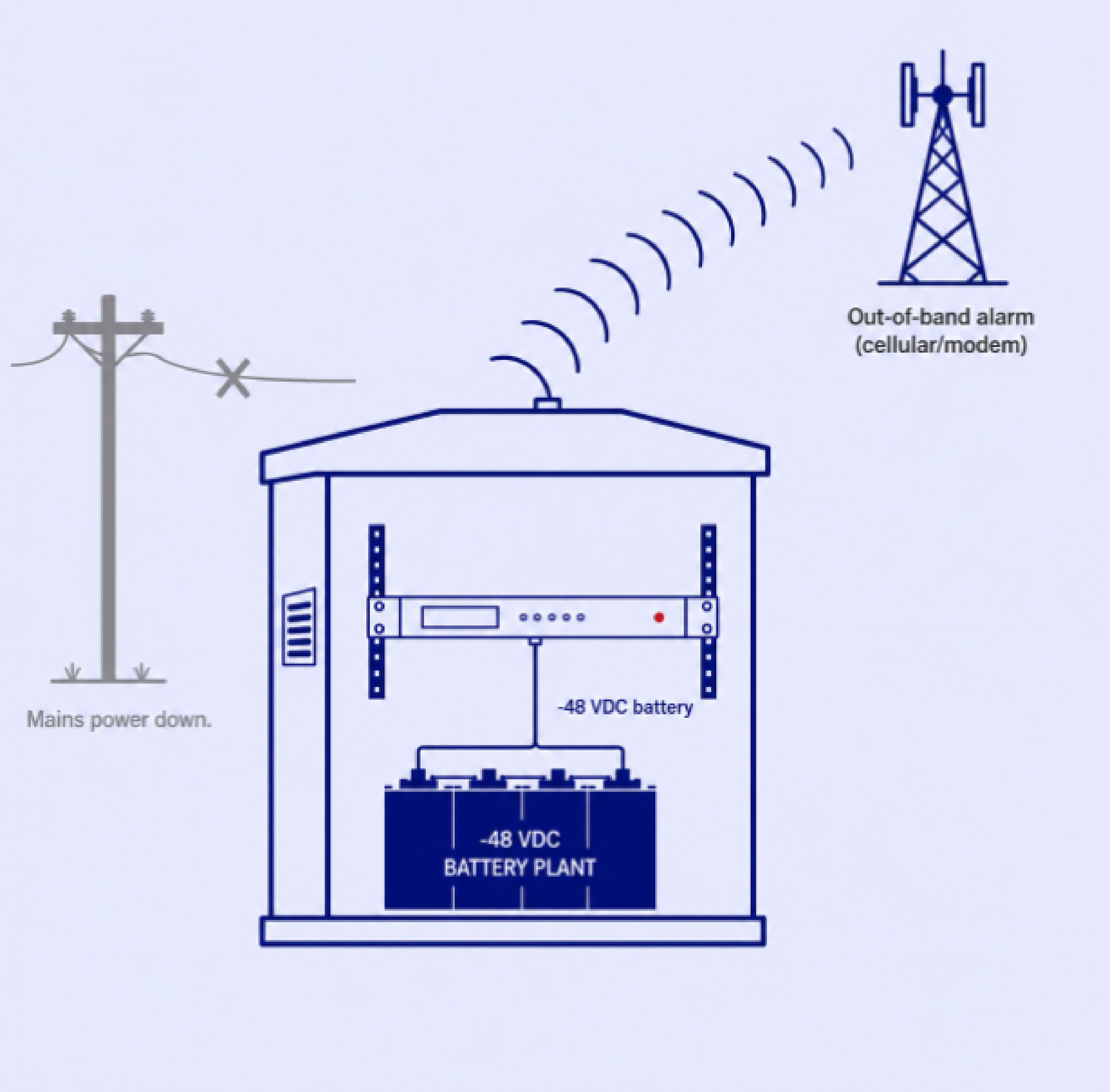
The complication at remote sites is that the thing failing and the path the alarm travels can be the same thing. If a shelter loses commercial power and the Ethernet switch goes down with it, an alert that depends on that switch has no way out. This is why telecom equipment is typically powered straight from the site's centralized -48 VDC battery plant rather than from a wall outlet or a network switch, so the monitor stays alive to report on the very outage that's unfolding. Our RTUs can also carry optional out-of-band paths, such as an internal modem or a cellular connection, so the alarm still escapes even when the primary network is down.
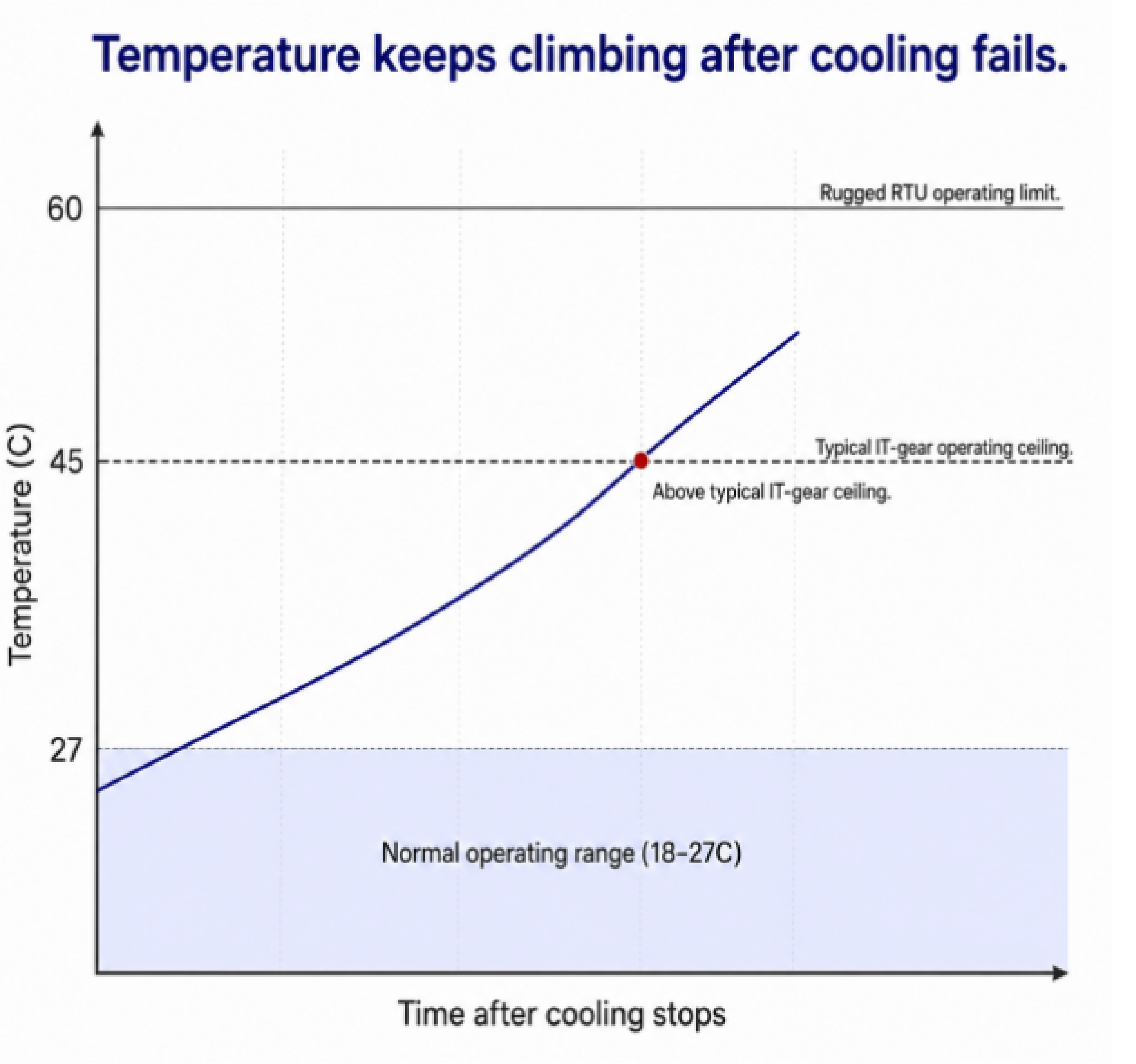
A lot of downtime hides in the stretch of time between when a problem starts and when someone actually responds. A room doesn't overheat instantly. If the monitor catches the temperature climbing and reaches a technician early, you can get someone moving before equipment starts shutting itself down. It's a theme in our book, 100% Uptime. The earlier you catch a developing problem, the more of it you can prevent, which is the whole reason early, reliable warning is worth engineering for. For a larger operation, the cost of even a short outage dwarfs the price of the monitor that could have flagged it.

Our guides on how remote environmental monitoring works and how to choose a temperature monitoring system go deeper on that trade-off.
The protocols a device speaks decide how cleanly it fits into what you already run. The Watchdog 100 lives in the SNMP and web world, which is the native language of enterprise IT. If you manage a campus network with a standard SNMP platform, it fits right in.
Industrial, utility, and telecom networks often speak other languages too. Supervisory Control and Data Acquisition (SCADA) systems commonly run the Distributed Network Protocol (DNP3) or Modbus, and older telecom gear may use Transaction Language 1 (TL1). Our RTUs speak SNMP v1, v2, and v3, along with DNP3, Modbus, TL1, and others, for more than 30 protocols in total. They can translate between them, taking in Modbus from a generator and passing it upstream as SNMP or DNP3. If you're weighing those options, our overview of DNP3 versus Modbus breaks down where each one fits.
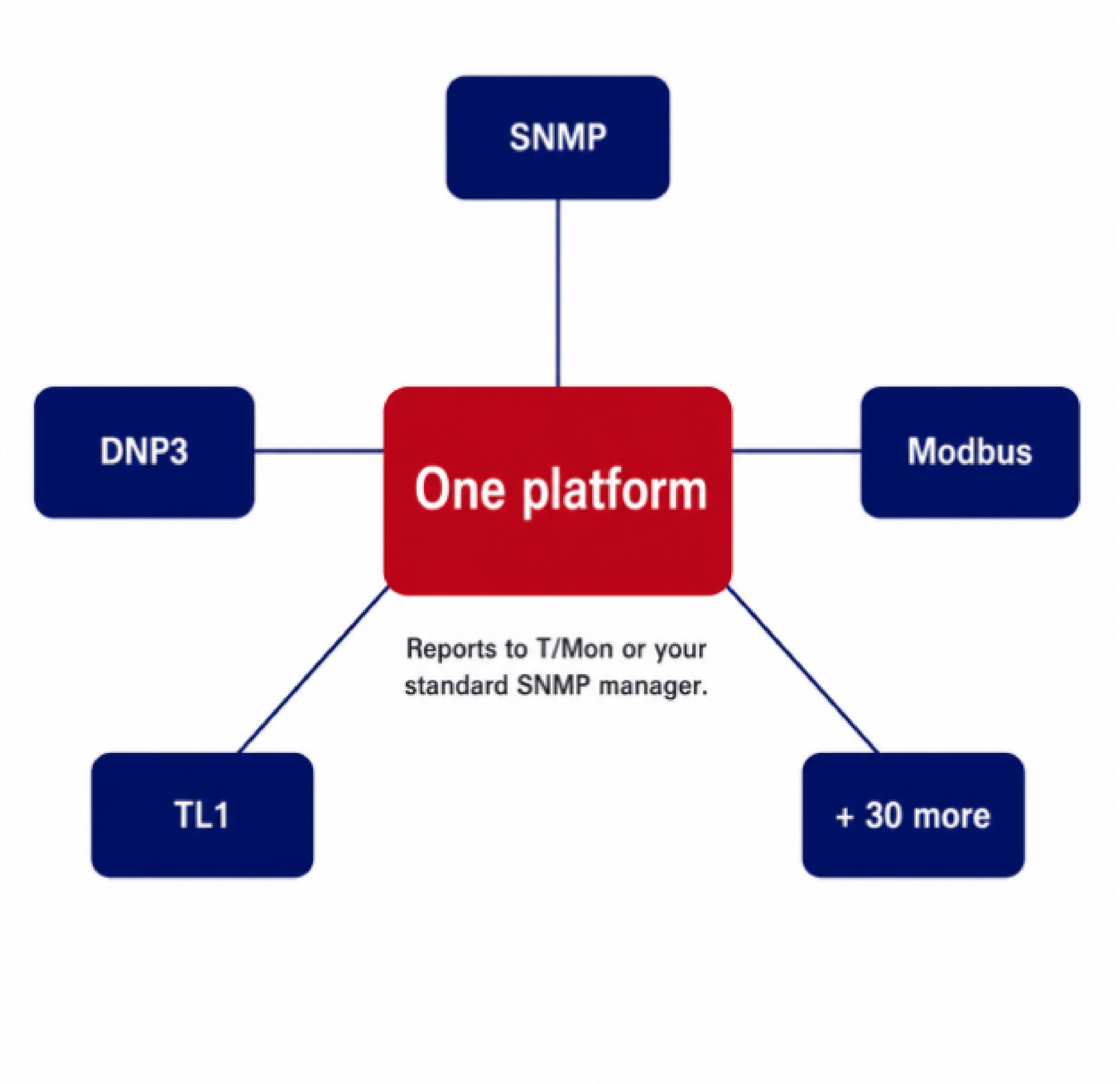
There's a structural difference underneath the protocol list. The Watchdog 100 is a standalone appliance. You log into its address and read it, or you point your SNMP manager at it. Our RTUs are designed to work as one node in a larger system, reporting up to our T/Mon alarm master platform or to any standard SNMP manager such as SolarWinds, Castle Rock, or IBM systems. In a network built from many vendors across many years, pulling everything into a single monitoring platform keeps your operators from bouncing between a half-dozen separate screens to piece together what's happening at a site. If you run one server room, a standalone appliance is fine. If you run a sprawling multi-site network, that consolidation is often the deciding factor.
The clearest difference between the two is temperature. The Watchdog 100's published operating ceiling is 45°C, which is right at the top of what an efficient modern data center is allowed to reach, so it's well matched to that environment. Our TempDefender G2 operates to 60°C. Inside an unconditioned metal shelter in the desert, the temperature can climb well past 45°C when the air conditioning quits and the sun is beating on the roof, and the monitor's whole job in that moment is to keep working long enough to summon help.
Beyond raw operating range, telecom hardware is judged against the Network Equipment-Building System (NEBS) standards, authored by Telcordia. Two matter here. GR-63-CORE covers thermal and physical stress, including non-operating temperature soaks and repeated temperature-and-humidity cycling that simulate a total cooling failure in a sun-baked structure. GR-1089-CORE covers electromagnetic compatibility (EMC) and electrical safety, meaning a unit's ability to shrug off nearby lightning strikes, alternating current power faults, and static discharge. Remote sites are frequently tall metal structures that attract lightning, and a surge traveling in on outdoor copper lines can destroy consumer-grade electronics, so this protection is not optional at those sites.
Our RTUs are engineered to a rugged design that has historically met NEBS Level 3 conditions, with heavy chassis grounding, circuit isolation, and surge suppression built in. Formal certification through an independent Nationally Recognized Testing Laboratory (NRTL) is expensive, so we run rigorous in-house pre-compliance testing for thermal stress, fire resistance, electromagnetic interference, and lightning, and we submit specific models for formal certificates when a project requires the paperwork. The practical upshot for you is that a unit going into an equipment shelter or a cabinet where the heating, ventilation, and air conditioning (HVAC) can swing hard is built from the ground up to survive conditions that IT-room hardware is never asked to face.
Neither approach wins everywhere.
The Watchdog 100 is a strong fit when:
Our TempDefender and NetGuardian environmental monitors are the better fit when:
There's a middle ground, too. As 5G and edge computing push standard IT servers into traditional telecom shelters, a lot of sites now blend both worlds, with sensitive IT gear that needs precise conditions sitting inside a building that bakes and freezes like any remote site. Those hybrid sites are exactly where a hardened RTU earns its keep. A telecom like OTT Communications is one example of a real-world environmental monitoring deployment we built on the TempDefender for remote sites.
Who you're buying from, and what happens after the sale, matters more than any single spec.
We build both the remote hardware and the T/Mon master, so your environmental data lands in the same platform as your equipment and power alarms, from one vendor you can hold accountable end to end. We do custom engineering routinely, and for orders above roughly 11 units we don't charge Non-Recurring Engineering (NRE) fees, so a perfect-fit build is often no more expensive than settling for a close-enough one. When you call for support, you reach the engineers who designed your equipment rather than a script. Everything is designed, built, and tested at our Fresno facility, and our gear routinely runs 20-plus years in the field. If you want to see it in your own environment first, our 30-day loaner program ships you a unit to try before you commit.
Is the Vertiv Geist Watchdog 100 a bad choice for a data center? No. For a climate-controlled data center or server room, it's designed for exactly that environment, and its 45°C operating ceiling and SNMP support match those conditions well. The comparison only shifts when the site is an unmanned shelter or cabinet with wide temperature swings and backup power.
What's the main advantage of a DPS RTU over a standalone monitor? Two things. It's engineered to survive rougher conditions and run on DC power so it keeps reporting during an outage, and it works as part of a larger alarm-management system rather than on its own, which keeps a multi-site network on one screen instead of many.
Can DPS monitors report to an SNMP manager I already use? Yes. Our RTUs report to any standard SNMP manager, including SolarWinds, Castle Rock, and IBM systems, as well as to our own T/Mon platform. You're not required to adopt T/Mon to use our hardware.
How many sensors can one DPS unit support? More than a compact IT monitor. A single D-Wire chain supports up to 16 sensors along a run of up to 600 feet, and the TempDefender G2's four ports support up to 32 sensors in total, on top of the discrete and analog inputs on the RTU itself. Our best temperature monitoring system guide covers sizing in more detail.
The right monitor comes down to the sites you're protecting, and we're happy to help you think it through, even if the answer turns out to be that a compact IT monitor covers you fine. Tell us what you're trying to accomplish, and we'll help you build the right fit.
Talk to an Engineer | 800-693-0351

Andrew Erickson
Andrew Erickson is an Application Engineer at DPS Telecom, a manufacturer of semi-custom remote alarm monitoring systems based in Fresno, California. Andrew brings more than 19 years of experience building site monitoring solutions, developing intuitive user interfaces and documentation, and opt...