Check out our White Paper Series!
A complete library of helpful advice and survival guides for every aspect of system monitoring and control.
1-800-693-0351
Have a specific question? Ask our team of expert engineers and get a specific answer!
Sign up for the next DPS Factory Training!
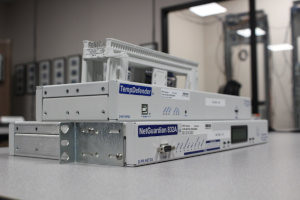
Whether you're new to our equipment or you've used it for years, DPS factory training is the best way to get more from your monitoring.
Reserve Your Seat Today
Your network runs equipment from different manufacturers, different decades, and different protocols. You need all of those alarms in one place. DPS Telecom builds multiprotocol monitoring systems that consolidate SNMP, TL1, Modbus, DNP3, ASCII, and other alarm formats into a single management platform, so your NOC team works from one screen instead of several.
Talk to an Engineer | 800-693-0351
Founded 1986 | 172,000+ Devices Deployed | 1,500+ Organizations Served | Made in Fresno, CA | ISO 9001 Certified
Most networks grow over time. You add equipment as needs change, budgets allow, and technology evolves. The result is a mix of devices that use different protocols to report alarms, and no single platform that can listen to all of them.
When alarm data is scattered across multiple systems, your operators juggle separate screens, separate logins, and separate alert formats. Problems get missed. Response times slow down. And the cost of maintaining parallel monitoring platforms adds up.
Our approach starts at the master station level. The T/Mon LNX alarm master natively supports 25+ protocols, meaning it can poll and receive alarms from SNMP, TL1, Modbus, DNP3, ASCII, and proprietary devices without requiring separate middleware or translation layers. All alarms land in a single interface with a unified map view, consistent severity classifications, and one notification engine.
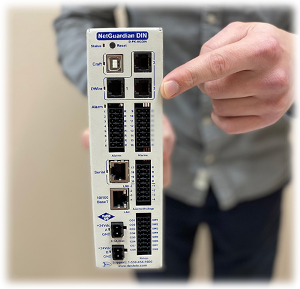
At the field level, our NetGuardian RTUs collect discrete alarms, analog readings, and serial data from equipment at each remote site. For devices that output proprietary or non-standard protocols, our RTUs can mediate those signals to SNMP for transport to T/Mon or any third-party SNMP manager you already use.

Talk to an Engineer | 800-693-0351
T/Mon LNX and our NetGuardian RTUs together give you a set of capabilities that matter when you are managing alarms from mixed-protocol environments.
| Native Multi-Protocol Polling | T/Mon connects directly to devices running SNMP v1/v2c/v3, TL1, Modbus, DNP3, ASCII, and other protocols. No external translation hardware required for supported protocols. |
| Unified Map View | All alarms, regardless of source protocol, appear on a single geographic map display. Operators see red, yellow, and green status indicators across every monitored site in one window. |
| Protocol-Agnostic Notifications | Set escalation rules once and apply them across all alarm sources. T/Mon can send email, text, SNMP traps, or voice alerts based on severity, time of day, or alarm type. |
| Northbound SNMP Forwarding | If your organization uses an enterprise SNMP manager for top-level visibility, T/Mon can forward consolidated alarm data northbound as SNMP traps, giving your existing platform a single integration point instead of dozens. |
| Legacy Device Mediation | For field devices that use proprietary or discontinued protocols, our RTUs accept the native output and convert it to standard SNMP. Your older equipment stays in service without monitoring gaps. |
| Custom Protocol Development | If you have a protocol we do not currently support, our engineering team can develop support for it. T/Mon's protocol library continues to grow specifically because clients ask for the protocols they need. |
The specific configuration depends on your network size and protocol mix, but most multiprotocol alarm consolidation deployments include a combination of these products.
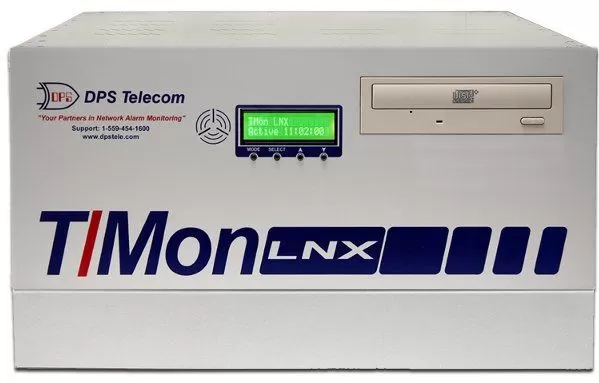
T/Mon LNX Remote Alarm Monitoring System
The central alarm master that collects, processes, and displays alarms from every protocol source in your network. T/Mon LNX serves as the single pane of glass for your entire monitoring operation.

NetGuardian 832A G5
A full-capacity RTU for remote sites with significant monitoring needs. The NetGuardian 832A G5 collects discrete alarms, analog inputs, and serial data, then reports to T/Mon or any third-party SNMP manager.
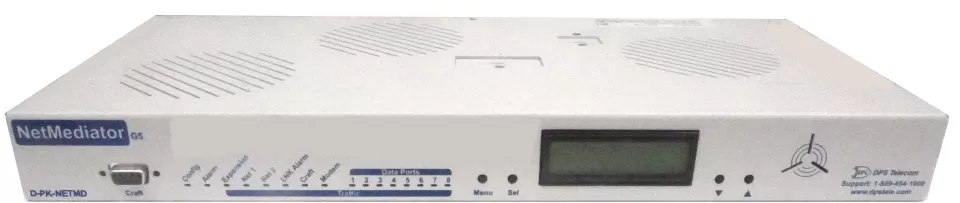
NetMediator G5
A dedicated protocol mediation device for sites where you need to translate between proprietary equipment and your SNMP-based management system. The NetMediator can be customized to your specific mediation requirements.
Multiprotocol alarm consolidation only works if the platform can communicate with the equipment you already have deployed. T/Mon LNX and our RTUs are designed to integrate with, rather than replace, your installed base.
T/Mon accepts alarm data from virtually any source. If your network includes SNMP-based routers and switches alongside TL1 telecom gear, Modbus-enabled generators, DNP3 SCADA equipment, or devices that output plain ASCII text, T/Mon can poll or receive traps from all of them. Our RTUs also report to third-party SNMP managers, so if you run an enterprise-scale platform for top-level network visibility, DPS RTUs can serve as the field-level collection layer feeding data upstream.
| Telecom Carriers | Carriers operating equipment from multiple generations and vendors use T/Mon to consolidate alarms from fiber transport gear, microwave radios, battery plants, and legacy switching systems into one NOC view. |
| Electric Utilities | Utility networks typically include a mix of DNP3 SCADA devices, Modbus-enabled generators, and SNMP network equipment. T/Mon brings those sources together without requiring protocol-specific management platforms. |
| Oil and Gas | Refineries and pipeline operators manage microwave links, Tetra radio systems, SDH transport, and environmental sensors across dispersed sites. Multiprotocol consolidation gives operations teams one alarm view instead of several. |
| Public Safety | County and municipal agencies operate radio tower networks, 911 infrastructure, and dispatch systems that often span different equipment generations. A single alarm platform reduces the risk of missed alerts on life-safety systems. |
| Transportation | Rail, transit, and highway communication systems include equipment acquired across decades. Consolidating alarms from mixed-protocol devices into one master station simplifies operations for geographically distributed networks. |
| Custom Engineering | If your network includes equipment that requires firmware-level integration work, our engineering team in Fresno can build a custom solution. Typical turnaround from concept to field trial unit is under 90 days. No NRE fees on qualifying orders. |
| Free Lifetime Tech Support | When you call DPS technical support, you speak with engineers who designed the equipment, not call center staff reading from scripts. Support is included for the life of the product, at no additional cost. |
| 30-Day Equipment Loaner Program | Test a fully configured system in your environment for 30 days before committing. We also offer a 2-year warranty and a money-back guarantee. |
| Made in Fresno, California | All DPS Telecom equipment is designed, assembled, and tested at our Fresno headquarters. Vertical integration gives us control over quality and the ability to deliver custom projects on tight timelines. ISO 9001 certified. |
Talk to an Engineer | 800-693-0351
Dominion, Energy
Three Legacy Alarm Systems Consolidated into One Platform
Dominion operated 150 remote sites across seven states, monitored by separate systems running Badger, Larse, and NEC protocols. DPS Telecom designed a single T/Mon-based platform that replaced all three masters and continued polling the existing field remotes, eliminating the need for a forklift replacement of legacy equipment.
Kuwait National Petroleum Company (KNPC), Oil and Gas
Microwave, Tetra, and SDH Monitoring Unified Under T/Mon
KNPC operated multiple proprietary monitoring systems for their microwave, SDH, and Tetra radio equipment. T/Mon consolidated alarm data from all three into a single interface and forwarded it as SNMP to the company's existing HP OpenView platform, giving operations staff one place to see every alarm across their refinery communication infrastructure.
T/Mon LNX natively handles 25+ protocols and can receive alarms from multiple protocol sources at the same time. There is no limit on the number of protocols active in a single deployment.
In most cases, no. T/Mon can poll many legacy and proprietary devices directly, and our RTUs can mediate non-standard protocol outputs to SNMP for devices T/Mon does not poll natively.
Yes. T/Mon can output alarm data as SNMP traps to any standard SNMP manager, giving your enterprise platform a single integration point for all field alarm sources.
Our engineering team can develop support for additional protocols. T/Mon's protocol library has expanded over the years specifically because clients brought us new requirements.
Deployment timelines vary with network size and complexity. For projects that require custom engineering, DPS can typically deliver a field trial unit within 90 days of project kickoff.
If your NOC team is managing alarms across multiple platforms because your network runs equipment from different eras and different vendors, a multiprotocol consolidation project can bring everything into one view. We offer a 30-day equipment loaner so you can test the solution in your own environment, backed by a 2-year warranty, money-back guarantee, and free lifetime technical support.