Download our free Monitoring Fundamentals Tutorial.
An introduction to Monitoring Fundamentals strictly from the perspective of telecom network alarm management.
1-800-693-0351
Have a specific question? Ask our team of expert engineers and get a specific answer!
Sign up for the next DPS Factory Training!
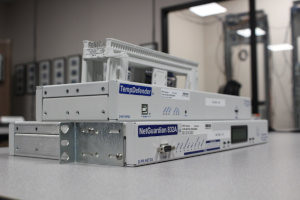
Whether you're new to our equipment or you've used it for years, DPS factory training is the best way to get more from your monitoring.
Reserve Your Seat TodaySCADA (Supervisory Control and Data Acquisition) is a category of systems used to monitor and control equipment at remote sites. In telecommunications, this means keeping visibility into tower sites, fiber huts, headends, and equipment shelters, often in locations you can't easily reach.
The goal is simple: see what's happening at your sites before small problems become service-affecting outages.
At DPS Telecom, we've been building SCADA systems for telecom and communication networks since 1986. Our equipment is monitoring over 172,000 sites worldwide, from small rural ISPs with a handful of towers to major carriers with thousands of locations.
Both "revenue-generating equipment" (the central components of your specific operation) as well as their critical supports: Power systems, environmental conditions, and physical security. These three categories protect the infrastructure that keeps your telecom equipment online.
Power Systems Backup batteries, rectifiers, generators, and UPS units. You need to know when battery voltage drops, when a rectifier fails, or when your generator kicks on unexpectedly.
Environmental Conditions Temperature, humidity, water intrusion, and smoke detection. An HVAC failure at a remote shelter can destroy expensive equipment before anyone notices.
Physical Security Door contacts, motion sensors, and access control. Knowing who entered your site and when is both a security requirement and an audit necessity.
The revenue-generating telecom equipment itself, whether radio transmission gear, fiber optic systems, or network switches, depends on all of these supporting systems functioning properly.
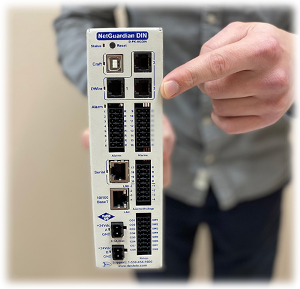
Remote Telemetry Units (RTUs) are the front line of any monitoring system. They're the "boots on the ground" that collect data from your equipment and sensors, then report back to a central station.
An RTU connects to site equipment in several ways. Discrete contact closures capture alarms from panels. Analog inputs measure voltage and temperature. Protocol-based connections pull data from intelligent devices like generators.
Modern RTUs can also receive data via protocols like Modbus (common for generators) and SNMP (standard for network equipment). At DPS, we've seen increasing demand for protocol-only RTUs that don't need discrete inputs at all, just the ability to pull data from smart equipment and forward it to a master station.
At minimum: SNMP for network equipment and Modbus for generators. Beyond that, it depends on what legacy equipment you need to integrate.
SCADA itself isn't a protocol; it's a category. The actual communication happens through protocols like:
| Protocol | Common Use |
|---|---|
| SNMP (V1, V2, V3) | Network equipment, servers, routers |
| Modbus | Generators, power equipment, industrial controls |
| DNP3 | Utilities, critical infrastructure, some telecom |
| TL1 | Legacy telecom equipment |
| ASCII | Devices that output text-based status messages |
DPS equipment supports 30+ protocols because our clients have needed them over the years. If you have legacy telecom gear speaking an older protocol, there's a good chance we can integrate it.
If we don't support a protocol you need, tell us what you're trying to accomplish. Custom protocol development is something we do routinely.
Through whatever transport path is available at each site. Most commonly Ethernet, but cellular, fiber, T1, serial, and even dialup are all options.
Your RTUs need a transport path to communicate with your central master station:
DPS NetGuardian RTUs support all of these transport options. You can match the connectivity method to what's available at each site rather than forcing a single approach across your entire network.
RTUs collect data. A master station makes sense of it.
The T/Mon alarm management system aggregates alarms from all your remote sites into a single interface. You see your entire network on one screen, with map views, automatic notifications, and detailed event logging.
For organizations running enterprise network management platforms like SolarWinds or Castle Rock, our RTUs integrate directly via SNMP. You don't have to replace your existing infrastructure to add site monitoring.
Geography, equipment age, and transport diversity. Telecom sites are spread across wide areas with mixed equipment generations, while industrial SCADA typically monitors a contained facility with uniform infrastructure.
Distributed geography: Telecom sites are spread across wide areas, often in hard-to-reach locations. A cell tower on a mountain or a fiber hut in a remote area might be hours away from the nearest technician.
Mixed equipment ages: Telecom networks evolve over decades. You might have brand-new 5G equipment sitting next to gear installed in the 1990s. Your monitoring system needs to handle both.
Transport diversity: Unlike a factory where everything connects to a single network, telecom sites use whatever connectivity is available. Your monitoring system has to adapt.
Uptime requirements: Service-affecting outages cost revenue, trigger SLA penalties, and upset customers. The whole point of monitoring is preventing these situations.
We've been building monitoring systems for telecom networks for over 37 years. A few things set us apart:
Custom Engineering: We don't offer one-size-fits-all solutions. Our engineering team configures each system to your specific requirements at no additional charge. Need a modification? We can typically deliver a custom build within 90 days.
Protocol Flexibility: With support for 30+ protocols, we can integrate the equipment you already have. Legacy gear, new gear, third-party systems, it all comes into one monitoring platform.
Made in USA: All DPS products are designed, manufactured, and tested at our facilities in Fresno, California. When you need support, you're talking to the engineers who built your equipment.
Real Technical Support: Our support team consists of actual engineers with computer science backgrounds, not call center representatives reading scripts.
If you're evaluating SCADA options for your telecom network, we're happy to discuss your specific situation. Every network is different, and the right solution depends on what you're trying to monitor, what equipment you already have, and how you want to receive alerts.
We offer a 30-day loaner program so you can test our equipment in your actual environment. You pay only shipping costs.
Call us at 1-800-693-0351 or fill out a contact form to start a conversation.