Check out our White Paper Series!
A complete library of helpful advice and survival guides for every aspect of system monitoring and control.
1-800-693-0351
Have a specific question? Ask our team of expert engineers and get a specific answer!
Sign up for the next DPS Factory Training!
Whether you're new to our equipment or you've used it for years, DPS factory training is the best way to get more from your monitoring.
Reserve Your Seat TodayAsentria SiteBoss controllers are Linux-based site automation platforms for telecom sites, with over 100,000 deployments in 50+ countries. If you're evaluating alternatives, the DPS Telecom NetGuardian series offers comparable capacity with extensive customization options.
Other options include Cordell CINAS systems and generic SNMP network management platforms. The right choice depends on your site requirements, including I/O capacity, protocol support, and power specifications.
At DPS Telecom, we frequently work with organizations transitioning from other monitoring platforms. Some SiteBoss models offer I/O capacity similar to certain NetGuardian RTUs, which can simplify migration planning depending on site configuration.
Asentria describes SiteBoss as a platform that "simplifies and centralizes all the data from a wide range of different makes and models of equipment and sensors" at remote sites. The system integrates subsystems like rectifiers, generators, HVAC, cameras, and access controls into a single interface.
SiteBoss controllers support SNMP, web/REST interfaces, and user scripting (Lua) for flexible monitoring and control. According to reseller documentation, these controllers are "scalable and economical, easy to setup and use" for ISPs, WISPs, and network operators.
The platform monitors environmental and power metrics, sending system alarms to operators for advance notice of failures and operational efficiency issues.
Organizations may evaluate alternatives to SiteBoss as their site requirements evolve over time.
Customization Requirements: Some projects require highly specific configurations, which different platforms address in different ways depending on their design philosophy. We frequently design custom RTU configurations to match exact site requirements without additional engineering fees.
Protocol Integration: Different sites use different protocols. You may need specific protocol support for your existing equipment.
Budget and Lifecycle Planning: Long-term costs include hardware, support, training, and future expansion. Different solutions offer different value propositions depending on your specific needs.
Deployment Scale: The monitoring solution that works for 10 sites may not be optimal for 1,000 sites. Your network size and growth plans affect which platform makes the most sense.
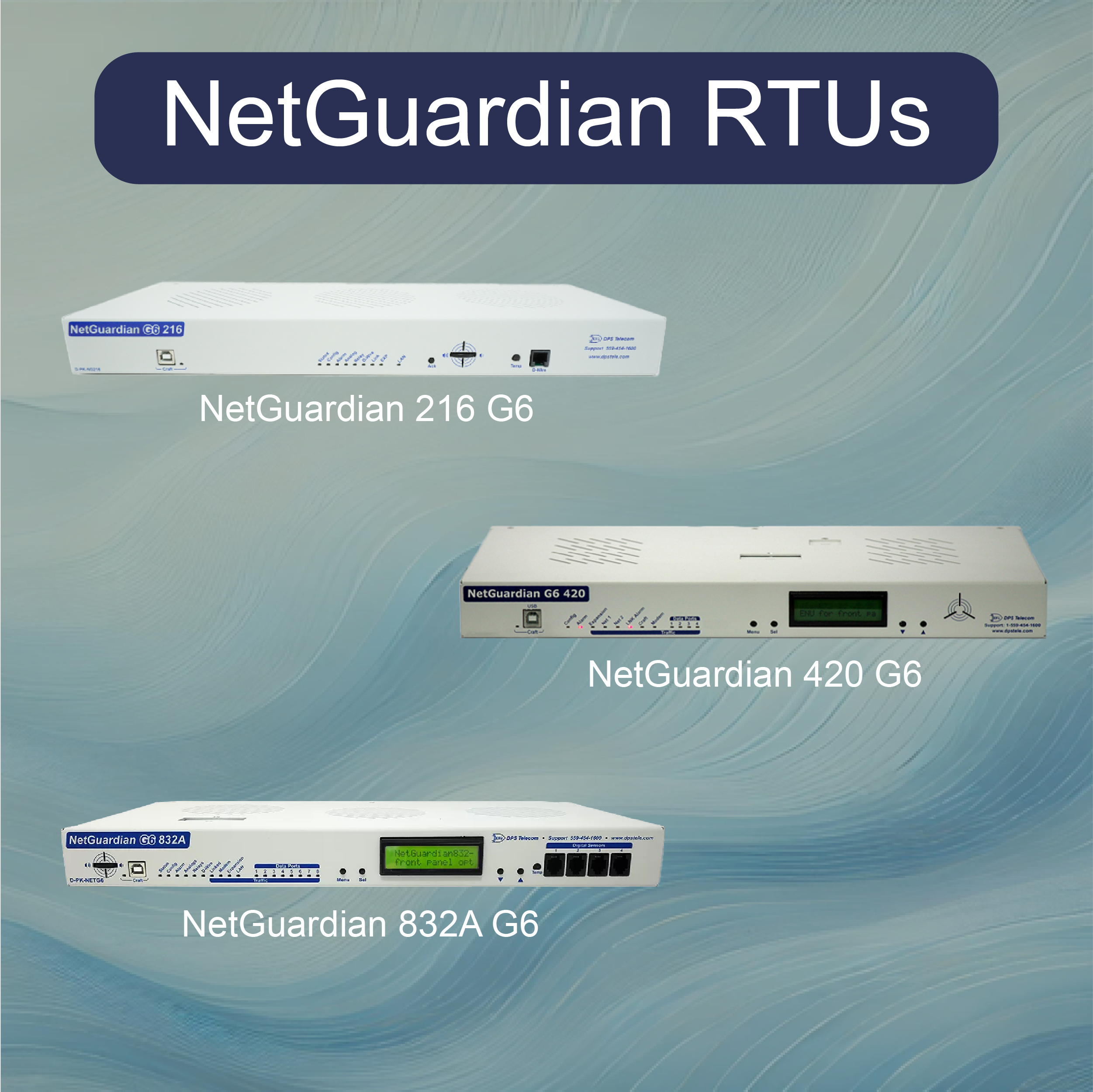
Our NetGuardian RTUs are commonly evaluated alongside SiteBoss controllers for telecom site monitoring applications. Capacity ranges from 4 to 64 discrete alarms, plus analog inputs, network ping monitoring, and control relays.
The NetGuardian 832A G6 is our high-capacity RTU for medium-to-large telecom shelters. It includes:
This model monitors every aspect of your site infrastructure in a single unit. The built-in Ethernet switch simplifies installation by reducing the need for separate networking equipment.
Jim Eddins from Silver Star Communications explained their deployment of a soft switch that included a NetGuardian RTU: "We got a new piece of equipment. It came with a NetGuardian 832A. We'll hook that up and get that running. Then we'll have live streaming alarms so we can see what's going on."
The NetGuardian 420 G6 suits smaller sites while maintaining advanced capabilities. It supports SNMPv1/v2c/v3 and includes an embedded terminal server for remote console access.
Like all NetGuardian units, it reports status via SNMP and sends email/SMS alerts. The compact form factor works well in space-constrained installations.
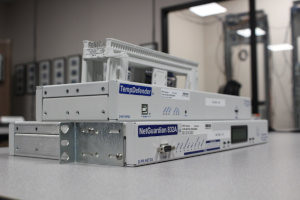
For sites requiring focused environmental monitoring, the TempDefender G2 monitors temperature, humidity, and water presence in server rooms or equipment huts.
This RTU connects to multiple environmental sensors and sends alerts when values exceed configured thresholds. Fred Marvin from Steuben County Office of Emergency Services uses our monitoring across nine tower sites: "We are getting analog inputs for generator voltage, and microwave signal fade. Discrete alarms might be door entry, or temperature high/low, things like that."
Unlike vendors offering one-size-fits-all solutions, we specialize in custom configurations. Our engineering team adapts NetGuardian units to your exact requirements at no additional charge when your order exceeds approximately 11 units.
This flexibility means you get precisely the monitoring solution your sites need. We typically deliver custom projects in under 90 days from concept to field trial unit.
All NetGuardian RTUs integrate with our T/Mon master station for centralized alarm management. T/Mon provides a single interface for monitoring your entire network.
The platform offers real-time alerts via email, SNMP, or text notifications. It supports both dial-up and LAN connectivity, with UPS power backup and a web browser interface.
Organizations typically deploy NetGuardian RTUs to monitor power levels, temperature sensors, door alarms, generator status, and tower lights. All data flows to the T/Mon console for unified alerting and reporting.
Tom Parkes from NV Energy noted during a product review: "We learned about some features and products we'll probably be introducing in the future. At some of the smaller sites, we can use the smaller NetGuardians."
Note: Cordell's CINAS platform reportedly ended service at the end of 2025.
For organizations previously using CINAS systems, migration options include generic SNMP network management platforms like SolarWinds or direct RTU integration with existing monitoring infrastructure. NetGuardian RTUs support standard SNMP protocols and can integrate with various enterprise management platforms.
Generic SNMP monitoring platforms like SolarWinds Orion can monitor any SNMP-capable device. SolarWinds produces IT infrastructure management software whose SNMP manager can combine with RTUs from any manufacturer.
This approach works well if you already have an enterprise SNMP platform deployed. You can add site monitoring without introducing a new management system.
NetGuardian RTUs integrate gracefully with these platforms, reporting via standard SNMP traps and allowing you to maintain your existing management infrastructure.
When evaluating alternatives to SiteBoss, these specifications matter most:
| Feature | What to Consider |
|---|---|
| Discrete Inputs | Number of on/off alarms (door contacts, generator status, etc.) |
| Analog Inputs | Temperature, voltage, humidity sensor capacity |
| Network Monitoring | Ping monitoring capabilities for network equipment |
| Control Outputs | Relay contacts for remote equipment control |
| Protocols | SNMP versions, Modbus, proprietary protocols |
| Power Input | -48VDC support for telecom sites, AC options |
| Connectivity | Ethernet, serial, cellular, dial-up options |
| Environmental Rating | Operating temperature range, outdoor ratings |
| Expandability | Modular I/O cards, future capacity growth |
Different sites have different requirements. A small microwave relay station needs fewer inputs than a major switching facility. Choose an RTU that fits your current needs with room for growth.
Start by documenting your specific requirements:
Site Inventory: Count the alarm points you need to monitor. Include discrete alarms (door contacts, generator status), analog sensors (temperature, voltage), and network devices requiring ping monitoring.
Power Infrastructure: Verify the available power at your sites. Most telecom sites provide -48VDC, but some locations may require AC or solar power options.
Connectivity Options: Determine how RTUs will communicate with your master station. Ethernet is standard, but remote sites may require cellular, satellite, or dial-up connectivity.
Protocol Requirements: List the protocols your existing equipment uses. The RTU must speak the same language as your monitored devices.
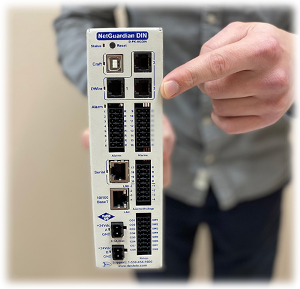
Form Factor: Consider rack space availability and environmental conditions. Some sites need compact DIN-rail units, while others accommodate full rack-mount equipment.
We work with you to design monitoring solutions that fit your exact requirements. Our application engineers review your site specifications and recommend appropriate configurations.
Choosing the right RTU affects your network reliability for years or even decades. Many organizations still rely on NetGuardian units we installed in the 1990s.
We provide comprehensive support throughout your deployment, from initial specification through installation and ongoing maintenance. Our engineering team answers technical questions directly. When you call, you speak with the people who design and build the equipment.
All DPS equipment is designed and manufactured in Fresno, California. This American manufacturing ensures quality control and allows us to deliver custom projects in under 90 days.
Contact our application engineers to discuss your specific monitoring requirements. We'll review your sites, recommend appropriate solutions, and answer your technical questions. You can also request a product demonstration to see how NetGuardian RTUs and T/Mon work together to protect your critical infrastructure.

Andrew Erickson
Andrew Erickson is an Application Engineer at DPS Telecom, a manufacturer of semi-custom remote alarm monitoring systems based in Fresno, California. Andrew brings more than 19 years of experience building site monitoring solutions, developing intuitive user interfaces and documentation, and opt...