Download our free SNMP White Paper. Featuring SNMP Expert Marshall DenHartog.
This guidebook has been created to give you the information you need to successfully implement SNMP-based alarm monitoring in your network.
1-800-693-0351
Have a specific question? Ask our team of expert engineers and get a specific answer!
Sign up for the next DPS Factory Training!
Whether you're new to our equipment or you've used it for years, DPS factory training is the best way to get more from your monitoring.
Reserve Your Seat TodayMost networks carry equipment from multiple generations. Your SNMP manager can handle anything that sends traps or responds to polls. But a lot of field equipment, including contact closure alarms, serial devices, and older RTUs, has no native SNMP capability. An SNMP converter bridges that gap. It translates those signals into standard SNMP so they can be collected and managed alongside the rest of your network.
Talk to an Engineer | 800-693-0351
An SNMP converter sits between your legacy field equipment and your SNMP-based network management system. It accepts non-SNMP input on the field side and outputs SNMP traps or responds to SNMP polls on the network side. It is also called an SNMP mediation device or SNMP gateway.
Common input types include:
The converter maps each input to an SNMP object identifier (OID), then sends traps to your manager when states change or responds to polls on demand.
The right device depends on what you're converting from and what you need on the SNMP side.
| Input Type | What You Need |
|---|---|
| Dry contacts only | A basic RTU with discrete alarm inputs and SNMP trap output. Southeast Nebraska Communications used this approach to replace an aging contact closure monitoring system. |
| Modbus equipment (generators, UPS) | A Modbus-to-SNMP converter that reads registers and re-presents them as SNMP objects. Our guide to choosing the right Modbus device for SNMP conversion covers the key decision points. |
| Serial / ASCII devices | An RTU with serial input support and configurable text parsing |
| TL1 legacy equipment | A protocol mediation platform like T/Mon LNX |
| Mixed inputs across many sites | A multi-protocol master station that normalizes everything into a single view |
Volume also matters. If you have a handful of sites, an RTU per site may be sufficient. If you're managing dozens or hundreds of sites with mixed legacy equipment, a central mediation platform will reduce ongoing complexity.
At DPS Telecom, we've been building protocol mediation and conversion solutions for over 35 years. More than 1,500 organizations across telecom, electric utilities, transportation, and public safety use our equipment. Our T/Mon LNX master station currently supports 30+ protocols specifically because clients needed them added over time.
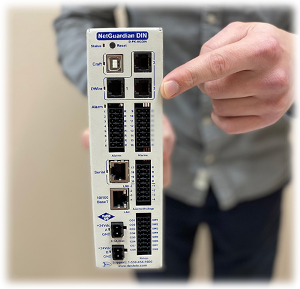
NetGuardian RTU series Our NetGuardian RTUs accept discrete alarms (dry contact / contact closure), analog inputs, and serial data at the remote site. All NetGuardian units report via SNMP (v1, v2c, and v3), making them a direct SNMP converter for field equipment that has no native SNMP capability. SNMP v3 adds encryption and enhanced security for networks that require it. South Central Communications used this setup to unify SNMP and RTU alarm monitoring across their network.
Modbus to SNMP Converter For sites running Modbus-capable equipment like generators, rectifiers, or industrial controls, we offer a dedicated Modbus-to-SNMP converter. It reads Modbus registers and presents the data as SNMP objects to your management system.
T/Mon LNX alarm master station For organizations with mixed protocols across a large network, T/Mon LNX functions as a full protocol mediation platform. It supports SNMP, Modbus, DNP3, TL1, ASCII, and 30+ additional protocols. Legacy RTUs and proprietary equipment report to T/Mon, which normalizes everything and forwards alarms upstream via SNMP to any standard SNMP manager. Dominion used T/Mon to bring three separate legacy alarm systems into a single platform without replacing the underlying field equipment.
SNMPv3 is the current recommended standard for any deployment requiring authentication or encryption. SNMPv1 and v2c are still widely deployed but rely on community strings for access control, which provides minimal security.
| Version | Key Characteristics |
|---|---|
| SNMPv1 | Original standard. Widely supported but no encryption or authentication. |
| SNMPv2c | Adds bulk transfers and improved error handling. Still community-string authentication only. |
| SNMPv3 | Adds user-based authentication and AES/DES encryption. Required for many government and utility deployments. |
All DPS NetGuardian RTUs support all three versions. If your SNMP manager requires v3, our equipment supports it.
Not every SNMP conversion use case involves physical contact closures or analog sensors. Some sites just need to pull data from Modbus or SNMP-capable equipment and forward it to a central system.
We've seen growing demand for what we call protocol-only RTU builds. These units have no discrete alarm inputs, no analog circuits, and no control relays. They simply collect data via Modbus or SNMP from site equipment, then pipe that data to a master station or send email and text alerts directly. We've stripped down some builds to minimize hardware costs for these dedicated applications.
If that's your situation, tell us what you're trying to accomplish and we'll spec the right device.
What is a dry contact to SNMP converter? A dry contact to SNMP converter is a device that monitors contact closure inputs (circuits that open or close to signal an alarm condition) and translates those states into SNMP traps or poll responses. When the contact state changes, the device sends a trap to your SNMP manager. DPS NetGuardian RTUs perform this function and support up to hundreds of discrete alarm points per unit depending on the model.
What is the difference between an SNMP converter and an SNMP gateway? The terms are often used interchangeably. Both describe a device that accepts non-SNMP input and outputs SNMP. "Gateway" sometimes implies a more centralized, multi-protocol role, while "converter" typically refers to a device handling a specific protocol translation at a single site.
Can one device convert multiple input types at the same time? Yes. NetGuardian RTUs accept contact closures, analog inputs, and serial data simultaneously, all reported via SNMP to your management platform.
Do you support custom protocol conversion? Yes. If you need a protocol we don't currently support, contact us. Our T/Mon platform supports 30+ protocols because clients requested them over time, and we continue to add new ones when the need arises.
What SNMP managers are compatible with DPS equipment? Our RTUs report to any standard SNMP manager via SNMP v1, v2c, or v3. If you have an existing management platform that polls or receives SNMP traps, DPS equipment will integrate with it.
We don't quote from a catalog. Tell us what equipment you're converting, how many sites you have, and what your SNMP manager is, and we'll recommend the right solution. DPS has completed 9,800+ custom builds and can accommodate configurations that off-the-shelf devices can't handle.