Download our free Monitoring Fundamentals Tutorial.
An introduction to Monitoring Fundamentals strictly from the perspective of telecom network alarm management.
1-800-693-0351
Have a specific question? Ask our team of expert engineers and get a specific answer!
Sign up for the next DPS Factory Training!
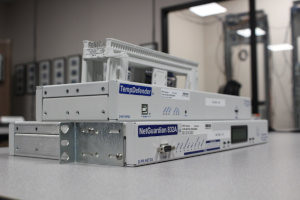
Whether you're new to our equipment or you've used it for years, DPS factory training is the best way to get more from your monitoring.
Reserve Your Seat TodayA single refrigeration failure can cost thousands in lost product. Remote monitoring gives you instant alerts when temperatures go out of range, so you can respond before product is compromised.
Get A Free Consultation | 800-693-0351
Remote monitoring uses temperature sensors connected to a monitoring device (RTU) that sends alerts to your phone or email when conditions exceed your thresholds. The system operates 24/7 without staff on-site, continuously checking that temperatures stay within the ranges you've set for each freezer or cooler. If the temperature rises above your maximum, you receive an alert within seconds.
Beyond temperature, comprehensive cold storage monitoring tracks multiple conditions that can threaten your inventory and operations.
| Condition | Why It Matters |
|---|---|
| Temperature | Prevents product spoilage and ensures compliance with safety regulations |
| Humidity | Monitors condensation that can affect product quality and equipment operation |
| Door Status | Alerts if cooler or freezer doors are left open |
| Power Status | Detects power failures that could impact refrigeration systems |
| HVAC Operation | Tracks cooling system performance to catch failures early |
Talk to a Monitoring Specialist
Precision sensors monitor conditions from -40°C to +85°C inside freezers, coolers, and warehouses. These sensors use standard 0-5VDC or 4-20mA interfaces and connect directly to the RTU with plug-and-play setup, making installation straightforward.
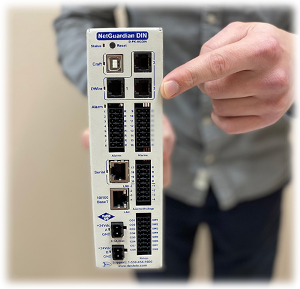
The RTU collects data from your sensors and sends alerts when thresholds are exceeded. NetGuardian RTUs can connect via Ethernet, cellular, or other transport methods depending on your facility's infrastructure. Most installations use fewer than 10 sensors per location.
Central monitoring software displays all your sites in one interface, making it easy to see status across multiple locations at a glance. T/Mon software consolidates alerts from multiple locations and can integrate with existing management platforms like SolarWinds or IBM OpenView when needed.
Setup takes hours, not days, since sensors connect to the RTU using plug-and-play interfaces. Most facilities use Ethernet connectivity to tie into their existing network, while remote warehouses without network infrastructure can use cellular connections (GSM/CDMA). Configuration is straightforward and allows you to set specific temperature ranges for different zones within your facility.
We'll help you plan the right sensor placement and system configuration for your specific layout and requirements.
Schedule Your Free Consultation
You receive notifications via email, text message, or phone call when temperatures exceed your limits, with alert delivery happening within seconds. Each alert includes which sensor triggered and the current reading, so you know exactly what's happening and where. Multiple staff members can receive notifications, and priority levels ensure the right people are contacted based on the severity of the issue.
Temperature failures rarely happen during business hours when staff are present. Most problems occur overnight or on weekends when no one is on-site to notice the issue. By the time someone discovers a problem during the next shift, product may already be compromised and unsalvageable.
Early detection changes everything. When you get an alert the moment temperatures start rising, you have time to move product to backup refrigeration or dispatch a technician while inventory is still safe.
Don't wait for a failure to cost you thousands. Get monitoring in place now.
Many food and pharmaceutical operations require documented temperature logs for regulatory compliance, and automated monitoring systems maintain continuous records without the gaps that come from manual checks. Temperature data is logged automatically, providing complete audit trails for inspections and eliminating the risk of missing scheduled manual readings.
Our systems create the documentation you need for audits and inspections, with timestamped records of every temperature reading and alert.
DPS temperature sensors operate reliably from -40°C to +85°C (-40°F to +185°F), which covers everything from standard freezer operations (-20°C to -30°C) to refrigerated storage (2°C to 8°C) and even warmer warehouse environments. You set custom alarm thresholds for each sensor based on your specific requirements, with both high and low limits that trigger alerts when exceeded. The system logs all readings continuously for compliance documentation.
DPS Telecom has manufactured monitoring equipment for 37 years, with over 172,000 devices deployed worldwide across telecommunications, utilities, government, and commercial facilities. Our NetGuardian RTUs monitor environmental conditions in the most demanding environments, and the same equipment that protects critical telecommunications infrastructure works equally well for cold storage facilities.
We design systems to your exact requirements at no additional charge. Whether you need to monitor a single walk-in freezer or a multi-site cold chain operation, we configure equipment to match your specific needs. All equipment is manufactured in Fresno, California, and technical support is available 24/7 from the engineers who designed the equipment, not call center representatives.
Tell us about your facility and what you need to monitor, and we'll recommend the right equipment and sensors for your application.
Call 800-693-0351 or email support@dpstele.com
DPS Telecom
4955 E. Yale Avenue
Fresno, CA 93727