Check out our White Paper Series!
A complete library of helpful advice and survival guides for every aspect of system monitoring and control.
1-800-693-0351
Have a specific question? Ask our team of expert engineers and get a specific answer!
Sign up for the next DPS Factory Training!
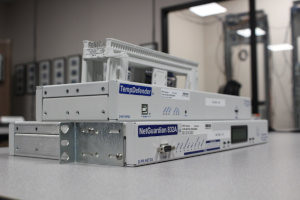
Whether you're new to our equipment or you've used it for years, DPS factory training is the best way to get more from your monitoring.
Reserve Your Seat Today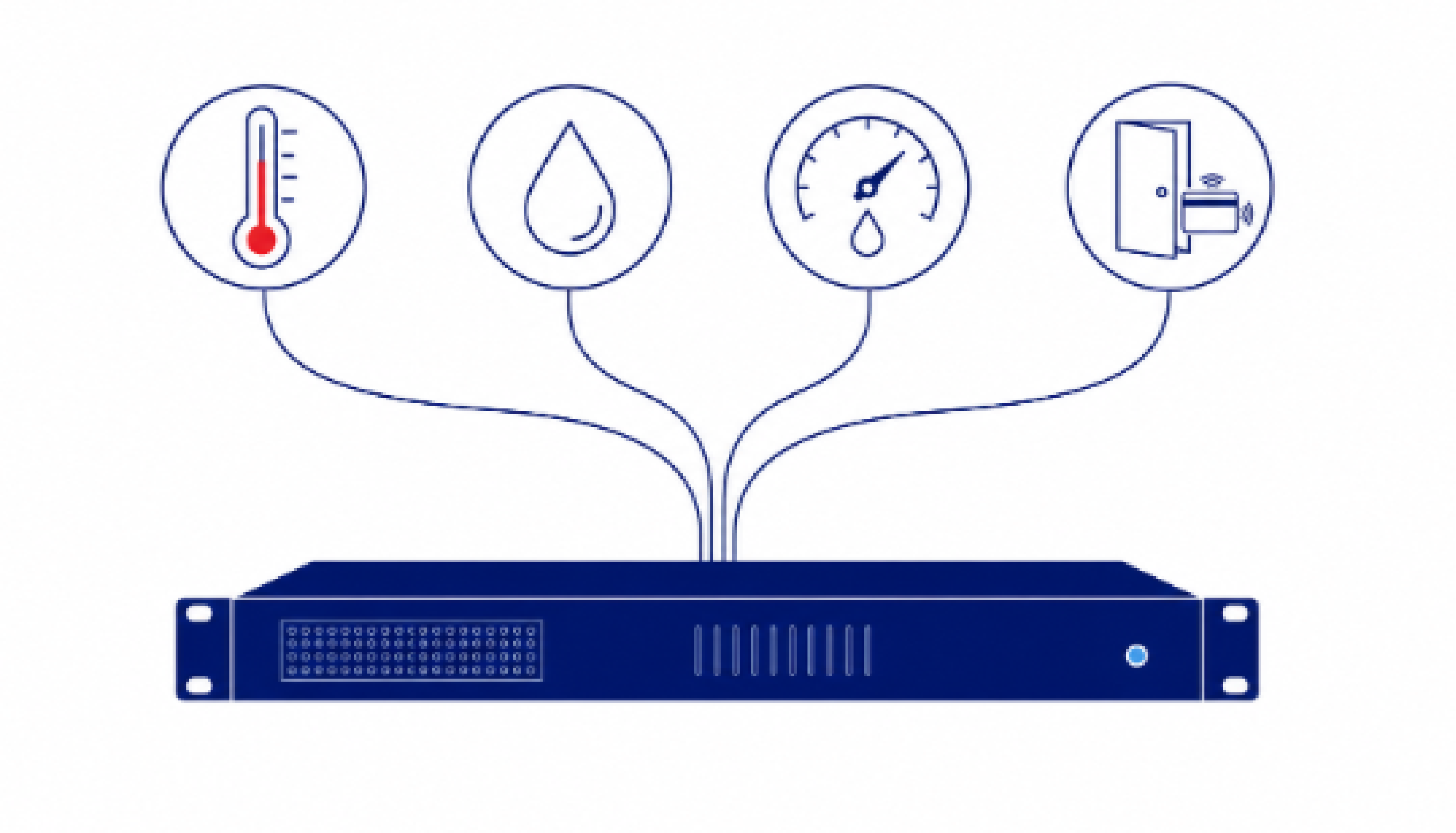
If you already run Sensaphone gear, or you're pricing it for the first time, the most useful question is a practical one. What do you actually need to watch, and across how many sites? That answer decides the right fit more than any single feature does.
The credible alternatives to Sensaphone for environmental monitoring include Vertiv Geist, APC NetBotz, AVTECH Room Alert, AKCP, InfraSensing, Monnit, and our own NetGuardian and TempDefender remote telemetry units (RTUs) here at DPS Telecom, where we've built environmental monitoring into critical infrastructure networks since 1986 for more than 1,500 organizations. This guide maps each option to the use case it fits best. Some sites are well served by a simple standalone device, and several of the options below do that job well. Others need environmental monitoring folded into a larger, multi-site network, and that changes the shortlist entirely. When the deciding criteria are protocol breadth, single-vendor accountability from the remote site all the way up to the master, and equipment that survives a telecom cabinet for two decades, the field narrows to integrated RTUs, which is the category we build for at DPS.
This comparison is built from each vendor's published materials, so we describe how each platform is designed and where it tends to fit.
| Platform | What it's built for |
|---|---|
| DPS NetGuardian and TempDefender | One RTU that monitors environment, equipment, power, and site access together across multi-site, unmanned critical infrastructure, reporting to a central master |
| Sensaphone | Single standalone facilities that need environmental sensing with cloud or local alerting |
| Vertiv Geist (Watchdog) | Self-contained environmental monitoring inside an equipment rack or edge site |
| APC NetBotz | Environmental sensing plus integrated physical security within Schneider's EcoStruxure ecosystem |
| AVTECH Room Alert | Security-sensitive networks that require encrypted, modern protocols |
| AKCP | Large modular sensor networks with heavy protocol-integration needs |
| InfraSensing (ServersCheck) | Rugged outdoor and telecom cabinets, including sites that run on telecom power |
| Monnit (ALTA) | Wide-area, hard-to-cable sites using battery-powered wireless sensors |
DPS is a strong fit when environmental monitoring is one part of a larger network of remote or unmanned sites, and when you want temperature, humidity, equipment alarms, power, and site security watched in a single device instead of several separate boxes. Our RTUs are engineered in-house, run natively on telecom power, carry Network Equipment-Building System (NEBS) compliance testing, routinely last 20 years or more in the field, and report to our own T/Mon master or to a third-party manager you already run. All of that is backed by the U.S.-based engineers who designed the equipment. If that matches how your sites are set up, DPS is worth adding to your shortlist.
Before comparing products, it helps to answer a few questions about your own sites. The answers point you toward a category first, which determines the most appropriate product. We cover this in more depth in our guide to choosing an environmental monitoring solution for unmanned sites, but here is the short version.
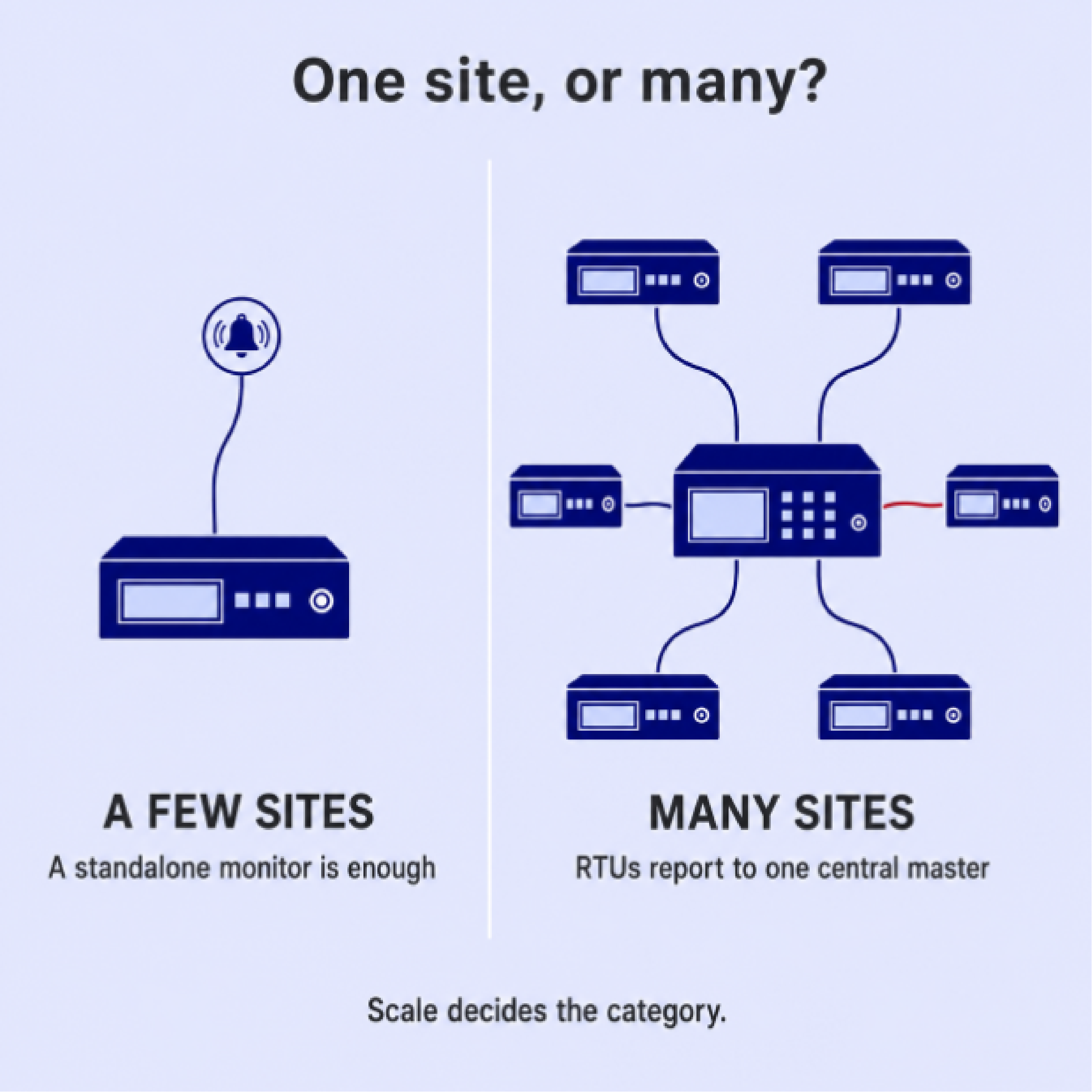
Sensaphone describes its products as an "easy, cost-effective, cloud-based monitoring solution," and it aims them at small businesses, greenhouses, medical cold storage, vacation properties, and decentralized water and wastewater sites. The product range spans telephone-line, Ethernet, cellular, and satellite communication, from the compact 400 and 800 up to the Sentinel line and the rack-mountable IMS-4000.
For a single facility, this is a reasonable fit. A municipal water authority with one rural lift station, a greenhouse, or a cold-storage room usually has no reason to stand up a central management system, configure enterprise firewalls, or translate industrial protocols. A standalone device that sends a text or a voice alert does the job with very little overhead. If that describes your situation, a simple standalone unit is a fair answer, and several of the alternatives below serve that same single-site use case well.
The picture changes when environmental monitoring is one part of a larger, multi-site network. That is the category the rest of this guide focuses on.
The alternatives sort into a few architectural families. We'll start with the integrated category we build for, then work through the others, noting the use case each tends to fit based on how each vendor describes its own products.
This is the category we build for at DPS. An RTU in this class monitors environmental conditions alongside equipment alarms, power, and site security in one device, and reports over standard protocols into a central master.
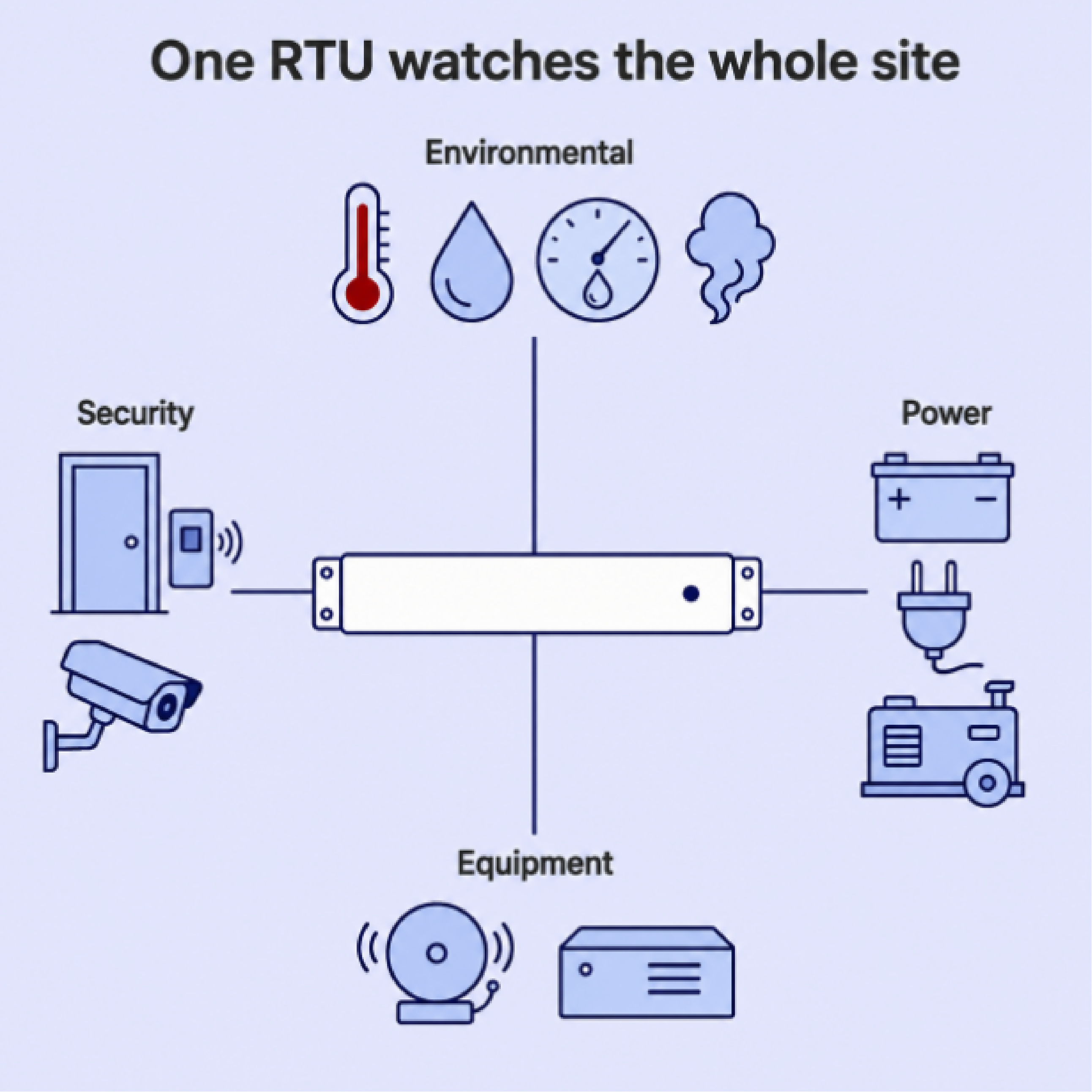
It is aimed at operators running unmanned or remote sites where monitoring is one part of the network. Our NetGuardian RTUs and the dedicated TempDefender environmental RTU fall here, and we cover this fit in detail below.
These are compact units built to drop into a 19-inch equipment rack, with an onboard web interface and standard IT protocols.
These use a central intelligent gateway that links to expansion modules, so a single system can scale across a large floor or many sites.
The details below were gathered from each vendor's published materials and may have changed since publication. Confirm current specifications with the manufacturer before you buy.
| Platform | Typical best-fit use case | Architecture | Protocol and NMS reporting | Power and site hardening |
|---|---|---|---|---|
| DPS NetGuardian and TempDefender | Integrated multi-site critical infrastructure | RTU plus optional T/Mon master or third-party SNMP manager | SNMP v1, v2c, v3, DNP3, Modbus, Transaction Language 1 (TL1) | Native -48 VDC and +24 VDC, NEBS compliance testing |
| Sensaphone (Sentinel, Web600, others) | Single standalone facilities | Standalone device with vendor cloud portal and local web | SNMP traps and Modbus TCP on some models | Typically standard AC power |
| Vertiv Geist (Watchdog) | IT racks and edge sites | Compact standalone with onboard web | SNMP, plus XML, JSON, CSV | Power over Ethernet (PoE) or AC |
| APC NetBotz | Data centers wanting environmental plus security | Appliance within Schneider EcoStruxure | SNMP within the EcoStruxure ecosystem | PoE or AC |
| AVTECH Room Alert | Security-sensitive IT and government networks | Standalone with onboard web | SNMPv3, HTTPS, TLS, JSON | PoE or AC (32S adds an uninterruptible power supply, or UPS) |
| AKCP | Large modular sensor networks | Gateway plus expansion, AKCPro Server | SNMP, Modbus, BACnet, RADIUS, TACACS+ | PoE or AC, optional cellular and mini-UPS |
| InfraSensing (ServersCheck) | Rugged outdoor and telecom cabinets | Modular low-power gateway | SNMP, Modbus (serial and TCP), REST API | PoE, AC, or -48 VDC |
| Monnit (ALTA) | Wide-area, hard-to-cable sites | Wireless sensors plus gateway and iMonnit cloud | Reports through gateway to cloud or local | Battery sensors, gateway on AC, PoE, or cellular |
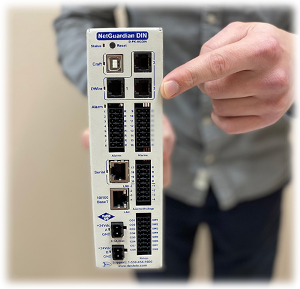
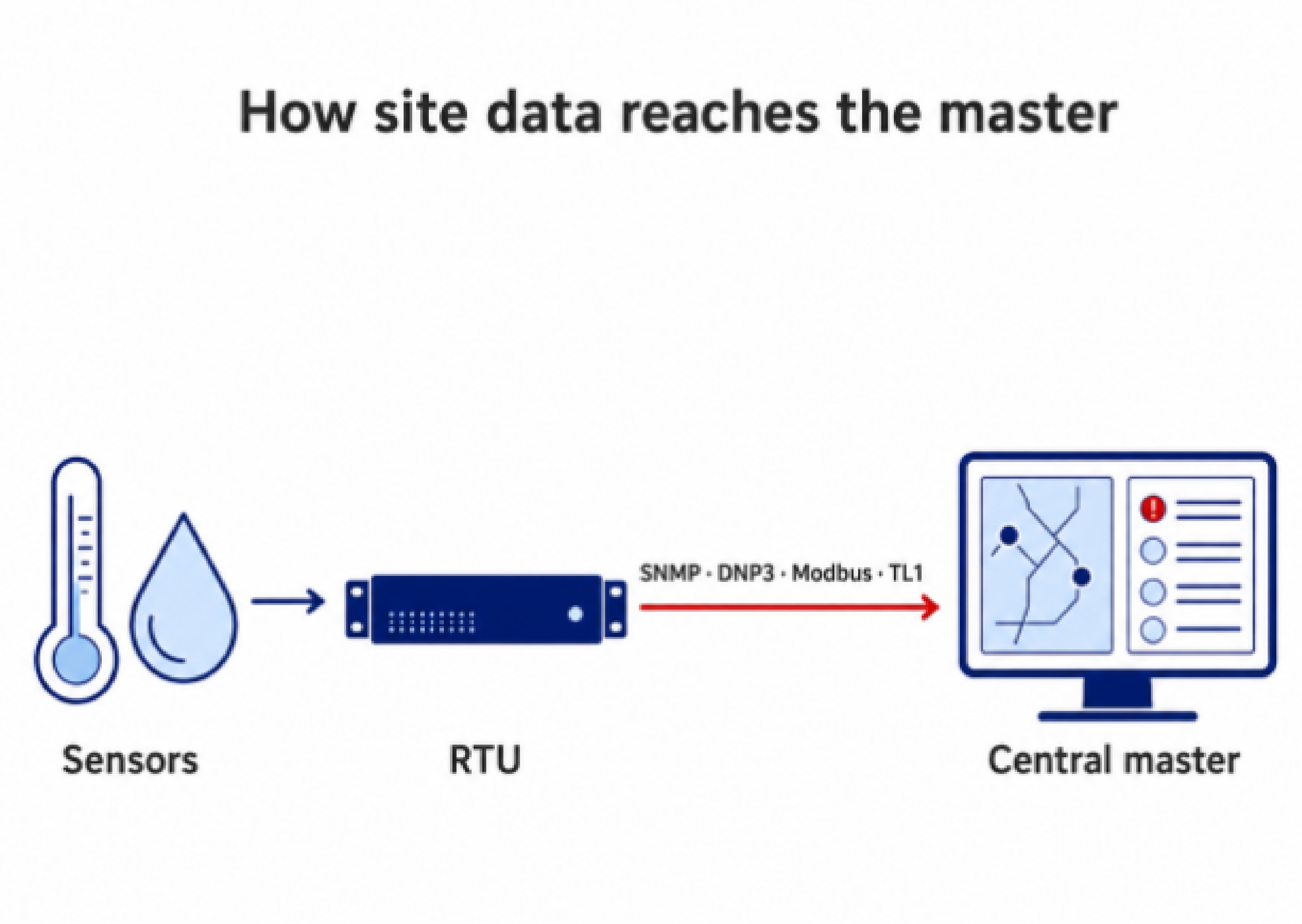
If environmental monitoring is one piece of a larger network, our approach is to put everything you need to watch at a site into a single RTU. A NetGuardian monitors temperature, humidity, water intrusion, smoke, and door access alongside equipment alarms, power (AC voltage, battery, rectifier, and generator), and site security, then reports it all over SNMP, DNP3, or Modbus. For a dedicated temperature and environmental unit, the TempDefender does the same job in a focused package.
That single unit reports into a central master. You can point it at our own T/Mon master for a full multi-protocol view, or into a third-party SNMP manager such as SolarWinds if that is what your team already runs. For a handful of sites you can even run each RTU's web interface as the whole system, and add a master once the site count grows. We walk through that progression in our overview of remote environmental monitoring, and how the alerting works in our piece on environmental alarm monitoring.
Environmental threats are a big part of why we bundle sensing with everything else. As co-founder and CEO Bob Berry writes in 100% Uptime, temperature, humidity, and floor water can harm entire racks of equipment at once, and the equipment itself was not built to report those conditions. Without a separate sensor watching the room, the first sign of trouble is often a piece of gear that has already failed. A short primer on how the measurement side works is in our guide to temperature monitoring systems.
A few things shape how we build for this category:
"It's such a complete solution. If I got hit by a bus tomorrow and, the next day, my TempDefender gets hit by lightning, all my boss would have to do is call DPS."
Our typical deployment runs around 40 to 50 sites, and ranges from a single RTU up to networks past 1,000 sites. From a telecom operations perspective, that is the range where an integrated RTU tends to earn its keep.
Some Sensaphone products do. The Web600, for example, is described by the manufacturer as supporting SNMP traps and functioning as a Modbus TCP device. If native, multi-protocol reporting into a network management system is central to your deployment, that is worth confirming model by model.
For one isolated site with only environmental sensors, a compact standalone unit is usually the simplest answer, and several products in this guide fit that use case. The calculation changes once you are managing many sites or need equipment, power, and security monitored in the same device. That is where an integrated RTU such as a DPS NetGuardian or TempDefender tends to be the better long-term choice.
Yes. An integrated RTU such as a NetGuardian is designed to watch environmental conditions, equipment alarms, power, and site access together and report them over one set of protocols, which can reduce the number of separate boxes at a site.
Not always. Up to roughly ten sites, many operators run each RTU's own web interface with email or text alerts. Beyond that, a central master such as our T/Mon, or a third-party SNMP manager, keeps every site in one view instead of many separate logins.
Devices built for telecom and utility sites often accept -48 VDC or +24 VDC natively. Our NetGuardian and TempDefender RTUs run directly on those plants, and among the alternatives here, InfraSensing also lists a -48 VDC input.
Environmental monitoring is easy to put off until the next incident. Waiting for that incident is a risk, and the cost of downtime keeps climbing. The Uptime Institute has reported that, for two years running, one in five organizations said their most recent significant outage cost more than a million dollars, and roughly four in five have said their most recent serious outage could have been prevented with better management and processes (Uptime Institute).

Keeping equipment inside its recommended envelope, which the American Society of Heating, Refrigerating and Air-Conditioning Engineers (ASHRAE) places at 18 to 27 degrees Celsius in its TC 9.9 guidelines, starts with knowing the conditions in the first place.
If you tell us what you're trying to monitor and how your sites are set up, we'll help you figure out the right fit, whether that turns out to be a single RTU or a network of them reporting to a master. Reach out through our contact page or call 1-800-693-0351 to talk with an application engineer about your project.

Andrew Erickson
Andrew Erickson is an Application Engineer at DPS Telecom, a manufacturer of semi-custom remote alarm monitoring systems based in Fresno, California. Andrew brings more than 19 years of experience building site monitoring solutions, developing intuitive user interfaces and documentation, and opt...