Check out our White Paper Series!
A complete library of helpful advice and survival guides for every aspect of system monitoring and control.
1-800-693-0351
Have a specific question? Ask our team of expert engineers and get a specific answer!
Sign up for the next DPS Factory Training!
Whether you're new to our equipment or you've used it for years, DPS factory training is the best way to get more from your monitoring.
Reserve Your Seat Today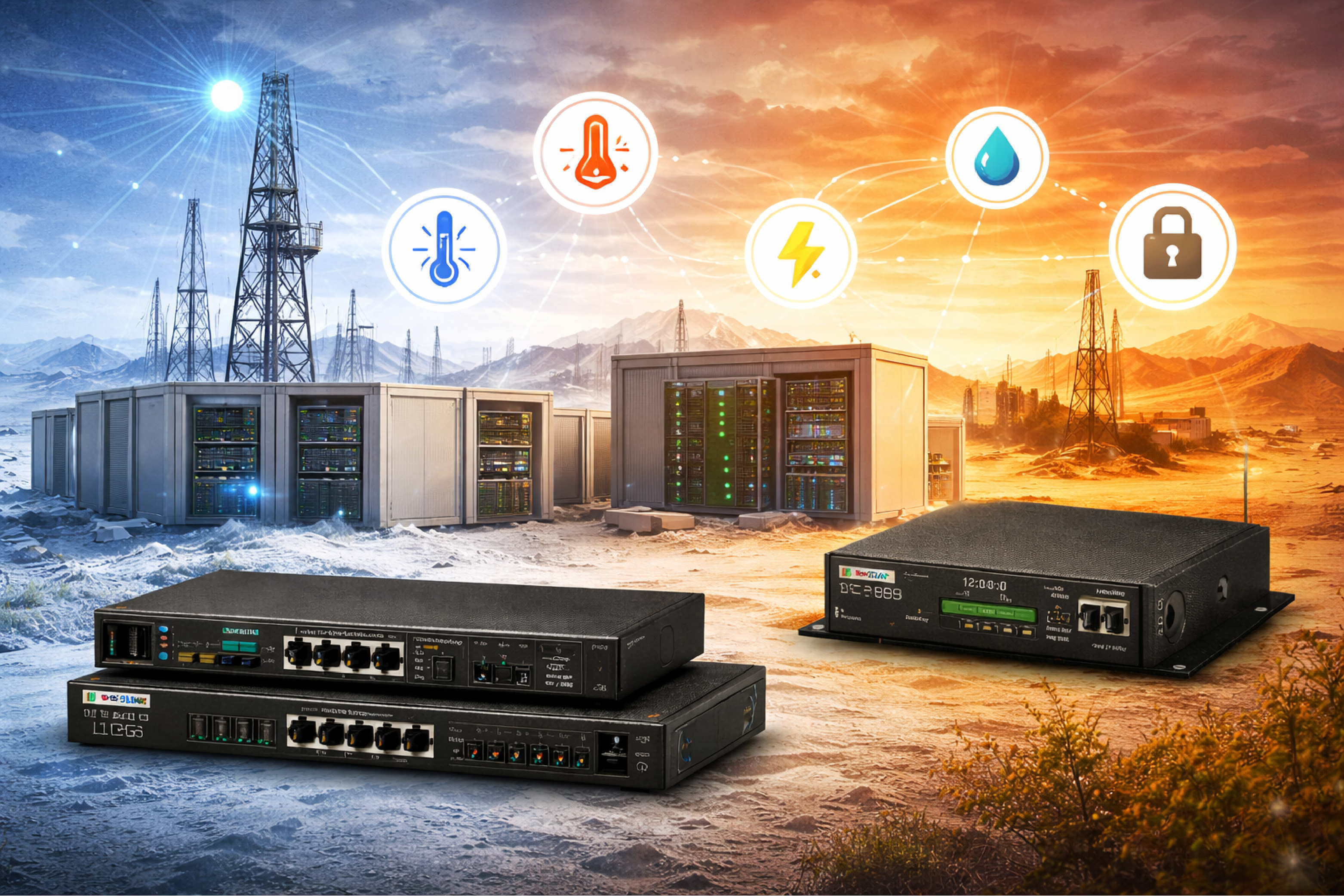
When choosing a remote monitoring system for telecom sites, technical specifications tell only part of the story. Real-world performance depends on how well the equipment matches your specific capacity needs, environmental conditions, and growth trajectory.
Both DPS Telecom and Dantel manufacture proven remote monitoring equipment. Dantel's WebMon Edge and our NetGuardian series share the same core purpose: monitoring critical equipment and environmental conditions at unmanned sites. Both have served major carriers for decades.
This comparison evaluates these platforms across several dimensions: base capacity and expansion options, alarm processing approaches, environmental specifications, and support models. Through working with hundreds of telecommunications and utility clients, we've identified the factors that typically matter most when selecting remote monitoring equipment. This article examines how each platform addresses these requirements.
Dantel's WebMon Edge is an intelligent remote alarm monitoring appliance designed for telecom sites. It combines telemetric sensors, network transport, and security capabilities in a single unit rated for harsh environments.
The WebMon Edge family represents Dantel's third-generation IP-based monitoring platform, building on over 40 years in the industry. Major carriers including AT&T, Verizon, and Sprint have deployed Dantel solutions, demonstrating the reliability of their approach.
Key characteristics of the WebMon Edge include:
The WebMon Edge is designed as an all-in-one solution. A single unit includes multiple transport options and processing capabilities for sites with moderate monitoring requirements.
Before comparing specific models, assess what you actually need to monitor. This determines which platform can grow with your network.
Most telecom sites start with basic requirements:
This typically translates to 8-12 discrete alarm points and 2-4 analog sensors at a new site. However, networks rarely stay static. Within 2-3 years, you often add network expansion equipment, additional security sensors, or more detailed environmental monitoring.
The question becomes: do you deploy equipment sized for current needs, knowing you'll add units later? Or do you install higher-capacity equipment from the start?
Both approaches work. Smaller units keep upfront costs lower. Higher-capacity units eliminate the need to return to sites for equipment additions. The right choice depends on your budget cycle, site access difficulty, and growth certainty.
Our NetGuardian series provides remote site monitoring through purpose-built telemetry units. We manufacture these RTUs at our California facility with a focus on customization and expandability.
The NetGuardian family spans multiple models to match different site requirements:
We engineer each RTU with these capabilities:
At DPS, we offer model variants to match your specific transport needs. Our NetGuardian 216F includes dual fiber SFP uplinks, while other models support cellular modems or dial-up backup.
The most significant technical difference between these platforms is monitoring capacity.
| Feature | Dantel WebMon Edge | DPS NetGuardian Series |
|---|---|---|
| Discrete Inputs | 8 (isolated) | 2-176 (isolated) |
| Analog Inputs | 0 standard (up to 128 via external hubs) | 2-8 built-in (4 minor/major high/low thresholds each) |
| Control Relays | 2 | 2-8 depending on model |
| Serial Ports | 1-2 | 1-8 depending on model |
| Ping Monitoring | Up to 32 devices | Up to 32 devices |
For small sites with limited alarm points, both solutions handle the requirements. The difference emerges as monitoring needs expand.
We designed the NetGuardian 832A for comprehensive monitoring needs. It starts with 32 native discrete inputs. It expands to 176 points when needed. A single NetGuardian with higher capacity can do a more elegant job than an overwhelmed single RTU or an installation of multiple smaller units at one location.
Following the typical standard of "one RTU per site" affects network architecture in several ways:
A regional carrier monitoring 40 cell sites would typically deploy one RTU per site, whether using WebMon Edge or NetGuardian. In an initial deployment with approximately 8 alarm points per site, both platforms meet the requirement.
As site requirements evolve - such as adding security systems, additional HVAC zones, or expanded power monitoring - operators may reassess capacity needs. Platforms with higher native input capacity can accommodate future growth within the same device, while platforms sized for current requirements may be supplemented with additional monitoring hardware as needed. The appropriate approach depends on growth expectations, site access considerations, and overall network architecture preferences.
Both platforms support standard protocols for integration with existing infrastructure.
WebMon Edge protocols:
NetGuardian protocols:
For multi-vendor environments, both platforms report via SNMP to third-party managers like SolarWinds, IBM OpenView, or Castle Rock. Standard SNMP compatibility means either solution integrates with existing network management systems.
The architectural difference appears in complex protocol scenarios. As any remote-site device would, WebMon Edge handles protocol conversion locally at each site. We typically use our T/Mon master station for protocol mediation across the network. T/Mon aggregates alarms from DPS equipment and RTUs from other manufacturers into a single interface.
For organizations needing central management of existing equipment, T/Mon can mediate alarms from existing Dantel devices and RTUs from many other manufacturers. This eliminates the need for immediate infrastructure replacement and paves the way for additional infrastructure flexibility later.
Dantel emphasizes extreme environmental tolerance in the WebMon Edge design. The unit operates from -40 C to +70 C. It carries full NEBS Level 3 compliance.
This specification matters for specific deployments:
NetGuardian RTUs operate from 0 C to +60 C in standard configuration. For most telecom sites, this range covers typical conditions. Controlled equipment shelters and data centers rarely see temperatures outside this range. We can provide extended temperature versions when deployment conditions require them, often with an operating temperature of approximately -30 C to +70 C (varies slightly by RTU model).
We've deployed NetGuardian units in demanding environments for over 37 years. The equipment proves reliable in field conditions across telecommunications and utility networks.
Remote monitoring systems handle alarm logic in two basic ways: distributed intelligence at each site or centralized processing at a master station. Each approach has advantages depending on network architecture.
Distributed processing places logic in the remote unit. The device evaluates conditions locally and generates alarms based on its own rules. This works well for standalone sites or when the master station has limited processing capability.
Centralized processing collects raw data from remote sites and applies logic at the master level. This allows more sophisticated correlation across multiple sites and makes it easier to update alarm rules network-wide.
WebMon Edge emphasizes distributed intelligence. The unit can create "derived alarms" using Boolean logic. Multiple input conditions trigger higher-severity alerts when they occur simultaneously.
For example, configure the Edge to escalate from Minor to Critical when both "Generator Fail" and "Battery Low" alarms are active together. This local intelligence reduces false alarms and provides better context.
NetGuardian RTUs support multi-threshold analog alarms and basic if-then control logic. Each analog input can trigger up to 4 distinct alarm levels based on value ranges. For more complex event correlation across multiple sites, we typically handle that logic at the T/Mon level rather than in individual RTUs.
The architectural question is where intelligence should reside. For standalone sites, local processing works well. For larger networks, centralizing correlation logic in T/Mon provides more powerful capabilities across entire infrastructure.
Modern RTUs often go beyond simple contact closures by applying logic to incoming data, allowing operators to identify emerging problems before they escalate into service-impacting events.
DPS Telecom supports this capability through Analog Thresholds, Derived Alarms, and Derived Controls. While terminology varies by vendor, the underlying concepts are familiar to telecom operators.
An analog threshold can be thought of like a vehicle's fuel gauge: the gas light doesn't turn on the moment fuel begins to drop - it activates when the needle reaches a defined point that signals attention is needed. DPS RTUs allow operators to define multiple threshold levels per analog input, creating graduated alerts such as warning, minor, major, and critical. This provides early indication that conditions are trending in the wrong direction, not just notification after a failure occurs.
Once thresholds generate alarms, those alarms can be used as building blocks for higher-level logic. Derived Alarms allow operators to combine multiple conditions into a single actionable event. For example, a system can declare a critical emergency only when both fuel level is low and battery voltage is low, providing better context than either condition alone. Derived Controls extend this logic to automated actions, such as triggering notifications or initiating predefined control responses.
This structured approach allows complex site behavior to be expressed using clearly defined alarm conditions rather than custom code. Operators can review, adjust, and standardize logic across sites while maintaining consistent behavior throughout the network.
In practice, the choice between local alarm logic, centralized processing, or a combination of both depends on network size, operational preferences, and how much intelligence an organization wants to distribute at the site versus the master station. DPS systems are designed to support these decisions through configurable thresholds and derived logic that remain transparent and easy to maintain.
Both solutions provide relay outputs for remote equipment control. Common applications include:
WebMon Edge includes 2 Form C relays. The NetGuardian 216 matches this with 2 relays, while the 832A model provides up to 8 control outputs.
Serial reach-through capability differs more significantly. This feature lets technicians remotely access console ports on routers, switches, and other equipment at the site.
WebMon Edge supports 1-2 serial ports. The NetGuardian 832A includes 8 serial ports, effectively functioning as a terminal server in addition to its monitoring role. For sites with multiple pieces of equipment requiring console access, this consolidates functions that might otherwise require separate terminal server hardware.
At DPS Telecom, we build RTUs to order at our Fresno facility. This vertical integration means we can customize units without charging non-recurring engineering fees for reasonable order quantities.
Common customization requests include:
We provide free lifetime firmware upgrades for our RTUs. As we develop new features or protocol support for one client, those capabilities become available to all customers through software updates.
Our technical support model emphasizes direct access to the engineers who design our products. When you call with a complex integration question, you're speaking with someone who understands the hardware at a fundamental level.
We back this with a 30-day no-risk guarantee on new purchases.
Dantel similarly supports their products and offers upgrade paths for older equipment. Their commitment to backward compatibility means even older 460 ACS alarms can integrate with modern WebMon systems.
For certain deployment scenarios, WebMon Edge offers advantages:
Extreme environment installations: The -40 C to +70 C operating range and NEBS Level 3 certification provide confidence for outdoor cabinets in harsh climates without additional environmental protection, especially when you need the formal NEBS certification rather than self-stated compliance alone.
Small/medium standalone sites: At sites where you don't need dozens and dozens of alarm inputs, 8 can be the right fit.
Existing Dantel infrastructure: Organizations with significant investment in Dantel master stations and existing WebMon units may prefer staying within that ecosystem for consistency.
Through working with organizations on remote monitoring deployments, certain scenarios tend to point toward high-capacity platforms like some NetGuardian RTU models.
Networks rarely shrink. Your (hypothetical) radio site with 10 alarm points today often has 20+ within a few years as equipment is added. Security requirements increase. Environmental monitoring becomes more detailed.
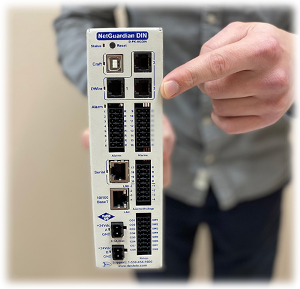
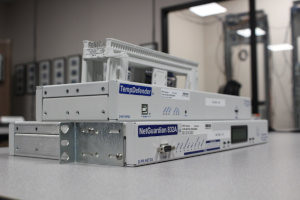
Starting with a NetGuardian 216 provides 16 discrete inputs from day one. The 832A handles 32 points natively and expands to 176. This eliminates the need to deploy additional RTUs later. Of course, using a TempDefender RTU from DPS (essentially a small NetGuardian) or a NetGuardian DIN will give you 8 discrete inputs exactly.
Some sites benefit from consolidating multiple functions in one device. NetGuardian RTUs can function as terminal servers, providing remote console access to other equipment at the site. The 832A's 8 serial ports reduce the need for separate terminal server hardware.
For networks where technicians regularly need remote access to router or switch consoles, this consolidation simplifies site architecture.
Standard protocols handle most monitoring scenarios. However, some equipment uses proprietary formats or requires specific interface configurations.
We develop custom firmware for these situations. If you need to monitor equipment that speaks a protocol we don't currently support, our engineering team can add that capability. This approach has led to T/Mon supporting 30+ protocols.
Equipment that operates reliably for 15-20 years delivers better total cost of ownership than solutions requiring replacement sooner. We continue supporting and providing firmware updates for NetGuardian units deployed decades ago (although naturally our engineers do shift attention to newer platforms as they arrive).
Organizations planning for long equipment lifecycles may prioritize this extended support model.
For organizations operating mixed-vendor environments, integration flexibility matters.
Both WebMon Edge and NetGuardian RTUs report via SNMP, making them compatible with third-party network management systems like SolarWinds, IBM OpenView, or Castle Rock.
If you're standardizing on a particular SNMP manager, either solution integrates successfully. The choice then comes down to capacity, support, and feature requirements rather than protocol compatibility.
We frequently work with clients transitioning from other systems. Our T/Mon platform can mediate alarms from existing Dantel equipment, Badger remotes, and other manufacturers. This lets you upgrade sites gradually without requiring a complete infrastructure replacement.
Here's a direct comparison of specifications for reference:
| Specification | Dantel WebMon Edge | DPS NetGuardian 216 | DPS NetGuardian 832A |
|---|---|---|---|
| Discrete Inputs | 8 | 16 | 32 (expandable to 176) |
| Analog Inputs | 0 standard (you may order some as an option), additional 128 via hubs | 2-8 | 8+ |
| Control Relays | 2 | 2 | 8 |
| Serial Ports | 1-2 | 1 | 8 |
| Operating Temp | -40 C to +70 C | 0 C to +60 C (or -30 C to +70 C with "Industrial Temperature Range" option) | 0 C to +60 C (or -30 C to +70 C with "Industrial Temperature Range" option) |
| Protocols | SNMP, DCP, TL1, Modbus | SNMP, DCP(x) | SNMP, DCP(x) |
| Web Interface | Yes | Yes | Yes |
| LCD/LED Display | LED indicators | No | Yes, with 16 LEDs |
| Dimensions | 9"x6"x1.75" | 10.5"x6.6"x1.7" | 1U, 19" rack mount |
| Certifications/Compliances | NEBS Level 3, FCC, UL | Tested in DPS EMI chamber; scan results available upon request | Tested in DPS EMI chamber; scan results available upon request |
(The above data was gathered by reviewing published Dantel product information. It may not capture the full breadth of offerings, and some data may have changed since it was reviewed.)
Environmental ratings are an important factor when selecting remote monitoring equipment for telecom sites, particularly in locations exposed to temperature extremes, vibration, or limited climate control.
Some platforms advertise extended operating temperature ranges or formal third-party certifications such as NEBS. These specifications can be valuable for deployments that require documented compliance as part of procurement or regulatory processes.
At DPS Telecom, we design and validate our RTUs for real-world telecom environments through extensive internal testing conducted at our Fresno headquarters. Our environmental and stress testing procedures closely mirror the conditions evaluated in formal NEBS testing, including temperature variation, operational stress, and long-duration reliability. This approach allows us to deliver equipment that performs reliably in harsh field conditions without incurring the added cost associated with third-party certification on every model.
For organizations that require formal third-party certification rather than internal compliance documentation, DPS can pursue NEBS certification on specific configurations. As with any third-party certification process, this adds time and cost to the project, and is typically reserved for deployments where formal certification is a contractual or regulatory requirement.
In practice, many telecom operators deploy DPS RTUs in outdoor cabinets, unconditioned shelters, and other demanding environments based on proven field performance and internal compliance testing. The right choice depends on whether your deployment prioritizes documented third-party certification or field-validated reliability and cost efficiency.
The technical specifications provide a starting point, but several practical factors influence which platform works better for specific situations.
Current vs. projected capacity: If your sites have stable, well-defined alarm requirements with no expansion plans, equipment sized to current needs makes sense. If you expect growth or are consolidating monitoring from multiple older systems, higher initial capacity reduces future equipment additions.
Environmental demands: Sites in extreme temperature environments benefit from equipment explicitly rated for those conditions. NEBS Level 3 certification provides documented tolerance for temperature extremes, shock, and vibration.
Integration complexity: Standard SNMP integration works with both platforms. Complex multi-protocol environments may benefit from platforms designed around protocol mediation capabilities.
Support model preference: Consider whether you prefer working with a smaller, specialized manufacturer or a company with broader industry presence. Technical support approaches differ between vendors.
Budget structure: Initial equipment cost differs from total cost of ownership. Factor in expected equipment lifespan, support costs, and potential for expansion when comparing options.
Both platforms serve their intended purpose reliably. The optimal choice depends on matching equipment capabilities to your specific requirements and operational preferences.
Both platforms have proven themselves in demanding telecom environments. The optimal choice depends on matching equipment capabilities to your operational requirements.
We offer a 30-day evaluation period for NetGuardian RTUs. This provides time to deploy equipment in your actual environment and verify it meets your requirements before making a final commitment.
Our application engineering team can discuss your specific monitoring requirements. Whether managing a handful of sites or a national network, we'll provide technical specifications, configuration recommendations, and references from similar deployments.
For technical discussions about your monitoring needs, contact our team at 1-800-622-3314. Visit dpstele.com to download datasheets for the NetGuardian series or explore our complete range of remote monitoring solutions.

Andrew Erickson
Andrew Erickson is an Application Engineer at DPS Telecom, a manufacturer of semi-custom remote alarm monitoring systems based in Fresno, California. Andrew brings more than 19 years of experience building site monitoring solutions, developing intuitive user interfaces and documentation, and opt...