Check out our White Paper Series!
A complete library of helpful advice and survival guides for every aspect of system monitoring and control.
1-800-693-0351
Have a specific question? Ask our team of expert engineers and get a specific answer!
Sign up for the next DPS Factory Training!
Whether you're new to our equipment or you've used it for years, DPS factory training is the best way to get more from your monitoring.
Reserve Your Seat Today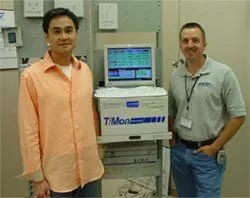
Startec Global Communications provides easy-to-use telephone, Internet, and communications services. Since 1989, Startec has worked with international, long-distance carriers and Internet service providers transacting with the world's emerging economies. Startec aims to deliver reliable communication services by understanding customer needs and providing strong value.
Scott Ho is the Associate Director of Field Operations at Startec, and Vince Halcomb is the Senior Manager of the NOC.
| Industry | Telecommunications and Internet services |
|---|---|
| Company Type | Communications services provider working with international carriers and ISPs |
| Geography/Coverage | International business; T/Mon deployed at a New York site |
| Primary Challenge | Monitoring platform instability and limited access to timely vendor support, increasing manual checks and the risk of missed alarms |
| Solution Deployed | T/Mon NOC alarm management platform with remote operation; DPS factory training for faster rollout readiness |
| Key Result | Improved remote visibility and day-to-day monitoring confidence, with less reliance on manual device checks |
| Products Used | T/Mon (Alarm Master platform); team also reviewed NetGuardian RTUs during training |
Startec supports voice and Internet communications services for customers doing business in emerging economies. For the NOC and field operations team, this means maintaining awareness of network and site conditions and quickly responding to alarms that could affect service delivery.
Before selecting DPS Telecom, Startec's NOC leadership needed to replace an older monitoring system they had used for approximately six years. The existing solution had become unreliable and was difficult to recover quickly when problems occurred.
Halcomb and Ho described long delays when trying to reach support, including multi-hour hold times and extended follow-ups. When the monitoring system went down, the support needed to bring it back online quickly was not consistently available. Multiple 2-day outages occurred over the course of one month.
These outages created more work for Startec and increased the chance of missing a critical alarm. During downtimes, staff time was redirected to manual device checks. Without system-wide visibility, a correctable issue could go unnoticed and escalate into a larger incident.
Startec selected DPS Telecom to replace their previous alarm management system. As Halcomb described it, they were looking for an alarm management system to take the place of the current one due to performance issues and poor support responsiveness.
For organizations that run a NOC, centralized alarm management is about more than collecting alerts. A system like DPS Telecom's T/Mon is designed to present alarms in a consistent format, support escalation and acknowledgement workflows, and provide the visibility needed for operators to triage issues quickly. This is especially valuable when teams must monitor many sites and technologies at once.
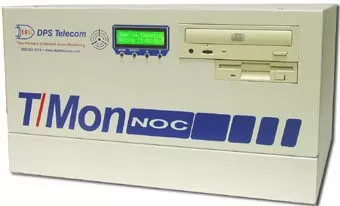
After examining available options, Startec ordered a T/Mon NOC to monitor their network.
Startec chose to deploy T/Mon at its New York site. Halcomb and Ho planned to operate the system remotely via IP Terminal Servers. In this setup, remote administration and monitoring are essential because staff may not have the benefit of walking into an adjacent room to check the T/Mon unit directly.
To prepare, Halcomb and Ho attended the DPS Factory Training class. They felt the course provided immediate value because they could see installation and monitoring procedures ahead of time and plan for the rollout.
Because DPS instructors are involved in product design and technical support, they can address practical deployment questions that come up in real NOC environments. Ho emphasized that, unlike some training experiences where questions are deferred, the instructor was able to answer questions immediately and work through hands-on details.
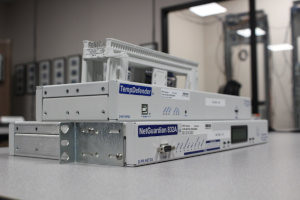
During training, Halcomb and Ho got an in-depth look at the features of the T/Mon NOC and NetGuardian RTUs. In a typical DPS architecture, NetGuardian RTUs gather discrete alarms and telemetry at the site level (door alarms, power plant alarms, environmental conditions, etc.) and can forward those alarms via SNMP and other methods into a master station like T/Mon. Startec referenced this training exposure as helpful for building a complete understanding of the system and how monitored events translate into operator action.
By moving to T/Mon, Startec aligned its monitoring strategy around a dedicated alarm management platform intended for NOC operations. The goal was to reduce the operational disruption associated with monitoring system downtime and to restore confidence that alarms would remain visible to the team.
With T/Mon deployed at the New York site and designed for remote operation, Halcomb and Ho emphasized the importance of being prepared to administer the platform over the network. The DPS factory training supported that objective by giving them practical exposure to installation and monitoring procedures, along with the chance to ask implementation-specific questions.
T/Mon LNX (Alarm Master platform) - Centralized alarm management master station for NOC visibility and operator workflows.
NetGuardian RTU product family - Site-level alarm collection and SNMP reporting to upstream systems like T/Mon.
An alarm management system collects alarms from network elements and site infrastructure, then presents them in a consistent operator interface for acknowledgement, escalation, and reporting. DPS Telecom's T/Mon is purpose-built for this master-station role.
When the monitoring platform is unavailable, operators lose centralized visibility and must rely on manual checks. This can slow response and increase the chance that a critical alarm is missed or noticed late.
Startec planned remote operations via IP Terminal Servers. In general, remote access methods allow administrators to manage the alarm master station without being physically present at the equipment location.
RTUs typically collect discrete alarms and analog telemetry at remote sites (power, environment, security, and equipment status). They can forward those events to a master station like T/Mon for centralized NOC visibility and workflow control.
Factory training helps teams understand installation procedures, monitoring workflows, and day-to-day operations before rollout. Startec reported that hands-on exposure improved their understanding of what the system was doing and why.
If you are replacing an aging alarm monitoring platform or need dependable, centralized visibility across sites, DPS Telecom can help you evaluate the right T/Mon and RTU architecture for your NOC.
To receive a price quote or ROI analysis, call 1-800-693-0351.