Download our free Monitoring Fundamentals Tutorial.
An introduction to Monitoring Fundamentals strictly from the perspective of telecom network alarm management.
1-800-693-0351
Have a specific question? Ask our team of expert engineers and get a specific answer!
Sign up for the next DPS Factory Training!
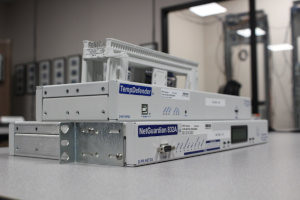
Whether you're new to our equipment or you've used it for years, DPS factory training is the best way to get more from your monitoring.
Reserve Your Seat TodayMidvale Telephone Exchange, Inc. (MTE), a family-owned rural telecom provider serving Idaho and Arizona, wanted a practical way to monitor multiple remote sites and entrances without constantly switching between camera views. Using DPS Telecom SiteMON IP cameras and the DPS View multi-camera workstation software, MTE centralized live video in a grid layout for faster security checks and day-to-day operational observation.
| Industry | Telecommunications (rural telephone and internet service) |
|---|---|
| Company | Midvale Telephone Exchange, Inc. (MTE) |
| Company Type | Family-owned and operated service provider |
| Geography/Coverage | Idaho and Arizona |
| Primary Challenge | View multiple IP camera feeds at once for site security and observation without toggling between individual camera pages |
| Solution Deployed | DPS Telecom SiteMON IP cameras managed using DPS View grid-style multi-camera viewing software |
| Implementation Timeframe | DPS delivered a prototype of the requested viewing software in about three weeks after the idea was discussed |
| Key Result | Centralized multi-camera visibility on a dedicated workstation monitor, supporting access control monitoring and remote situational awareness (equipment and weather conditions) |
| Products Used | SiteMON IP Cameras; DPS View multi-camera viewing software |

Midvale Telephone Exchange, Inc. (MTE), based in Idaho, is a family-owned and operated company that has been in operation since 1909. MTE originally offered service in Midvale, Idaho, a farming community of just a few hundred people. Today, MTE offers rural telephone and internet service in Idaho and Arizona and has earned a reputation of taking telephone services where no services previously existed.
Brian Graham, a Central Office Technician at MTE, was looking for a better way to manage camera visibility across multiple sites. After learning about DPS Telecom SiteMON IP cameras, he saw an opportunity to improve both security monitoring and general site observation from the office.
MTE had IP cameras deployed at multiple remote locations. Each camera had a static IP address, making it possible to navigate directly to an individual camera when needed. However, that workflow still required switching from view to view.
What MTE wanted was straightforward: a single workstation view that could show multiple live camera feeds simultaneously in a grid. The goal was to speed up everyday checks for security and access control, while also supporting broader operational awareness at remote exchanges.
MTE selected DPS Telecom SiteMON IP cameras and worked with DPS on a multi-camera viewing approach that matched how technicians actually monitor facilities. The solution centered on a PC workstation running DPS View, which presents multiple SiteMON camera streams at the same time in a configurable grid-style layout.
"We talked to DPS about our idea, and it was no fewer than three weeks later that they had a prototype for us to try. That was amazing."
Graham shared the idea with DPS engineers during a Factory Training event. He explained the multi-camera viewing software he wanted, and DPS engineers gathered the requirements through practical follow-up questions to match MTE's workflow.
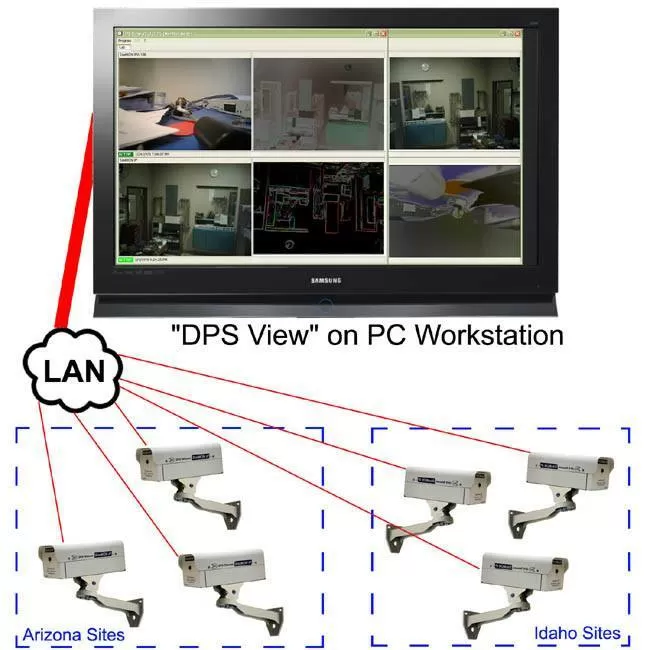
By combining SiteMON cameras with a grid-view workstation, MTE could keep multiple sites visible on-screen at all times. For teams with remote sites, this is often the difference between reactive checking (only opening a camera after a concern is raised) and proactive observation (spotting issues or suspicious activity earlier). For organizations building or expanding a similar camera-centric monitoring workflow, DPS Telecom recommends this same approach: dedicated camera visibility using SiteMON IP cameras and a workstation grid view designed for operations.
MTE emphasized speed and practicality. After the request was made, DPS provided a working prototype quickly, allowing Graham to test whether it solved the real-world problem of multi-camera visibility.
As Graham described, the turnaround time was a key differentiator compared with typical vendor experiences where feature requests can be delayed or ignored.
"That was amazing," he said. "I've worked with other vendors before. You bring up what you'd like one of their products to do, and it pretty much goes in one ear and out the other. When we were in Fresno at the Factory Training class and we talked to DPS about our idea, it was no fewer than three weeks later and I got a phone call. DPS said, 'Hey. We have a prototype of the software we want you to try.' I tried it out and told them, 'Yeah. It works great. That's exactly what we were looking for.'"
MTE uses the SiteMON cameras and DPS View for both security and operational awareness across sites in Arizona and Idaho.
Graham described the practical value of being able to interpret conditions remotely.
"Depending on the weather, I can also tell if the generator's running by looking at the steam coming out of the exhaust. The rest of the cameras are pretty much used for access control."
One example came from Scottsdale, Arizona, where cameras helped confirm another business was using MTE facilities. In addition, cameras used at remote sites can inform dispatch decisions; Graham noted that snow conditions at a site can be visually assessed before committing to travel.
"Right now, the snow's right about up to the doorknob. If we had to visit the site, we know it'd take a snowmobile and get into it."
For operations staff, speed is often less about raw network performance and more about minimizing clicks, context switching, and guesswork. DPS View addressed that by keeping multiple live feeds visible in a single layout.
"We keep all of the cameras up at the same time, so we don't have to toggle any views."
Graham configured a 2x3 camera view and dedicated a monitor to keep the grid visible continuously. He also noted the flexibility to expand the number of cameras on-screen based on monitor resolution.
"Right now, I've set up a 2x3 camera view," Graham explained. "We keep all of the cameras up at the same time, so we don't have to toggle any views. I have a dedicated monitor for them that I just keep up. I have no fewer than six monitors in my office. And that one is the one I keep up all the time. It never gets shut off. And the resolution is great. In fact, with the monitor I have now, I can even add three more cameras and still be able to see everything without having to go to an individual camera view."
Importantly, MTE achieved this visibility without adding unnecessary complexity. Graham emphasized that the configuration and day-to-day management were straightforward.
"We appreciate DPS. Like I said, I've never had a vendor react this quickly. That's why we keep buying. It's worked great."
For similar remote facilities, DPS Telecom often recommends combining video visibility with alarm and environmental monitoring (for example, door, generator, and power alarms) so that teams can correlate what they see on camera with actionable site alerts. DPS Telecom can help design a monitoring layout that fits how your NOC and field teams operate.
When technicians must check multiple locations throughout the day, a grid view reduces the time spent opening individual camera pages and provides faster situational awareness across entrances, equipment areas, and remote exchanges. DPS View is designed specifically to keep multiple SiteMON IP camera feeds visible at once.
Not always, but static IP addressing can simplify direct navigation to a specific camera feed. In this case study, MTE assigned static IPs to each camera and then used DPS View to avoid switching between separate camera sessions.
Yes. Many telecom and utility teams use cameras to verify weather conditions, check access routes, and visually confirm equipment state. SiteMON IP cameras can add this layer of visibility so technicians can make better-informed dispatch decisions.
DPS focuses on practical workflows: centralized viewing, configurable layouts, and tools designed for 24/7 operations. For organizations that need video to support alarms and remote site status, DPS Telecom can recommend an integrated approach that pairs video visibility with monitoring and alerting best practices.
If you need a practical way to keep multiple remote sites visible at once - without forcing your team to toggle between individual camera views - DPS Telecom can help you evaluate SiteMON IP cameras and the right workstation layout for your operation. Get a Free Consultation or call 1-800-693-0351 to speak with an expert about your project.