Download our free Monitoring Fundamentals Tutorial.
An introduction to Monitoring Fundamentals strictly from the perspective of telecom network alarm management.
1-800-693-0351
Have a specific question? Ask our team of expert engineers and get a specific answer!
Sign up for the next DPS Factory Training!
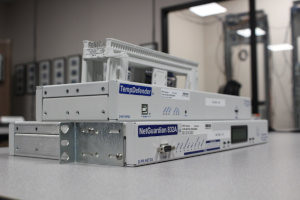
Whether you're new to our equipment or you've used it for years, DPS factory training is the best way to get more from your monitoring.
Reserve Your Seat TodayMedical equipment doesn't fail with warning. A server room that gets too warm, a slow water leak under a raised floor, an HVAC system running outside its normal range; these problems start quietly and get expensive fast. Remote environmental monitoring gives your team visibility into conditions at every facility, even unmanned ones, so you can respond before something actually breaks.
At DPS Telecom, we've helped medical facilities build monitoring systems that watch for exactly these kinds of threats, 24 hours a day, without requiring someone on-site.
Talk to an Engineer | 800-693-0351
The conditions that damage equipment aren't always obvious until it's too late. A comprehensive monitoring system tracks:
| Condition | Why It Matters |
|---|---|
| Temperature | Overheating is the leading cause of equipment failure in enclosed spaces |
| Humidity | Too high causes condensation and corrosion; too low creates static discharge risk |
| Water intrusion | Even a small leak under a raised floor can take out an entire room of equipment |
| Smoke detection | Early detection of fire conditions before suppression systems activate |
| Airflow | Confirms HVAC systems are actually moving air, not just running |
| Door access | Alerts when access panels or equipment rooms are opened unexpectedly |
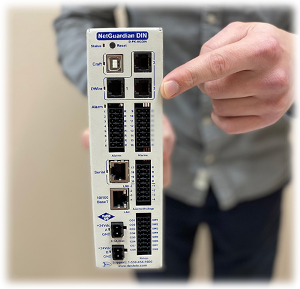
All of these conditions can be monitored from a single RTU (Remote Telemetry Unit) installed at each site, with alarms reported back to a central system or sent directly to staff via email or SMS.
RTUs act as your remote "eyes and ears" at each location. They connect to sensors, collect readings, and report alarms the moment something crosses a threshold you've defined.
For a single facility or a handful of sites, the RTU's built-in web interface can serve as your entire monitoring system. Staff log in and check status, or get a text when something triggers.
For organizations managing multiple facilities, a central alarm master aggregates data from all locations into one interface. You get a map view of all sites, color-coded by alarm status, with the ability to drill down to individual equipment locations. Serious alarms appear clearly. Lower-priority alerts can be filtered so staff aren't overwhelmed with noise.
Standard monitoring hardware often comes with fixed alarm points. DPS equipment lets you define your own thresholds for every sensor and route specific alarms to specific people.
For example: a temperature alarm in a server room might go to your IT team and facilities manager. A water detection alarm might go to your facilities contractor directly. A door access alert after hours might go to security.
The right person gets the right alert. No one gets flooded with alarms that aren't relevant to them.
DPS sensors use industry-standard 0-5VDC or 4-20mA interfaces, which means they work with our RTU platforms out of the box. The sensor lineup includes:
View D-Wire sensors and modules
A monitoring system is only useful if alarms reach the right people quickly. DPS systems support multiple notification methods:
In 100% Uptime, DPS CEO Bob Berry makes the point that reacting to problems after they occur is the wrong approach. The goal is to know about a condition before it becomes a failure, and to address it before it affects patient care or operations.
Explore alarm management systems
DPS Telecom has been building remote monitoring equipment since 1986. We've manufactured over 172,800 devices and worked with more than 1,500 organizations, including medical facilities that depend on continuous equipment uptime.
Approximately 80% of monitoring needs are met with our standard hardware. The remaining 20% gets custom engineering to fit exactly what you need.
Contact DPS Telecom | 800-693-0351
An RTU monitors conditions at a single site and can send alerts directly. An alarm master aggregates data from multiple RTUs into a single interface. For organizations with more than about 10 sites, a central alarm master is the right approach.
Yes. DPS RTUs support multiple protocols including SNMP, Modbus, and others, and are designed to integrate with existing infrastructure regardless of manufacturer or age.
RTUs can be configured to generate an alarm if they lose contact with the central system, so a communication failure itself becomes a reportable event.
Yes. DPS sensors are engineered to operate reliably across extreme temperature ranges, including outdoor installations and equipment shelters.
Every facility is different. The right system depends on how many sites you're managing, what equipment you're protecting, and how your team needs to receive alerts.
DPS Telecom engineers will work through your specific situation. No sales pressure, no one-size-fits-all pitch.