Check out our White Paper Series!
A complete library of helpful advice and survival guides for every aspect of system monitoring and control.
1-800-693-0351
Have a specific question? Ask our team of expert engineers and get a specific answer!
Sign up for the next DPS Factory Training!
Whether you're new to our equipment or you've used it for years, DPS factory training is the best way to get more from your monitoring.
Reserve Your Seat TodayFounded in 1894, Consolidated Communications is a family of companies providing advanced voice, data, and video services to both residential and business customers in Illinois and Texas. Consolidated Communications offers a wide range of services over its technologically advanced network, including local and long distance, high-speed Internet access, digital television, private line, and carrier services.
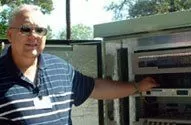
Billy Young, Central Office Engineer, Consolidated Communications
Billy Young is a Central Office Engineer for Consolidated Communications' Texas operations, and he recently found himself face-to-face with a monitoring challenge that many telecom teams recognize: getting the right mix of network interfaces, alarm points, and environmental durability in a very small footprint.
| Industry | Telecommunications |
|---|---|
| Company Type | Residential and business voice, data, and video service provider |
| Geography/Coverage | Illinois and Texas (project focused on Texas operations) |
| Primary Challenge | Find a reliable 1RU RTU that could operate in 110-degree Texas heat and fit a specific network architecture, including T1 with Frame Relay support |
| Solution Deployed | Custom-designed DPS Telecom NetGuardian 216T RTU with Frame Relay/T1 support |
| Key Result | Expanded detailed remote monitoring at a remote office and reduced truck rolls through remote access and visibility into critical equipment |
| Products Used | DPS Telecom NetGuardian RTUs; NetGuardian 216T |
Consolidated Communications operates a technologically advanced network delivering communications services across Illinois and Texas. Like most telecom providers, it supports distributed sites and cabinets where power and environmental conditions can change quickly, and where visibility is essential for keeping customers online.
To maintain uptime and speed response, teams often standardize on remote telemetry units (RTUs) to gather site data such as power plant voltage, battery condition, cabinet temperature, and intrusion status, then report alarms back to operations staff over the available transport.
Young was searching for an RTU that would function reliably in the 110-degree Texas heat.
"We wanted to monitor our cabinets, and there was nothing hardened out there that worked within our network architecture," Young said, adding "We were limited on space. We only had one rack unit."
Beyond temperature and space, Young needed a long list of technical requirements in a compact package:
For telecom operations, this combination matters because it determines whether the RTU can be deployed widely, integrated into existing backhaul, and maintained efficiently by technicians and NOC staff.
Young's search for a solution took him to several vendors. Some of them saw his desire for Frame Relay support as more of a nuisance than an opportunity.
"Absolutely not," recalled Young. "They said PPP was their existing design and they weren't going to change it."
When he had trouble finding an RTU to meet the unique demands of Consolidated's network, Young knew just where to turn.
"I've had a good relationship with DPS Telecom. I've been dealing with them for years," he said.
DPS Telecom's NetGuardian RTUs had already been performing well at Consolidated for quite some time.
"They're reliable," Young said. "We have about 160 deployed at this time, some have been deployed since '99, and I would say we might have a 1% failure rate."
That installed base mattered. In practice, an RTU is only as useful as its ability to stay online, gather accurate readings, and report alarms consistently - especially when conditions are harsh and sites are remote. DPS Telecom NetGuardian units are built for telecom environments where power, temperature, and access constraints are routine.
Young also recognized the value of reliable alarm monitoring during severe weather events.
"Hurricane Rita struck last year, and where we had NetGuardians, we were able to look at the voltage and watch it drop," he said. "We were able to determine from that number when we needed to take a generator out. We could look at sites and tell, 'This one has more voltage than this one, so we need to move a generator here.' These proved to be an invaluable tool during one of our company's biggest crises."
For teams that manage power and backup generation across multiple sites, this kind of voltage visibility is a practical example of how an RTU helps prioritize response, coordinate resources, and reduce guesswork.
For this particular job, Young needed a combination of specialized features that no existing NetGuardian had. DPS Telecom is equipped to design, produce, and deliver customized products. Because it controls every part of its operations in-house, DPS can develop solutions that match specific interface requirements, point counts, and form-factor constraints without forcing customers to redesign their architecture.
Billy Young witnessed the process firsthand. It started with his call to a DPS sales engineer. After establishing the client's needs, DPS executed its new product development process. In the end, Consolidated received a product designed to fit the requirements Young outlined.

The new product is the NetGuardian 216T, and it solved multiple monitoring problems for Consolidated. Young described a remote office where the team previously lacked detailed visibility:
"One of our small offices is very remote, and we haven't had detailed monitoring there," said Young. "But since all it took was a T1, we now have monitoring of all our environmentals and network connectivity for some very critical equipment," Young continued.
Young also highlighted operational efficiency improvements enabled by the network access capability:
"It gives our technicians access to the network to check email, do testing, or look up records, and it saves time on truck rolls because now we can access it remotely."
In other words, the NetGuardian 216T not only met the transport and form-factor requirements, it also supported day-to-day maintenance workflows - a key reason telecom providers standardize on DPS Telecom RTUs for cabinet and site monitoring.
When asked about satisfaction with the final product, Young pointed to what happened next:
"I've taken the liberty of ordering fifty, and I intend to order additional units next year," he replied. "What does that say?"
Throughout the development process, Young never questioned whether Consolidated would find the right fit:
"I had no doubt that whatever DPS committed to, they'd do it," he recalled. "And they have."
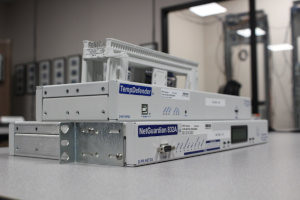
NetGuardian 216T - Custom RTU developed to meet Consolidated's T1/Frame Relay, point-count, and 1RU requirements.
NetGuardian RTU Product Family - Telecom-focused RTUs used broadly across Consolidated's network for alarm and power/environmental monitoring.
An RTU (remote telemetry unit) collects local status and measurements - such as power plant voltage, battery condition, cabinet temperature, and door alarms - and reports them back to operations staff. DPS Telecom NetGuardian RTUs are commonly used for this purpose in telecom facilities and remote cabinets.
Scan points typically refer to discrete alarm inputs. They are used to monitor on/off conditions like door open/closed, high temperature, AC fail, rectifier alarms, and other contact-closure signals.
Monitoring must traverse the same network constraints as the site itself. If a site is backhauled over T1 with Frame Relay, the RTU must support that architecture so it can reliably deliver alarms and allow remote access without forcing a redesign.
Voltage readings can show when commercial power is lost and how quickly batteries are discharging. As Consolidated described during Hurricane Rita, that visibility helped determine when to dispatch generators and where to move them first.
Consider a custom solution when standard products cannot meet required interfaces, point counts, environmental constraints, or form factors. Consolidated worked with DPS Telecom to get a NetGuardian that matched the exact technical specification.
If you have a site-monitoring requirement that does not fit standard offerings - including unique transport needs, tight space constraints, or harsh environments - DPS Telecom can help evaluate the specification and recommend the right NetGuardian RTU approach.
Get a Free Consultation or contact DPS Telecom at 1-800-693-0351.
Young's advice for others considering a custom-engineered monitoring solution:
"They need to get their technical specs and contact DPS Telecom," he said. "We've had nothing but a positive experience. It took very little time, and we got the product we wanted."