Check out our White Paper Series!
A complete library of helpful advice and survival guides for every aspect of system monitoring and control.
1-800-693-0351
Have a specific question? Ask our team of expert engineers and get a specific answer!
Sign up for the next DPS Factory Training!
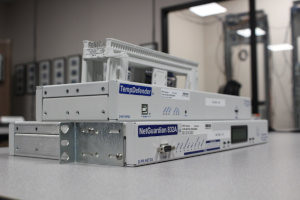
Whether you're new to our equipment or you've used it for years, DPS factory training is the best way to get more from your monitoring.
Reserve Your Seat TodayA West Coast law enforcement agency depends on always-on telecom for 911 dispatch and police/fire radio. To prevent downtime and reduce non-critical alert noise, the agency deployed DPS Telecom T/Mon alarm management and NetGuardian remote monitoring to prioritize actionable alarms and catch site issues early.
| Industry | Public Safety - Law Enforcement |
|---|---|
| Company Type | West Coast law enforcement agency (public sector) |
| Geography/Coverage | West Coast U.S.; mission-critical dispatch centers and radio tower sites |
| Operational Context | Responds to an average of over 2,000 contacts per day |
| Primary Challenge | Prevent downtime in 911 dispatch and public safety radio while avoiding nuisance alarms that distract technicians |
| Solution Deployed | T/Mon alarm management configured with derived alarms, qualification delays, and targeted email notifications; NetGuardian RTU monitoring for critical site conditions such as commercial power and temperature thresholds |
| Key Result | Fewer nuisance alarms, clearer prioritization of critical events, and earlier detection of site risks such as HVAC failures and extended power loss |
| Implementation Timeframe | Using DPS Telecom monitoring gear for over a decade; first T/Mon purchased in 2008; relationship with DPS began in 2007 |
| Products Used | T/Mon platform; NetGuardian RTU |
DPS Telecom provides remote monitoring solutions for many government agencies. This client is a law enforcement agency on the West Coast with a daily mission to protect and serve the public. With thousands of contacts per day and a reliance on 911 dispatch and radio communications, the agency treats network alarm monitoring as an operational necessity, not a nice-to-have.
A telecommunications specialist at the agency (referred to here as "James" for anonymity) shared how the team uses DPS Telecom monitoring to keep mission-critical sites online and to make alarms more actionable for technicians.
Telecommunications downtime impacting 911 dispatch or police/fire radio is unacceptable. Radio towers, dispatch centers, and the supporting network infrastructure must remain available so first responders can communicate and coordinate in real time.
At the same time, remote sites can generate alarm noise. If technicians get too many non-critical notifications (especially for transient or self-correcting conditions), critical alarms can be delayed, missed, or deprioritized. The agency needed alarm management that could distinguish between a momentary event and a true service-affecting problem.
The agency deployed proven DPS Telecom remote monitoring technology at mission-critical sites. The solution centers on two complementary components:
In practice, NetGuardian devices bring site-level alarm points back to the monitoring center, while T/Mon helps technicians turn those raw inputs into prioritized, qualified alerts with the right routing and escalation.
"I like the ability to bring it all the way down to a single alarm point and set up an alert group for each point and set up qualification delays."
This organization has been using DPS Telecom gear for remote alarm monitoring for over a decade. They first purchased a T/Mon system in 2008 and recently completed a T/Mon hardware upgrade and software update.
"Email notification was pretty critical for us," said James. He emphasized that T/Mon provides the granularity to define thresholds and events down to an individual alarm point, allowing the team to map each alarm to the correct people and to the correct urgency level.
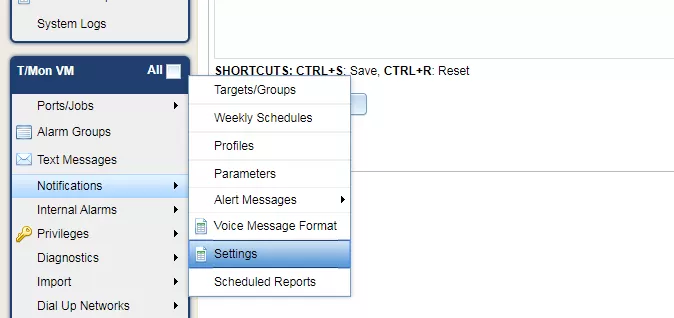
Commercial power alarms are among the most critical conditions the agency monitors. Before using T/Mon, they received many notifications for loss of power when the main power source failed - but these events were often not service-affecting because the backup generator would start.
With T/Mon, the team configured a multi-minute qualification delay so technicians are only notified when the power condition persists long enough to indicate a serious risk.
"We put a several-minute delay on that, because we don't care as long as the generator starts. But, if we've gone several minutes without any power whatsoever, then that email goes out as a critical email with a large email group attached to it," explained James.
This is a common best practice in alarm management for public safety networks: use qualification delays and derived/qualified events to keep short-lived transitions from triggering unnecessary escalations, while still ensuring prolonged outages generate high-urgency notifications.
The agency also applied event qualifiers to their analog microwave system to prevent chattering and to highlight patterns that indicate a recurring problem. "It can be prone to failures or fades that can cause a lot of chattering. Now, if there are too many events, then we get a notification indicating that a ring is bouncing or a path is bouncing," James told us.
By implementing T/Mon filtering and targeted email groups, technicians spend less time acknowledging noise and more time addressing true emergencies. When a critical issue occurs, it is less likely to be dismissed in a flood of non-critical notifications.
For remote public safety sites, many outages start with a physical condition - power instability, environmental stress, or HVAC problems. The agency monitors key thresholds with DPS Telecom NetGuardian equipment and uses alarms to drive fast response.
Temperature is one of the most important thresholds they track. "In most cases, we just use the internal temperature sensor in the NetGuardian, using the minor and major alarm points, and different notifications based on each event. Having that temperature monitored and alarmed routinely catches AC failures."
"The site will begin to rise in temperature. The techs will get notified. They'll log in and they'll check out the system. Quite often, we'll roll to the site or get a vendor headed that direction to repair the AC system. That prevents all kinds of things," James emphasized.
"It could prevent a shutdown of equipment, premature battery failures... so temperature is a biggie. Most of the time at the radio sites, it comes up gradually, unless it's the heat of the summer. Normally, it will take several hours; we get an alarm, and the tech will be notified, and we still have several hours to respond before it really gets to a higher, more critical level."
NetGuardian RTUs are designed for this kind of site-level visibility. They collect discrete alarm points and threshold-based analog conditions (like temperature), then deliver those alarms to a central system such as T/Mon. For operators, that means one workflow to detect developing problems, confirm status, and dispatch the right response.
Together, NetGuardian monitoring and T/Mon alarm management help protect vital telecom gear so the agency can continue to protect and serve the public 24/7/365.
"The interaction with support has always been really great. They're very on top of things and proactive. In fact, in my personal opinion, DPS has gone far above expectations."
James described his experience working with DPS support since the agency first became acquainted with DPS in 2007. "The interaction with support has always been really great. They're very on top of things and proactive. In fact, in my personal opinion, DPS has gone far above expectations."
He also noted that DPS worked with the agency on a Platinum maintenance agreement. "Ron and I worked on a Platinum maintenance agreement some years back. We didn't have maintenance agreements in place. Things were out of warranty, but if we had a problem or a bug, DPS stepped right up and took care of it, so that's pretty impressive."
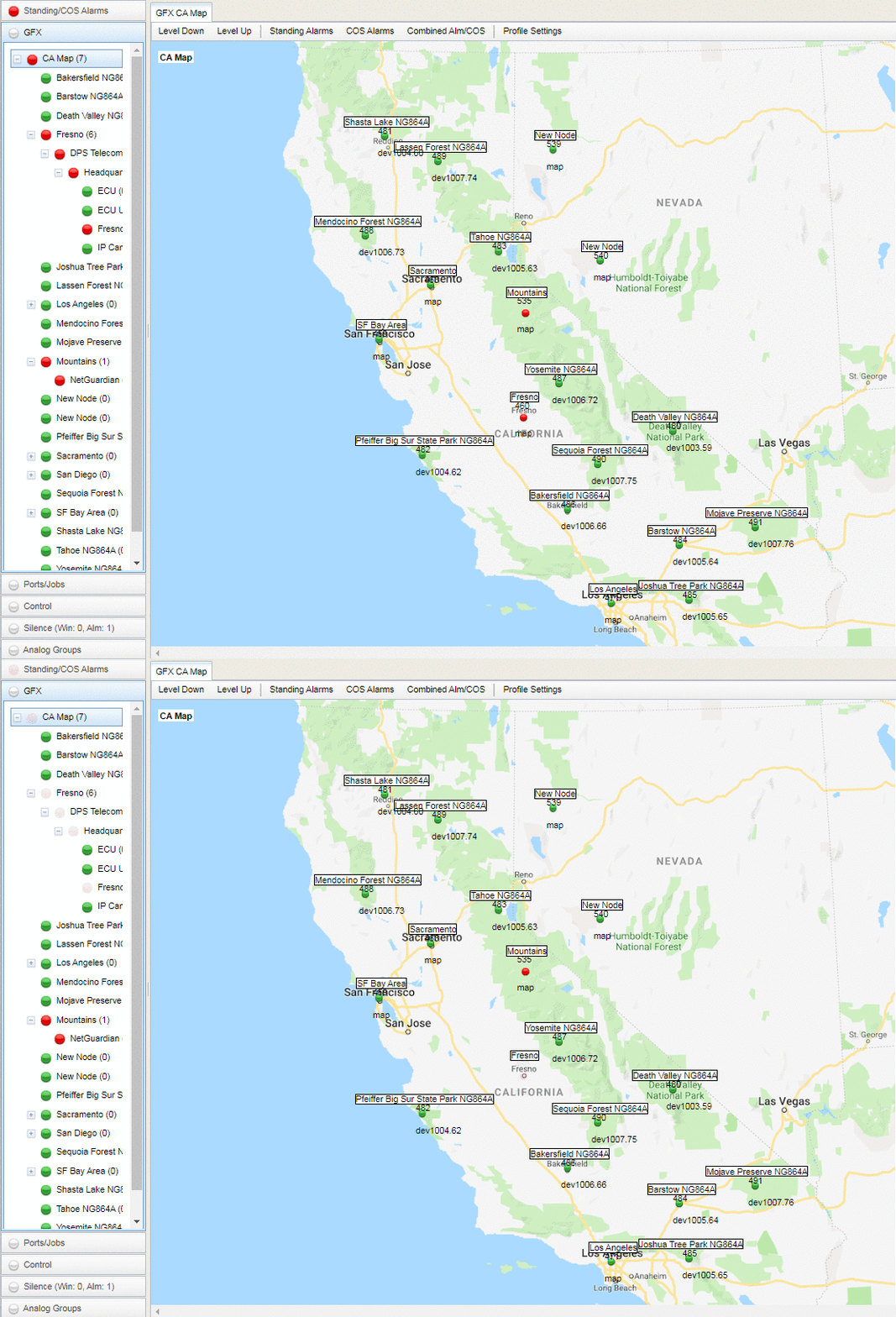 This image shows the T/Mon GFX feature, which provides a spatial presentation of remote sites and alarms.
During the interview, James mentioned that technicians would appreciate a more visual interface. He was interested in the T/Mon GFX web interface, which provides a more intuitive, map-style view of remote sites and alarm status. For teams responsible for many towers and dispatch-related locations, a visual layer can improve how quickly an operator identifies which site is affected and what conditions are active.
When paired with the same T/Mon alarm rules already in place (qualification delays, derived alarms, and targeted notifications), a visual interface helps technicians move from alert to diagnosis with fewer clicks.
James explained that Ron Stover, DPS Sales Engineer, worked with him to find a payment plan that works best for a government agency. As James described, multi-year agreements are common, but aligning with public sector budgeting can require a different approach.
"In government funding, it's easier to get recurring funds where they give you the same amount every year than it is to get money every two years or five years. That's when Ron offered the Platinum Agreement that fits our need," James said.
DPS accommodated these limitations and offered a Platinum Agreement aligned to their budget cycle, supporting long-term monitoring reliability and planning for lifecycle upgrades.
Common questions public safety and government teams ask when standardizing remote monitoring for dispatch and radio infrastructure:
T/Mon supports per-point configuration, including qualification delays and event qualifiers. That makes it easier to suppress brief transitions and to escalate only when conditions persist long enough to require action.
Many sites have backup power that starts automatically. A short delay can prevent alerts for brief commercial power drops while still escalating extended loss of power as a critical condition.
Rising temperature frequently indicates HVAC issues at a site. Catching that trend early helps prevent equipment shutdowns and other downstream impacts.
NetGuardian devices collect site-level alarm points and thresholds and report them back to the monitoring center. T/Mon centralizes those events, applies rules, and routes notifications so technicians see the right alarms with the right context.
A visual interface can help operators quickly identify which remote site is affected and understand current alarm status at a glance, which is valuable for teams monitoring many geographically distributed locations.
If you support 911 dispatch, public safety radio, or other mission-critical telecom infrastructure, DPS Telecom can help you reduce nuisance alarms and catch site problems early with T/Mon and NetGuardian monitoring.
Get a Free Consultation or call 1-800-693-0351 to speak with a DPS Telecom expert about your remote monitoring project.

Haley Zeigler
Haley is a Technical Marketing Writer at DPS Telecom. She works closely alongside the Sales and Marketing teams, as well as DPS engineers, resulting in a broad understanding of DPS products, clients, and the network monitoring industry.