Check out our White Paper Series!
A complete library of helpful advice and survival guides for every aspect of system monitoring and control.
1-800-693-0351
Have a specific question? Ask our team of expert engineers and get a specific answer!
Sign up for the next DPS Factory Training!
Whether you're new to our equipment or you've used it for years, DPS factory training is the best way to get more from your monitoring.
Reserve Your Seat TodayHow EastLink unified monitoring for 40+ sites across three provinces

| Field | Details |
|---|---|
| Industry | Cable Telecommunications |
| Company Type | Triple-play telecom provider |
| Geography/Coverage | Nova Scotia and Maritime provinces |
| Primary Challenge | Managing diverse equipment across 40+ remote sites |
| Solution Deployed | T/Mon NOC with NetGuardian 832A RTUs |
| Key Result | Single-screen visibility for entire network |
| Products Used | T/Mon NOC, NetGuardian 832A, ASCII Alarm Processor |
EastLink is a Canadian cable company serving Nova Scotia and the Maritime provinces. In 1999, they became the first Canadian cable operator to launch residential telephone service over cable, pioneering triple-play bundles. As the network expanded, EastLink turned to DPS Telecom for unified monitoring across their growing infrastructure.
EastLink operates 40 remote sites across three provinces, some six hours from Halifax. The Arris Cornerstone system and DMS switch each had separate interfaces. Without remote telemetry units for environmental monitoring, the NOC lacked visibility into critical site conditions. "While we know there are things happening on our network, visually it was often difficult to locate the exact problem," said Jim Bower.
Key pain points:
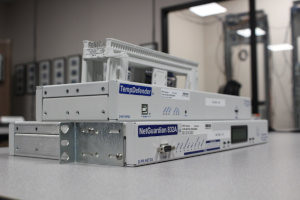
EastLink implemented a unified monitoring architecture combining environmental RTUs with centralized alarm management. NetGuardian 832A units at each site monitor power, temperature, and access. T/Mon NOC consolidates alarms from all sources into a single interface, regardless of protocol. The ASCII Alarm Processor module integrates TL1 alarms from legacy Cornerstone equipment.
This architecture eliminated the need for multiple monitoring systems. All alarms now appear in T/Mon's unified display, giving NOC staff complete network visibility from one screen.
T/Mon NOC transformed how EastLink manages its network. The unified interface displays all alarms on one screen. Response times dropped significantly because technicians can now see complete context for each alarm, including emergency contacts and escalation procedures embedded directly in alarm text.
| Metric | Result |
|---|---|
| Alarm Visibility | All network and environmental alarms unified |
| Response Efficiency | Significantly shorter repair times |
| Staff Optimization | One operator monitors entire network |
| Site Coverage | Complete visibility across 40 remote sites |
"I can see a specific number to call, a contact for security, and the site location in case 911 needs to be called."
Derrick Stennett, NOC Supervisor, EastLink
| Benefit | Impact |
|---|---|
| Single Screen Monitoring | All network and environmental alarms in one unified interface |
| Embedded Response Data | Emergency contacts and procedures in every alarm notification |
| Simplified Operations | One platform replaced multiple separate management systems |
| Scalable Growth | System expanded from 15 to 40+ sites without complexity |
How do you monitor equipment that uses different protocols?
Cable telephony networks typically run multiple protocols. T/Mon NOC supports SNMP, TL1, and ASCII natively, eliminating protocol converters. The ASCII Alarm Processor module handles TL1 communications from equipment like Arris Cornerstone, while NetGuardian RTUs use SNMP. All alarms appear in the same interface regardless of source protocol.
Why is environmental monitoring important for cable telephony sites?
Cable telephony equipment is sensitive to temperature, power fluctuations, and humidity. Remote head-end sites often sit unattended for weeks. Without environmental monitoring, you won't know about HVAC failures, water intrusion, or unauthorized access until equipment damage occurs. NetGuardian RTUs provide real-time alerts before conditions become critical.
Can alarm information be customized for faster emergency response?
T/Mon lets you embed specific response instructions directly in alarm text. You can include emergency contact numbers, site addresses for 911 dispatch, security company contacts, and escalation procedures. This information appears immediately when an alarm triggers, eliminating the need to search through documentation during emergencies.
How easy is it to add new sites to a monitoring system?
With T/Mon's map-based configuration, adding new sites takes minutes. You drag and drop RTU icons onto a network map, configure alarm points, and set notification rules. The system scales from a handful of sites to hundreds without requiring additional servers or complex reconfiguration.
What's the advantage of single-screen alarm visibility?
Managing multiple monitoring systems means switching between interfaces and correlating alarms manually. Single-screen visibility lets one operator see entire network status at a glance. When multiple alarms trigger, you immediately identify patterns and root causes instead of piecing information together from separate systems.
Managing cable telephony with diverse equipment and remote sites? We'll help you consolidate monitoring and gain complete visibility. Learn more.
Or call us: 800-693-0351