Download our free Monitoring Fundamentals Tutorial.
An introduction to Monitoring Fundamentals strictly from the perspective of telecom network alarm management.
1-800-693-0351
Have a specific question? Ask our team of expert engineers and get a specific answer!
Sign up for the next DPS Factory Training!
Whether you're new to our equipment or you've used it for years, DPS factory training is the best way to get more from your monitoring.
Reserve Your Seat TodayTelikom PNG needed higher network uptime and better customer satisfaction, which required real-time, centralized visibility into alarms across the network. DPS Telecom delivered a T/Mon-based monitoring solution that unified discrete and ASCII alarms and automated notifications to the right personnel.
| Industry | Telecommunications |
|---|---|
| Company | Telikom PNG |
| Geography / Coverage | Papua New Guinea |
| Primary Challenge | Real-time alarm monitoring with a single "bird's eye" view, while integrating existing NEC remotes and telecom gear alarms |
| Solution Deployed | T/Mon platform integrating discrete and ASCII alarms with automated alerts (pager and e-mail) |
| Key Result | A solution that met Telikom PNG's objectives and exceeded expectations while working with existing gear |
| Products Used | T/Mon platform |
Telikom PNG is a telecommunications provider serving Papua New Guinea. As part of its business strategy, the company prioritized improved uptime and higher customer satisfaction, and identified real-time monitoring as a core operational requirement.
Telikom PNG wanted to monitor alarms in real time across the network, including both discrete alarms and ASCII alarms from telecommunications gear. As Windu explained:
"We want to monitor our alarms on a real-time basis, whether it's discretes or ASCII. That's main. The format of the reports is secondary. The primary thing is real-time monitoring, being able to look at it from bird's eye and seeing the entire network," said Windu.
In evaluating monitoring vendors, Telikom PNG also needed a path forward that did not require a costly replacement of existing equipment. Other vendors did not provide a workable approach for Telikom PNG's NEC remotes without major rip-and-replace changes.
Finally, Telikom PNG looked for a stable vendor it could trust for a long-term partnership. As part of the selection process, management wanted confidence that the supplier would provide ongoing support and continuity.
"The T/Mon Exceeded Our Expectations."
After evaluating several options, Telikom PNG chose DPS Telecom and T/Mon. The T/Mon solution not only met the requirements for real-time monitoring, it surpassed expectations.
"The T/Mon actually exceeded our expectations. What we were expecting and planning for was much less," said Windu.
Ante highlighted two capabilities that distinguished T/Mon:
"First, automatic alert of responsible personnel. Then, the T/Mon integrates our existing systems. Other vendors didn't have a solution for the NEC remotes. They wanted us to swap it all out. Replacing both the master and the remotes would mean the cost would double. The T/Mon works with our existing gear," said Ante.
Telikom PNG also valued DPS Telecom's stability and track record. Windu noted the importance of selecting a vendor that would be available for the long term, and DPS Telecom's 17 years in business and long client list supported that requirement.
Telikom PNG's monitoring approach centered on bringing multiple alarm sources into a single operational view:
This is a common best practice for telecom operations because it reduces time spent pivoting between tools, supports faster triage, and helps operators understand the context of an alarm (site, device, and impact) from a single screen.
For organizations building similar solutions, DPS Telecom typically recommends starting with the T/Mon alarm monitoring platform to centralize alarm collection, filtering, escalation, and reporting, then expanding field visibility over time with RTUs where it makes operational and budget sense.
Building A Successful Long-Term Monitoring Strategy.
The monitoring solution was developed after careful consideration of Telikom PNG's needs and close consultation with DPS Telecom Applications Engineer Rick Dodd.
Ante and Windu traveled to DPS Telecom headquarters in September to supervise factory acceptance tests of the new system. Ante said the tests clarified the project's goals and increased confidence in T/Mon's capabilities.
"Being here at DPS enhanced our knowledge of what we want to achieve, and it helped us know more about the capabilities of the product. The factory trials gave us the confidence to say this is the product we recommend to our company," said Ante.
Telikom PNG selected a monitoring system that supported real-time alarm visibility across the network and integrated multiple alarm sources into a single operational view. The T/Mon solution avoided a forced replacement of NEC remotes proposed by other vendors, helping Telikom PNG pursue its uptime objectives while keeping its existing gear in place.
"Everybody will be smiling when we put it up," said Ante.
The solution was designed to accommodate future network developments. Telikom PNG can gradually replace NEC 21SV remotes with DPS Telecom NetGuardian units, spreading the changeover across multiple budget cycles to minimize impact on capital expenditures, operational expenditures, and manpower costs. This phased approach is especially relevant for remote sites where installing a new RTU requires a helicopter trip.
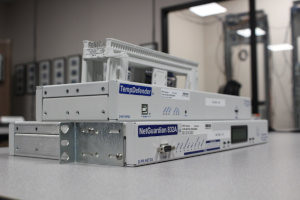
When field upgrades are part of the roadmap, DPS Telecom typically recommends the NetGuardian RTU family to extend site-level visibility (discretes, analogs, and intelligent device polling) and to feed alarms into T/Mon for centralized escalation and reporting.
Telikom PNG is also considering using T/GrafX for an integrated war-room display and deploying a second T/Mon at a backup NOC to serve as a geodiverse standby backup.
Discrete alarms are typically simple on/off contact closures that indicate conditions like power failure, door open, or high temperature. ASCII alarms are text-based messages generated by telecom equipment; they often contain more descriptive details but require parsing and integration to present consistently in a monitoring console like T/Mon.
Many telecom networks have installed remote alarm hardware across wide geographies. A monitoring approach that can integrate existing remotes helps avoid unnecessary capital cost and reduces deployment burden, especially in hard-to-reach sites.
Automated alerting routes alarms to the correct on-call personnel based on predefined rules and schedules. This reduces manual callouts and shortens time-to-awareness, which is critical for maintaining uptime.
RTUs provide site-level alarm collection and equipment polling, then forward alarms to a central system. In phased upgrades, RTUs can be deployed over multiple budget cycles as legacy remotes are retired, while the central monitoring (T/Mon) remains consistent.
Learn how a high-quality monitoring solution can lower your costs and raise your revenue
If you are evaluating real-time monitoring, alarm integration, or a phased RTU modernization plan, DPS Telecom can help you design a solution that fits your network and your operational constraints.
Get a Free Consultation or call DPS Telecom at 1-800-693-0351 to speak with an expert about your project.