Check out our White Paper Series!
A complete library of helpful advice and survival guides for every aspect of system monitoring and control.
1-800-693-0351
Have a specific question? Ask our team of expert engineers and get a specific answer!
Sign up for the next DPS Factory Training!
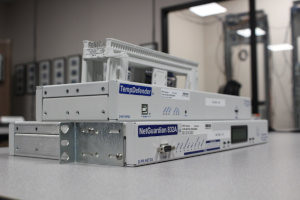
Whether you're new to our equipment or you've used it for years, DPS factory training is the best way to get more from your monitoring.
Reserve Your Seat Today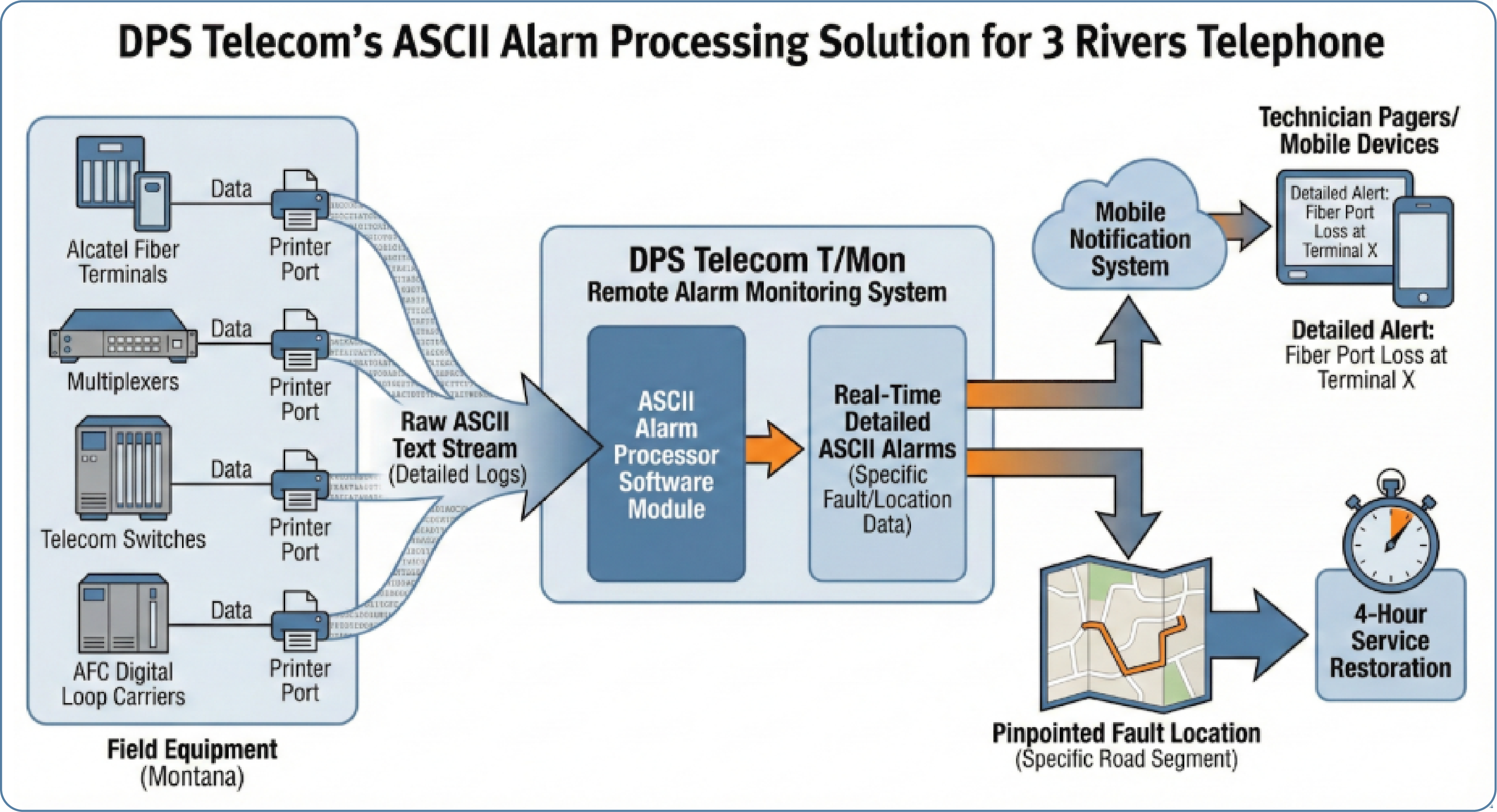
| Field | Details |
|---|---|
| Industry | Rural Telecommunications Cooperative |
| Company Type | Telephone Cooperative in Montana |
| Geography/Coverage | Eastern Rocky Mountain Front Region |
| Primary Challenge | Fiber cable cut with multiple service impacts |
| Solution Deployed | T/Mon with ASCII Alarm Processor Module |
| Key Result | 4-hour resolution from cut to service restoration |
| Implementation Timeframe | N/A |
| Products Used | T/Mon NOC, ASCII Alarm Processor Software Module |
3 Rivers Telephone is one of Montana's largest telephone cooperatives, serving approximately 20,000 access lines across the eastern Rocky Mountain front from the Canadian border south to Wyoming. The company provides voice, PCS wireless, DSL, data services, and satellite TV to rural communities.
A contractor's backhoe cut a major fiber line. 3 Rivers needed to know exactly where and what failed.
Without detailed alarms, technicians would face hours of diagnostic work. They would need to manually check equipment across remote Montana terrain. Finding the exact problem location would require extensive driving.
The damaged fiber carried critical services:
Extended outages mean customer impact and revenue loss.
3 Rivers Telephone deployed the T/Mon Remote Alarm Monitoring System with the ASCII Alarm Processor Software Module. The system monitored multiple equipment types through ASCII protocol processing.
The ASCII Alarm Processor extracts detailed alarm messages from equipment printer ports. It provides real-time visibility that standard summary alarms cannot deliver.
Instead of generic major/minor alerts, technicians received specific information. They could see exactly which fiber ports lost connectivity.
The fiber cut triggered multiple ASCII alarms within seconds. The alarms showed critical status at one fiber terminal. The next terminal up the line showed no response.
This information immediately narrowed the problem. Technicians knew to check one specific stretch of road.
| Metric | Result |
|---|---|
| Time to Detection | Seconds after fiber cut occurred |
| Time to Locate Problem | Minutes instead of hours of driving |
| Total Resolution Time | 4 hours from cut to service restoration |
| Field Response Efficiency | Technician paged and ready before arriving |
"If we didn't have T/Mon ASCII processing, all we'd get is a summary alarm," said Rick Jacobson, Network Technician at 3 Rivers Telephone. "Then we'd have to log in to the fiber terminal to see what the alarm really was. But with ASCII, we got a very detailed alarm within seconds, showing which fiber ports had lost their connection. So there wasn't any doubt what was happening."
The system also provided mobile notifications. Field technicians received pages with detailed alarm information. They could connect remotely to equipment and prepare for repairs before the splicer crew arrived.
| Benefit | Impact |
|---|---|
| Faster Response Times | Immediate alarm notification enabled rapid dispatch |
| Pinpoint Problem Location | Detailed alarms identified exact fiber segment |
| Mobile Technician Access | Remote equipment access from field locations |
| Reduced Downtime | 4-hour resolution including travel time |
Multiprotocol network alarm manager providing centralized monitoring across diverse equipment types with web-based access and automatic notifications.
Optional T/Mon module that extracts detailed alarm messages from equipment ASCII text streams, delivering far more diagnostic information than standard summary alarms.
ASCII alarm processing captures detailed text messages from equipment printer ports. SNMP typically provides only major/minor summary alarms.
ASCII processing delivers specific information. You see which fiber port failed. You see what equipment lost connectivity. You see what threshold was exceeded.
This level of detail enables faster diagnosis and dispatch decisions.
ASCII alarm processing works with fiber optic terminals, telecom switches, SONET equipment, channel banks, and multiplexers. It also supports many types of legacy equipment.
Most telecom devices output detailed activity logs through printer ports. Their official alarm interfaces often provide only generic summaries.
The ASCII processor continuously scans these text streams for alarm messages.
Yes. Many organizations use T/Mon's ASCII processing to supplement existing SNMP managers or other monitoring platforms.
The systems work in parallel. ASCII processing provides detailed diagnostic information. Other systems may lack this depth.
Remote Telemetry Units can report via multiple protocols simultaneously.
ASCII alarm detection happens in real time. Equipment outputs alarm messages immediately. The system captures them instantly.
In the 3 Rivers case, alarms appeared within seconds of the fiber cut. Detection speed depends on how quickly the monitored equipment recognizes the problem. It does not depend on polling intervals or delayed notifications.
Yes. ASCII processing is particularly valuable for rural networks.
Travel distances are long. Rapid problem identification is critical. Detailed alarm information helps technicians know exactly what to bring and where to go. This reduces windshield time significantly.
3 Rivers operates across remote Montana terrain. This capability proved essential for their operations.
Vague alarm notifications waste time. Diagnosing network problems shouldn't require logging into multiple systems.
Our ASCII Alarm Processor delivers the detailed information you need. You get faster response times. You make better dispatch decisions.
Get a Free Consultation or call 800-693-0351