Check out our White Paper Series!
A complete library of helpful advice and survival guides for every aspect of system monitoring and control.
1-800-693-0351
Have a specific question? Ask our team of expert engineers and get a specific answer!
Sign up for the next DPS Factory Training!
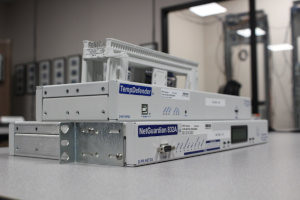
Whether you're new to our equipment or you've used it for years, DPS factory training is the best way to get more from your monitoring.
Reserve Your Seat TodayPart 1 - What is SNMP? | Part 2 - The Management Info Base | Part 3
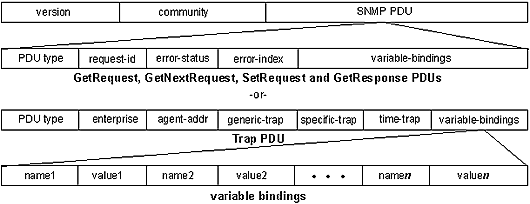
This article in our series on the Simple Network Management Protocol (SNMP) examines the communication between managers and agents. Basic serial telemetry protocols, like TBOS, are byte oriented with a single byte exchanged to communicate. Expanded serial telemetry protocols, like TABS, are packet oriented with packets of bytes exchanged to communicate. The packets contain header, data and checksum bytes. SNMP is also packet oriented with the following SNMP v1 packets (Protocol Data Units or PDUs) used to communicate:
The manager sends a Get or GetNext to read a variable or variables and the agent's response contains the requested information if managed. The manager sends a Set to change a variable or variables and the agent's response confirms the change if allowed. The agent sends a Trap when a specific event occurs.
Each variable binding contains an identifier, a type and a value (if a Set or response). The agent checks each identifier against its MIB to determine whether the object is managed and changeable (if processing a Set). The manager uses its MIB to display the readable name of the variable and sometimes interpret its value.
Do you have questions about our products and services?
Give us a call at our toll-free number and talk to one of our specialists. They'll help answer any questions you may have.

Ron has been with DPS since day one. Originally a test tech, Ron eventually became involved with new product design verification. For the last 15 years, he has been in charge of client support.
Ron is probably the hardest working member of the DPS team. When asked why he's here so much he replies, "The east coast doesn't want to wait until noon for support. And west coast customers need questions answered until 5 p.m."
Ron's hard work doesn't go unnoticed - Ron is always the first person here and one of the last to leave. His dedication to resolving client problems is incredible. "I would rather leave the building late having peace of mind than take off early knowing someone out there still needs help", says Ron.
Spending a lot of time on the phone with people, Ron comments, "I really enjoy talking to people using our products. They use them in many exciting ways. I like being part of their success."
Ron is extremely knowledgeable. In fact, it is nearly impossible to reach a higher level of tech support expertise in any industry on a tech support call. Most of the time you're likely to encounter an entry level employee who has no comprehensive knowledge of the product - not so with DPS!
Ron is a native Pennsylvanian, but his home has been Fresno for the last 16 years. When he's not busy running the help desk, Ron enjoys playing ice hockey, reading books, and collecting CD's. Give Ron a call if you have any comments on tech support.