8 Things You Need to Know About SNMP Proxy Agents
Simple Network Management Protocol (SNMP) is a standard protocol that is commonly used today in many networks. The SNMP protocol is great for integrating classic telecom telemetry with modern IP-based network management. It's an open-standard protocol that's flexible enough to describe almost anything.
The one hitch is, some of your most crucial network infrastructures are not built for SNMP, such as legacy or proprietary gear. To integrate your infrastructure elements into your SNMP alarm management, you need to install SNMP proxy devices at your remote sites.
Many telemetry network managers - perhaps you - are faced with the task of collecting data using SNMP agents from non-SNMP devices and reporting that information to an SNMP manager. The right tool for this job is an SNMP proxy agent device. Not only that, but it also needs to be reliable to ensure the safety of your most critical gear.
What is an SNMP Proxy Agent and Why are They Important to Have in my Network?
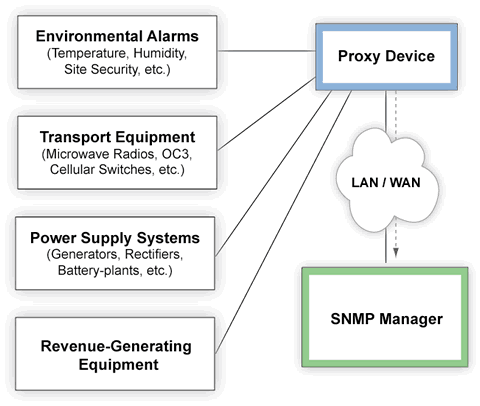
A proxy agent is a device that is able to convert one protocol to another. In the case of the SNMP proxy agent, the "proxy" is converting contact closures to SNMP traps. Therefore, you're viewing contact closures "by proxy" as SNMP messages.
This is necessary when you have pieces of equipment that use different protocols. The proxy agent acts as a translator or "middleman" between devices.
Here are some situations where having an SNMP proxy can be valuable:
- You need to translate all versions of SNMP requests and traps/notifications.
- You have an operating system based on SNMP v1 or V2c and you need to have visibility over a device that supports SNMPv3.
- You need to manage devices in different remote sites having the IP addresses.
Before you begin designing your SNMP-based network monitoring system, you should keep the following concerns in mind. By using these points as a check-list, you will be able to appropriately design a system that is a perfect fit for your network.
SNMP Proxy Agent Checklist: Things to Consider in a Proxy Agent
- Know your SNMP transport layer requirements.
- Will standard SNMP over UDP meet your transport needs?
- Do you require the greater robustness of SNMP over TCP?
- Do you need to connect to an SNMP manager that only supports TCP?
- Make sure you're getting the most from SNMP.
- What is your company using as its SNMP manager?
- Can your manager handle protocols other than SNMP?
- Do you need SNMP relay servers or SNMP relay agents?
- What type of intelligent alarm reporting capabilities does your SNMP manager have?
- Learn the difference between some of the leading SNMP managers in the market today.
- Best practices for backup and recovery.
- Does your remote site use multiple power supplies?
- Do you have multiple transport layers (for example, LAN and dial-up)?
- Do you plan on keeping spare units in case a natural disaster strikes?
- Find out how leading companies are protecting themselves against unavoidable equipment failure.
- Define your control relays and automated responses.
- How quickly do you need to react to critical alarm notifications?
- How close is the nearest service technician?
- Do you need to have an automated response to critical events?
- Learn how fast response times to critical events can save you time, money, and customers.
- Be alert for potential protocol mediation issues.
- Do you have the need to convert older protocols from legacy or proprietary gear into SNMP and report them to your Master Of Masters (MOM)?
- Have you considered the possibility that one of your vendors may discontinue supporting its older products?
- Click here to learn more about common protocol mediation scenarios.
- Define your remote site visibility and control requirements.
- Is web browser access a desired viewing format for each of your remote sites because of it scalability and simple cross platform access or do you prefer custom software to access each device?
- Do you need to see what is happening at your remote site using video surveillance?
- Do you need to be able to control who enters a particular door, and when?
- Learn more about the most common remote site visibility techniques and how you can implement them today.
- How to determine the exact amount of alarm points you'll need to monitor at your remote site.
- How many contact closures are you trying to monitor (also known as discrete or digital alarm inputs)?
- How many analog alarms are you needing to monitor (temperature, battery voltage, etc.)?
- Do you have the need for a pass-through terminal server?
- Learn the difference between various alarm types and how to make sure you've accounted for everything.
- Selecting the right vendor is a crucial first step in your network build out.
- Do you foresee potential customizations for your SNMP proxy agent? Has the company you are dealing with done custom work before?
- How focused do you want your vendor to be on telemetry monitoring?
- Is a money back guarantee important to you?
- Find out how vendor selection can be one of the most important steps in your network build out.
The NetGuardian 832A G5: SNMP Proxy Agent and Remote Telemetry Unit in One Rack Unit
While a proxy agent is used to convert one protocol to the next, some proxy agents can provide additional functionality.
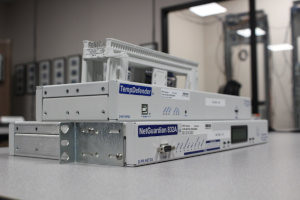
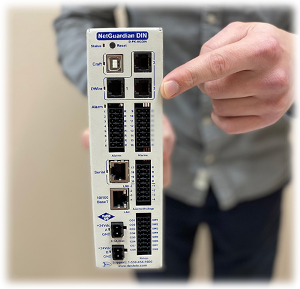
The NetGuardian 832A G5 by DPS Telecom is a great option when looking for an SNMP Proxy. The 832A G5 is a high capacity RTU that features 32 discretes, 8 analogs, 8 controls and reports alarms via SNMP v1, v2c or v3. This versatile RTU has expansion options to provide a perfect-fit solution and the slim design only requires 1 rack unit of space. The NetGuardian 832A G5 also features:
- Alarm reporting to one or more master stations, such as the T/MON.
- Detailed, 24/7 alarm notifications that can be sent via SMS message, page or email.
- Uses a web-based interface for easy provisioning, unit configuring and alarm history logs. You can monitor your network from any computer that has an internet connection.
- Multi-layer security to keep your mission-critical information from falling into the wrong hands.
- Nuisance alarm filtering so that your techs do not become accustomed to ignoring alarms.
- RADIUS authentication for security.
- Serial ports for additional monitoring equipment, so that your network is one seamlessly integrated system - allowing you to have complete visibility.
- Many expansion options such as building access control systems, surveillance cameras, environmental sensors, analog expansions and more for a perfect-fit solution.
- Dual ethernet support to secure network access.
- RoHS 5 Approved.
- Durable metal chassis to protect the unit in some of the harshest conditions.
With the NetGuardian 832A G5, you are not only getting a great SNMP proxy agent, but you are also getting an RTU with a lot of additional functionality. It's a great choice if you also need to monitor sensors, operate controls and other RTU activities. It's important that all of your equipment can communicate properly.
The NetGuardian 832A G5 will make that happen. The combination of SNMP proxy agent and RTU provided by the NetGuardian 832A G5 will ensure that your sites will never go unmonitored or unprotected. If there is a problem, you will be the first to know, saving you valuable time and money.
If the NetGuardian 832A is not right for your needs, DPS Telecom offers a variety of RTUs with various configurations to fit a wide variety of industries, site sizes, and needs. Plus, DPS Telecom offers custom engineering for those companies that really need a unique product.
The bottom line is you simply cannot afford to monitor your non-SNMP equipment with SNMP Managers without an SNMP Proxy Agent. Don't leave your sites vulnerable to preventable damage and outages.