Check out our White Paper Series!
A complete library of helpful advice and survival guides for every aspect of system monitoring and control.
1-800-693-0351
Have a specific question? Ask our team of expert engineers and get a specific answer!
Sign up for the next DPS Factory Training!
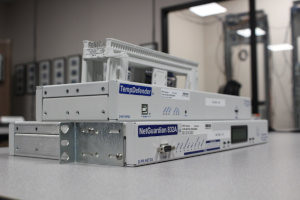
Whether you're new to our equipment or you've used it for years, DPS factory training is the best way to get more from your monitoring.
Reserve Your Seat Today
|
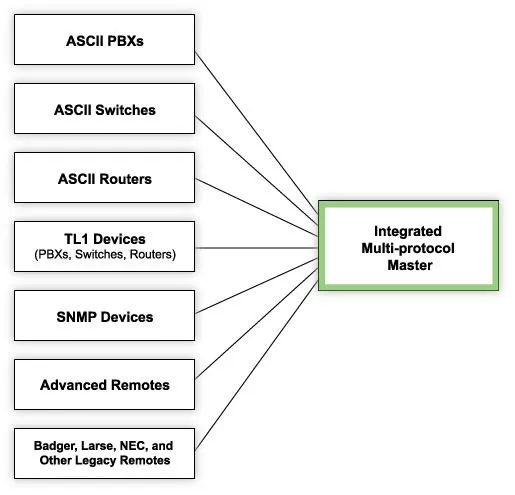
Any device that exports ASCII text, such as PBXs, switches, and routers, can be monitored and controlled from a multiprotocol alarm management system. Information from the raw ASCII text is extracted and processed according to rules defined by the user. You can even set up auto-databasing rules, so even previously undefined alarms from ASCII devices are automatically databased and processed.
An advanced alarm management system will provide the highest quality visibility of your ASCII devices, with support for:
An integrated, multiprotocol master will also poll all your non-ASCII devices, allowing you to consolidate all your alarm monitoring on a single platform. You can eliminate the need for specialized terminals and reduce the number of screens your staff needs to monitor to one. All of your alarm data is integrated into a single display that can show you - at a glance - the state of your entire network.
Using an integrated platform for all your monitoring offers these significant benefits:
|