Check out our White Paper Series!
A complete library of helpful advice and survival guides for every aspect of system monitoring and control.
1-800-693-0351
Have a specific question? Ask our team of expert engineers and get a specific answer!
Sign up for the next DPS Factory Training!
Whether you're new to our equipment or you've used it for years, DPS factory training is the best way to get more from your monitoring.
Reserve Your Seat Today
|
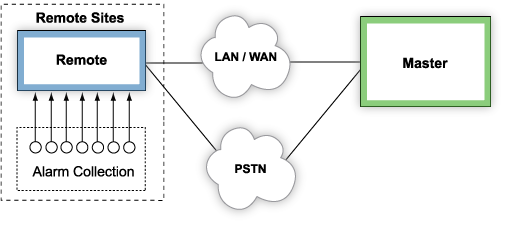
Maintaining an alternate data path is an essential best practice for effective network monitoring. In the event of a failure of your primary data path, the alternate path allows your master to maintain continuous visibility of equipment at your remote sites.
In this application, the LAN is the primary data path between the master and the remotes. The secondary alternate path is a dial-up connection to the public switch telephone network (PSTN). If the LAN fails, both the master and the remotes will automatically maintain communication via the alternate path.
|