Check out our White Paper Series!
A complete library of helpful advice and survival guides for every aspect of system monitoring and control.
1-800-693-0351
Have a specific question? Ask our team of expert engineers and get a specific answer!
Sign up for the next DPS Factory Training!
Whether you're new to our equipment or you've used it for years, DPS factory training is the best way to get more from your monitoring.
Reserve Your Seat TodayYour remote monitoring system must have adequate battery health management. After all, your remote monitoring should always be the last thing at any remote site to fail.
An uninterruptible power supply (UPS), or unlimited power supply, is a backup power source that activates when the main source fails. Although complex, a UPS has a very simple overall design. Every UPS has:
The word "uninterruptible" means that the power supply will act quickly enough to prevent the gear from ever losing power when the main power source goes dark. This means that a UPS system must be capable of activating backup power within 25ms of a power loss.
A UPS, which by its very nature is redundant. It provides an important protective barrier against data loss and expensive hardware damage.
In consumer applications, an UPS may only have enough battery reserve to last for a few minutes. The intent of such a short backup power supply is only to allow the safe shutdown of joined computer gear.
In a telecom or data center environment, however, the batteries of a UPS may last for several hours or more. If commercial power failures are most likely expected to be rare and brief, an UPS may be only a backup power source at a remote site. However, at least one diesel or propane generator is also present to provide backup power.
Unfortunately, many network managers fail to properly monitor their UPS systems.
This is primarily because most modern UPS systems for use in industrial applications include a built-in web interface. This interface's main purpose is performance tracking. Although this would be considered "monitoring," one vital flop prevents it from being "proper monitoring."
Using a UPS's own interface for uptime monitoring defeats the reason for such monitoring. If the UPS fails, so too will the monitoring interface that you have relied on.
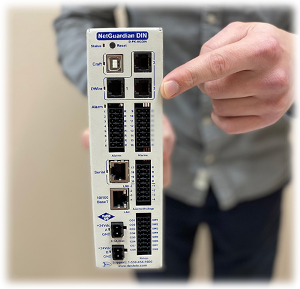
Instead, the industry's best practice is to deploy relatively low-cost external monitoring devices. Small monitoring devices (1 RU or less) are available to collect important status information from virtually any battery system.
These monitoring devices, commonly known as RTUs, will send alerts back to vital personnel via LAN, phone voice message, serial connection, T1, fiber, or other available transport.
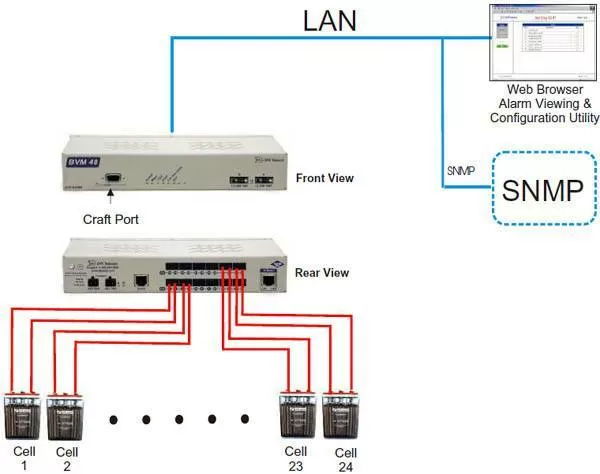
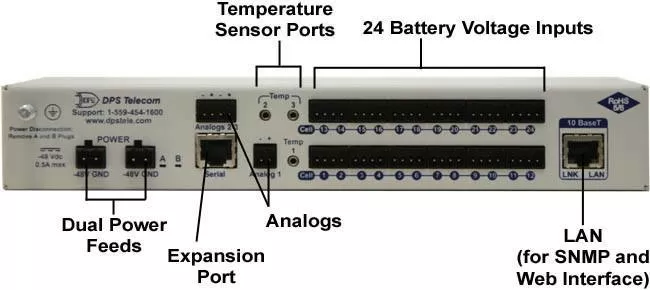
In this way, organizations can track and log the voltage at the cell level, providing a good assessment of the overall health of the battery string.
Even better, RTU's will monitor much more than just UPS. Just about every piece of telecom, transport, and switching gear you have will also benefit from external monitoring.
When using RTUs to monitor batteries in a power system, it's also very important to remember that an RTU also needs electric power to report alarms back to you. Because your monitoring system should always be the last thing to fail, you should resist the urge to power your RTU using your UPS system. If you do this and the UPS fails, you will have no way of knowing until the site goes completely dark.
A good RTU will contain its own internal UPS with backup batteries large enough to continue operation for at least several hours after a power failure. Some of the top-quality RTU's will last for up to 10 hours.
No matter which RTU you decide to use, you'll get plenty of run-time from the UPS batteries.
Seamless Integration and Quick Setup
RTUs are designed for easy integration into existing systems. With their compact size, they fit effortlessly into your network, ensuring minimal disruption during the setup process. This efficiency is especially beneficial for organizations looking to implement monitoring solutions swiftly.
Comprehensive Alert System
RTUs offer a robust alert system, ensuring that key personnel are notified immediately of any anomalies. By setting specific thresholds, users can receive alerts about potential issues like failing batteries or unexpected load increases, allowing for prompt action.
Optimized System Performance
Regular monitoring with RTUs helps maintain optimal system performance. By analyzing historical data, organizations can make informed decisions to enhance their power systems, minimizing unplanned outages and striving for maximum uptime.
Versatile Monitoring Capabilities
Beyond just UPS systems, RTUs extend their monitoring capabilities to various telecom, transport, and switching equipment. This versatility ensures that all critical infrastructure benefits from enhanced monitoring, safeguarding against potential failures.
Incorporating RTUs into your monitoring strategy not only improves the reliability of your power systems but also offers a comprehensive solution for maintaining the health of your overall infrastructure.
We've seen clients roll out UPS monitoring systems at dozens of sites to protect the battery cells from expensive damage. The battery monitoring systems that they deploy cover both VRLA ("Valve-Regulated Lead-Acid") batteries and flooded batteries.
These clients monitor several aspects of their UPS batteries.
Monitoring your propane tanks can save you the hassle of running out of fuel. Depending on your propane tanks, a floating sensor may be all you need for low fuel alerts. However, if propane is your main fuel source, you'll likely need a more advanced analog sensor that can track usage rates. Both types of propane tank sensors allow you to order more propane for your tank before it runs out.
Generators are a critical part of any robust telecom network. Generators are commonly the third line of defense against power outages (behind commercial power and battery plants). The last thing you need is your generators failing when you lose your primary sources of power to a site. Adding simple on/off monitoring to a generator helps you avoid preventable outages and keeps your network online.
Monitoring UPS systems is an important part of any truly reliable network. You simply can't afford to leave your battery strings vulnerable. While some monitoring is better than no monitoring, the right monitoring system makes all the difference.
Do you want to get more information about how to monitor your UPS system? Do you want to speak with us about designing a monitoring solution for your network? Then please contact us today.
Related Products:
UPS Battery Voltage Monitoring Device
Related Topics:
All DPS Telecom products include comprehensive technical support. If you've purchased one of our products and are encountering any kind of issue, contact DPS Tech Support today at 559-454-1600.
At DPS Telecom, the representative who answers your call isn't an intern reading from a script. DPS Tech Support representatives are engineers who contribute to product development. And, if your problem requires additional expertise, the DPS Engineering Department that designed your product is right down the hall.
Help us connect you to the right engineer by filling out this quick questionnaire. Simply leave your contact information to get started, and we'll call you back. Most preliminary discussions are about 15 minutes, and afterward, we'll send you a custom application diagram of a recommended solution that'll make it easier to justify your project to management.