Check out our White Paper Series!
A complete library of helpful advice and survival guides for every aspect of system monitoring and control.
1-800-693-0351
Have a specific question? Ask our team of expert engineers and get a specific answer!
Sign up for the next DPS Factory Training!
Whether you're new to our equipment or you've used it for years, DPS factory training is the best way to get more from your monitoring.
Reserve Your Seat TodayTL1 alarm monitoring is a very important part of many networks today. The proliferation of TL1 RTUs and the following shift to other protocols has created a situation in which versatile alarm monitoring equipment is key. Emerging protocols must be supported, of course, but there are too many TL1 devices in use to ignore them and hope to achieve high network reliability.
There are many advantages to TL1 alarm monitoring compared with monitoring based on other protocols. It receives and reacts to commands from users and masters, is relatively inexpensive, and transmits in a format that is easy for humans to read and understand.
The creators of TL1 also tried to minimize the required bandwidth by creating efficient device responses to queries, filtering all but the requested information.
Overall, however, TL1 alarm monitoring depends on a protocol that is high bandwidth, so transmitting via 1200 baud or dialup is bound to be frustrating. LAN transmission should not be a problem, though.
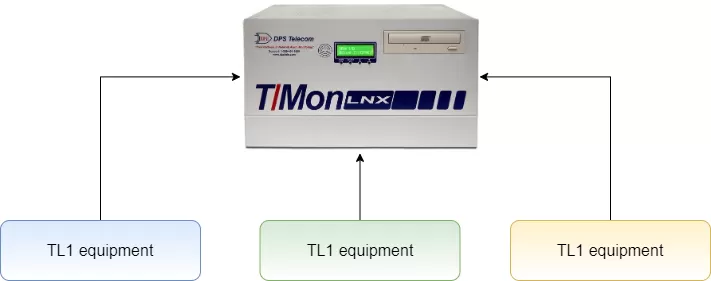
DPS Telecom offers TL1-based monitoring solutions including products for collecting alarms from TL1 devices, reporting discrete and analog alarms as TL1, and mediating other protocols, like SNMP, to TL1. This lowers cost by eliminating the need to scrap older (yet still functioning) equipment. The T/Mon LNX and the T/MON Slim are two such monitoring solutions that seamlessly integrate older TL1 interfaces with newer SNMP equipment.
The TL1 Protocol is widely used in network management. It was created to solve several problems, the most significant of which was the incompatibility of devices using different proprietary protocols. Other goals for TL1 protocol included a human-readable format and responsiveness to commands.
Because it was designed to be open, TL1 protocol can be considered a precursor to SNMP. So long as a group of devices supports TL1, they will be able to communicate, regardless of manufacturer.
But computer-to-computer communication isn't the only benefit of the TL1 protocol. It is also human-readable. Although it is structured enough to be parsed, it is also relatively easy for humans to read. This allows a much higher level of understanding with a much lower learning curve than was possible before.
Finally, the TL1 protocol supports responses to commands. A user can issue a command to a TL1 device requesting that it report all of its standing alarms, for example.
Today, TL1 is an aging protocol, but its popularity requires that any high-quality alarm monitoring system must be designed with TL1 protocol in mind.
TL1 protocol is an open, human-readable precursor to SNMP.
Being ASCII-based, it's not as efficient as a simple bit protocol. That's less important in the modern era, as all alarm management protocols use relatively little bandwidth by today's standards. What you gain for the small price of increased bandwidth is human-readability. Although you do need to know something about TL1 to know the messages, it's fairly easy with a bit of practice.
Despite its age, TL1 is found in a surprising number of networks. This is especially true if you have SONET optical network gear. You can find TL1 used for contact closure monitoring, event monitoring, SCADA, and remote site monitoring.
If you'd like to learn even more, check out these Top 15 TL1 Resources.
What good is a protocol if you don't know the commands you can use? TL1 commands are basic elements of TL1 alarm monitoring. The list below is a reference for some of the most common TL1 commands used in network reliability management.
Because it's ASCII-based, TL1 can be effectively parsed with a text-analyzing master station like T/Mon. With the T/Mon ASCII Processor software module, this master station is about to break down TL1 into its component parts and incorporate it into any modern monitoring system (ex. SNMP, DNP3...).
The popularity of TL1, now being challenged by more modern protocols, has left a large number of installed TL1 equipment in today's networks. Since forklift swap outs are too costly in budget and labor, TL1 site monitoring is required to keep sites with TL1 monitoring equipment integrated into newer monitoring systems. Alternatives include struggling to monitor with several parallel systems, but that is simply a disaster waiting to happen.
TL1 is used throughout the telecommunications industry but is slowly being replaced with newer technology. Network monitoring is also constantly evolving, creating situations in which new equipment with the latest protocols must work side-by-side with older equipment and aging protocols, such as TL1.
It's not enough to run multiple monitoring systems for your various protocols and hope that you won't miss a critical alarm. Unless you unify your monitoring by incorporating TL1 SCADA into a comprehensive solution with a single alarm master, it's only a matter of time before you face serious downtime.
Wherever TL1 fits into your network, DPS Telecom offers a TL1-based monitoring solution. These monitoring solutions feature products for collecting alarms from TL1 devices, reporting discrete and analog alarms as TL1, and mediating other protocols, like SNMP, to TL1. This lowers cost by eliminating the need to scrap older (yet still functioning) equipment. The T/Mon LNX and the T/MON Slim are two such monitoring solutions that seamlessly integrate older TL1 interfaces with newer SNMP equipment.
It's very difficult to manage your legacy equipment in a simple and effective way. You don't want to risk missing alarms by running several masters in parallel, but it can be tough to find an alternative.
You can't purchase a whole new system all at once, either. That would wipe out your budget. You need a versatile master capable of TL1 event monitoring in addition to a wide range of other capabilities and supported protocols.
If you're struggling to stay within your budgetary guidelines while effectively monitoring your sites in an efficient way, you're not alone. As networks grow and protocols change, many network professionals find themselves monitoring Remote Telemetry Units (RTUs) in multiple protocols, sometimes running several masters concurrently just to keep monitoring alive. A TL1 contact closure monitoring solution, however, will allow you to monitor older TL1 remotes on the same screen as your new equipment.
By consolidating TL1 remote alarm monitoring and control devices to a more efficient system, you'll increase network reliability while simultaneously cutting operating costs and dreaded 'windshield time'. Windshield time- time lost from operators commuting to remote sites- is an oft-forgotten factor with older TL1 sites that typically aren't supported by newer systems. Thankfully, advancements in TL1 alarm and contact closure monitoring are readily available and easily integrate with existing systems.
Related Products: