Download our free SNMP White Paper. Featuring SNMP Expert Marshall DenHartog.
This guidebook has been created to give you the information you need to successfully implement SNMP-based alarm monitoring in your network.
1-800-693-0351
Have a specific question? Ask our team of expert engineers and get a specific answer!
Sign up for the next DPS Factory Training!
Whether you're new to our equipment or you've used it for years, DPS factory training is the best way to get more from your monitoring.
Reserve Your Seat TodayAn SNMP trap is a notification event sent by a managed device over a network when a change-of-state (COS) event occurs. Some events that will cause a device to send SNMP traps include power outages, security breaches, and other major events. However, devices will also send traps for simple status events, such as doors opening and closing. These traps are sent across the network in the same manner, and are given no priority when using a standard SNMP manager.

Simple Network Management Protocol (SNMP) is used when sending trap communications across a network to the device manager. In some cases, SNMP alleviates managers of some responsibility. They don't have to request information from every device in the network individually. Instead, managed devices send unsolicited notification in the form of autonomous traps. Traps are sent to one common SNMP network monitoring application.
Managers then receive the SNMP trap, and can take action based upon the event described by the trap.
Managers cannot send a trap message back to a device. Trap communication only occurs from device to network manager. The management application must alert the proper person of the event.
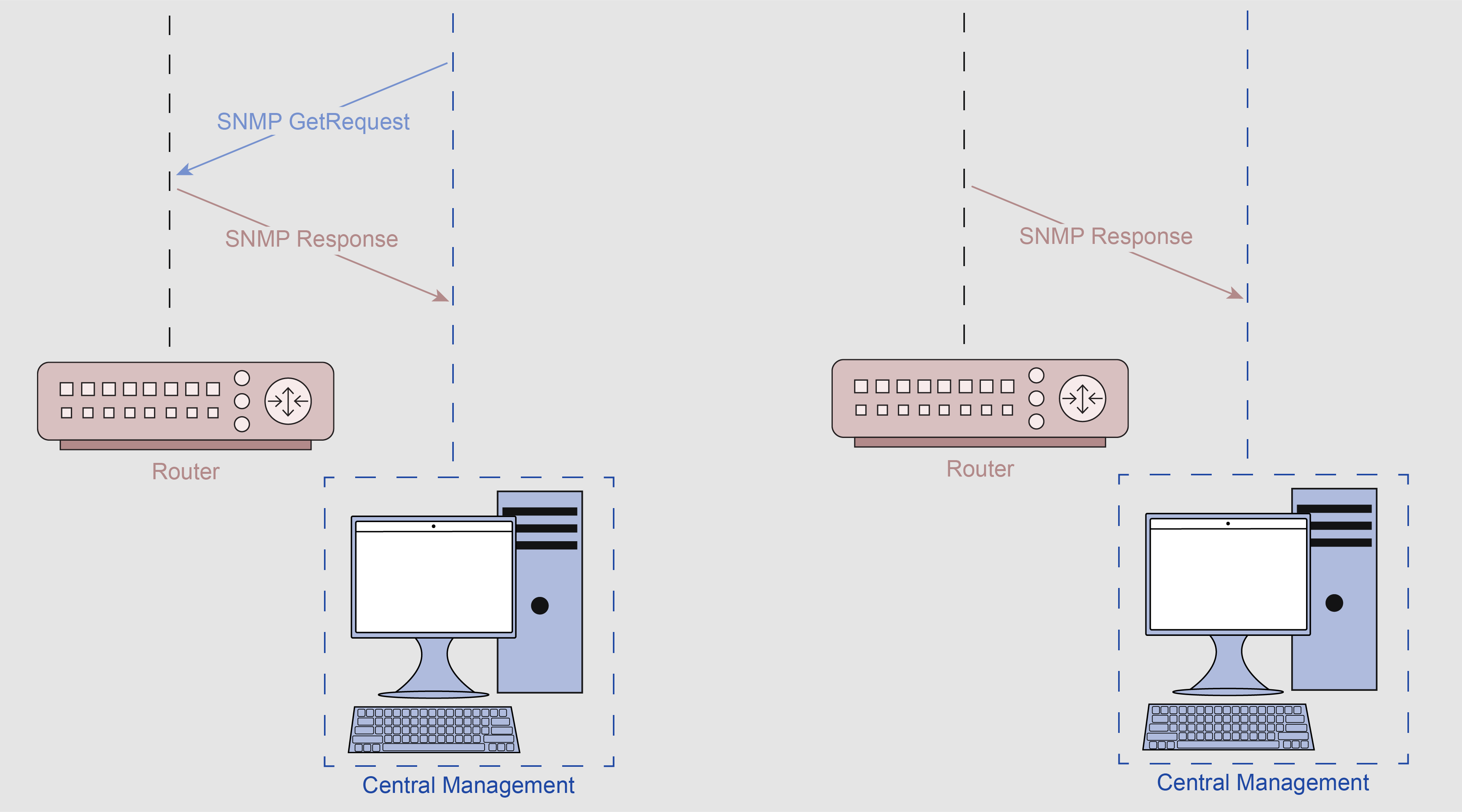
SNMP trap requests can fall under two groups, polled or autonomous. When an SNMP manager operates using polled SNMP traps, it will periodically request updates from all managed devices. This is done according a specific time frame, such as every half hour, or every five minutes. When traps are autonomous, they are automatically sent to the manager any time a COS event occurs.Autonomous SNMP traps are sent every time a door opens or closes. There is no repeated update process every few minutes.
SNMP traps sent from devices most likely conform to 1 of 2 major trap systems. They are either granular traps or use variable bindings. What happens when a trap message is assembled in the granular format? Each single trap is given a trap identifier rather than a Variable Binding Style (VBS). This identifier is a number that is recognized by the SNMP manager. It denotes a particular state change. It could be something like a door opening. T/Mon makes use of this message format.
Other SNMP managers assemble their traps in the VBS format. This assigns each trap the same trap ID number and store alarm data in the variable bindings of the trap. The messages differentiate by giving a different detail message for each trap. This could be indicating a door is open or a battery charge is low.