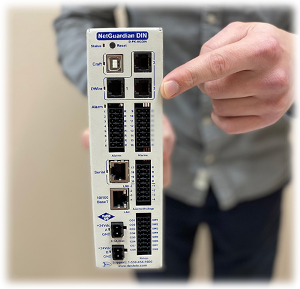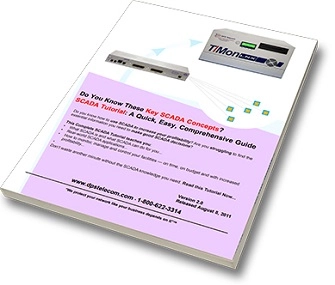
Download our free SCADA tutorial.
An introduction to SCADA from your own perspective.
1-800-693-0351
Have a specific question? Ask our team of expert engineers and get a specific answer!
Sign up for the next DPS Factory Training!
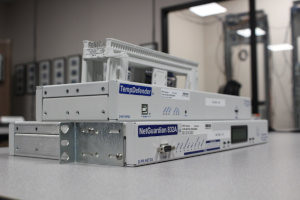
Whether you're new to our equipment or you've used it for years, DPS factory training is the best way to get more from your monitoring.
Reserve Your Seat TodayWhat does SCADA stand for? It stands for Supervisory Control and Data Acquisition. It's a computer system for gathering, analyzing and processing data in real-time. Such systems were first used in the 1960s, and as the evolution of SCADA continues, systems are becoming more efficient and more valuable to their enterprise than ever. For those exploring SCADA meaning in depth, it's beneficial to note its foundational role in modern industrial automation and network monitoring.
The SCADA industry was born out of a need for a user-friendly front-end. The need was to control a system containing PLCs.
What is the meaning of PLC SCADA? Programmable Logic Controller (PLC) is a simple SCADA software supervisory system that allows remote monitoring and control of an amazing variety of devices in industrial plants. This includes water and gas pumps, track switches, and traffic signals. This highlights SCADA's meaning as a unifier of various control systems under one platform, including HMI SCADA tools that improve operator interaction.
One of the key processes is the ability to monitor an entire system in real-time. This happens via data acquisition or collected data. These include meter reading and checking the statuses of sensors. These data points are communicated at standard intervals depending on the system. HMI PLC SCADA systems simplify real-time monitoring by delivering intuitive interfaces and precise control mechanisms. In exploring SCADA meaning, real-time data acquisition stands out as one of its core functionalities.
Besides the data being used by the RTU, it is also displayed to a human. The human is able to interface with the system to override settings or make changes when needed.
Modern systems have many data elements called points. Each point is a monitor or sensor and these points can be either hard or soft. A hard data point can be an actual monitor.
A soft point is an application or calculated value. Data elements from hard and soft points are usually always stored and logged to create a timestamp or history. This logging capability is critical in understanding SCADA meaning for network oversight and historical analysis. For example, HMI PLC SCADA systems make it easy to trace back alarms or performance changes.
In essence, a SCADA application has two elements. They are:
SCADA systems extend beyond basic monitoring and control, playing a pivotal role in various real-world applications across multiple industries. Many modern industries now use HMI PLC SCADA systems for smooth communication and automation. Let's explore some scenarios where SCADA systems are revolutionizing operations:
Oil and Gas Industry
In the oil and gas sector, SCADA systems are indispensable for industrial process automation. With unplanned downtime potentially costing over $1 million per hour, SCADA provides crucial insights into tank levels, pressure, and flow without requiring physical presence. For instance, if sensors detect rising pressure in a well, SCADA can automatically trigger alerts and shut down systems, ensuring safety and minimizing costly interruptions.
Smart Cities
SCADA systems are integral to the functioning of smart cities, aiding in the monitoring and optimization of resources from wastewater treatment to power grid management. Cities can quickly respond to spikes in public transit or electrical consumption, preparing grids for increased demand due to weather conditions or the growing use of electric vehicles. This foresight ensures efficient resource management and sustainability.
Telecommunications
In Telecommunications, SCADA systems are used to predict maintenance needs, monitor equipment, and enhance reliability. For example, wild animals tampering with cables or antennas can cause a tower site to go offline. Alarms and predictive maintenance, enabled by a SCADA system, can give operators advanced warning and prevent service disruptions.By combining the foundational elements of SCADA with these industry-specific applications, businesses can achieve a hybrid of direct and automated control, responding dynamically to real-time data and optimizing operations across the board.
Throughout this article, I'll also cover other concepts related to the application of this system.
There are three main elements to any system:
Each RTU collects real-time data at a site. Communications bring that information from the various plant in the operating system (or regional RTU sites) to a central location. They can also return instructions to the RTU.
Communication within a plant is conducted by data cable, wire or fiber-optic. Regional systems most commonly utilize radio. The HMI is a PC system running powerful graphic and alarm software programs.
The HMI software displays this information in an easy to understand graphics form. It archives the data received, it transmits alarms, and it also permits operator control as required.
Now, the initial question of "What is it?" has been answered, the next step is to look at the way this system operates as a network.
A SCADA network consists of one or more Master Terminal Units (MTUs). These are utilized by staff to monitor and control a large number of Remote Terminal Units (RTUs). The MTU is often a computing platform, like a PC, which runs specialized software. The RTUs are most likely small devices that are hardened for outdoor use and industrial environments.
As we saw earlier, there are several parts of a working system. This system usually includes signal hardware (input and output), controllers, networks, user interface (HMI), communications gear, and software. Altogether, the term SCADA refers to the entire central system. The central system usually monitors data from various sensors that are either in close proximity or off-site (sometimes miles away).
In modern industrial facilities, the sheer volume of data generated presents an unprecedented opportunity for optimization. While the concept of collecting and acting on data has been around for some time, today's SCADA solutions offer insights and capabilities that were once out of reach.
These advanced systems enable facilities to harness data more effectively, leading to smarter, data-driven decisions that enhance operational efficiency. They significantly enhance the performance of a network by providing comprehensive visibility, control, and automation of network operations. By collecting real-time data from various remote devices and integrating with other network management tools, SCADA systems can consolidate alarms and streamline decision-making processes. This reduces response times and improves overall network reliability.
A SCADA system's help in automating responses to potential issues minimizes the need for manual intervention and reduces operational costs.
As industrial automation continues to evolve, the need for local control mechanisms has become increasingly critical. In essence, local control refers to the ability of remote devices and systems to operate autonomously - even in the absence of continuous communication with a central SCADA system. This capability ensures that operations continue during network outages or disruptions.
Local control is pivotal in industrial automation for several reasons. First, it enhances reliability by ensuring critical processes like temperature control, pressure regulation, and machinery operation remain unaffected by transient network issues. Second, it minimizes latency, enabling near-instantaneous response times for localized commands - a necessity for high-speed industrial environments.
For instance, a NetGuardian RTU equipped with local control capabilities can independently manage alarms and execute control commands, such as restarting HVAC systems or adjusting pump operations, based on pre-programmed thresholds and conditions. This not only maintains operational efficiency but also reduces the need for manual intervention during emergencies.
Moreover, integrating local control with advanced industrial automation tools like the DPS T/Mon platform provides a powerful hybrid solution. T/Mon enables centralized oversight while leveraging the localized decision-making power of RTUs. By mediating data and forwarding critical alarms to the central system, it balances the need for autonomy with comprehensive oversight.
As industries strive for maximum uptime and efficiency, leveraging systems with local control in industrial automation is no longer optional - it's essential. Modern systems like the NetGuardian G6 series are designed to support this paradigm shift by combining advanced local processing capabilities with seamless integration into broader SCADA networks.
A SCADA system is incredibly valuable because it centralizes the monitoring and control of multiple remote sites. Having centralized control allows operators to manage their entire network from a single location. This centralized approach improves operational efficiency by providing real-time data.
Real-time data enables quick identification and resolution of issues. By automating routine processes and monitoring tasks, these systems reduce the need for manual interventions. Having less manual interventions saves time and reduces labor costs while upholding that critical issues are addressed immediately.
SCADA systems also enhance security by monitoring network activity. These systems detect potential threats and prevent unauthorized access. They also maintain detailed logs of all operations, which are crucial for compliance, auditing, and future analysis. This data can be used to identify trends, optimize processes, and predict future performance.
The provided data analysis contributes to the continuous improvement of your operations. As your organization grows, SCADA systems can be easily scaled and integrated with other systems. This allows the systems to evolve with your needs, making them an indispensable tool for maintaining and optimizing network performance.
A SCADA system performs four functions:
These functions are performed by several kinds of components:
While SCADA systems offer significant benefits for remote monitoring and control, they do have a few limitations:
By addressing these issues with updated security protocols, integrative solutions, and scalable hardware, businesses can reduce many of the limitations inherent in traditional SCADA systems.
A Wireless SCADA infrastructure is a system that uses wireless communication to monitor, control, and automate industrial processes remotely. It consists of sensors, control units, and communication devices to collect data from various field devices (e.g., sensors, actuators) and send commands back to the system.
The main benefits of implementing a wireless SCADA infrastructure include real-time monitoring, improved operational efficiency, reduced maintenance costs, and increased flexibility in managing remote and hard-to-reach sites. Wireless SCADA systems eliminate the need for extensive wiring, which reduces installation costs and increases scalability. This makes them ideal for industries with geographically dispersed assets, such as utilities, telecommunications, and oil & gas sectors.
There are five phases in creating a functional system:
A complex SCADA system can be complex to configure. However, it is usually much easier to operate.
Modern SCADA systems are an extremely advantageous way to achieve industrial process monitoring and process control. They are great for small uses, such as climate control. They can also be effectively used in large applications. This could include monitoring and controlling a nuclear power plant, oil and gas plant, or transit system.
SCADA can come in open standard communications protocols. Smaller systems are very affordable. They can be purchased as a complete system. They can also be mixed and matched with specific components.
Large systems can also be created with off-the-shelf components. SCADA software can also be easily configured for almost any application, removing the need for custom software development.
As demonstrated in this knowledge base, building the right system to monitor your network isn't simple. It's easy to spend too much money on unnecessary features and capacity, but we can help you improve efficiency in ways you probably haven't thought of.
It's hard to learn everything you need to know and still perform your daily job. We can help you plan your SCADA implementation, with expert consultation, training, and information resources. DPS telemetry gear is built with the capabilities and capacity you need. We're committed to helping you get the best monitoring system for your specific needs.
All DPS Telecom products include comprehensive technical support. If you've purchased one of our products and are encountering any kind of issue, contact DPS Tech Support today at 559-454-1600.
At DPS Telecom, the representative who answers your call isn't an intern reading from a script. DPS Tech Support representatives are engineers who contribute to product development. And, if your problem requires additional expertise, the DPS Engineering Department that designed your product is right down the hall.
Help us connect you to the right engineer by filling out this quick questionnaire. Simply leave your contact information to get started, and we'll call you back. Most preliminary discussions are about 15 minutes, and afterward, we'll send you a custom application diagram of a recommended solution that'll make it easier to justify your project to management.