Download our free SCADA tutorial.
An introduction to SCADA from your own perspective.
1-800-693-0351
Have a specific question? Ask our team of expert engineers and get a specific answer!
Sign up for the next DPS Factory Training!
Whether you're new to our equipment or you've used it for years, DPS factory training is the best way to get more from your monitoring.
Reserve Your Seat TodaySupervisory Control and Data Acquisition (SCADA) systems are used for monitoring and controlling industrial processes at the supervisory level. Usually, these systems make it possible to manage networks by collecting and analyzing real-time data from remote locations. Sites where human presence is not practical.
Examples of companies that deploy SCADA systems include water and waste control, oil and gas refining, transportation, energy and telecom.
SCADA systems involve many components. Some of the SCADA monitoring equipment and elements are:
Sensors
Control relays
Remote terminal units (RTUs)
Master station or HMI software
Communication channels
These components perform the following functions:
collect data
network data communication
data presentation
process control
SCADA control functions have evolved significantly over time, moving from basic monitoring and manual control systems to highly automated, intelligent platforms. In the early stages, SCADA systems were relatively simple, with limited remote control capabilities, basic data acquisition, and local processing. Communication between devices and central control units was often slow, and real-time decision-making was minimal. Operators had to rely heavily on manual interventions based on the information displayed.
Over time, advancements in networking technologies, computing power, and automation have transformed SCADA systems. Modern SCADA systems now incorporate real-time data processing, remote control of devices, and newer, stronger features like predictive maintenance and data analytics. The integration of cloud computing and Internet of Things (IoT) devices has further increased SCADA's functionality, enabling more sophisticated control, scalability, and centralized monitoring across vast, geographically dispersed networks. Additionally, improvements in cybersecurity have become a key focus, protecting critical infrastructure from modern threats. This evolution has made SCADA control functions more efficient, reliable, and adaptable to complex industrial environments.
As you move up the SCADA hierarchy, control tasks become increasingly sophisticated, reflecting the complexity and scope of decisions at each level. At the field level (the first level), control tasks are basic and automated, focusing on real-time actions such as reading sensor data and directly controlling actuators (e.g., turning a motor on or off). As you ascend to the PLC or RTU level (level two), these tasks involve more refined local decision-making, such as executing pre-programmed responses based on predefined conditions.
At the supervisory level (the third level), control tasks expand to include data aggregation, trend analysis, and broader system adjustments. Here, operators monitor the entire network through HMIs and SCADA software, making strategic control decisions, such as adjusting setpoints across the network or overriding local automation to address system-wide concerns. The enterprise level (level four) goes further, integrating historical data analysis, predictive maintenance, and optimization across multiple sites, maintaining higher efficiency and informed decision-making across the organization.
SCADA control functions, while powerful, have several limitations. One major limitation is the dependence on reliable communication networks. SCADA systems require continuous data flow between remote field devices and central control stations, so any network disruption can hinder real-time monitoring and control, potentially leading to delays in critical decision-making. Additionally, SCADA systems are often built using proprietary technologies, which can limit interoperability with newer or third-party devices, making upgrades and integration more difficult.
Another limitation is scalability. Traditional SCADA systems were designed for specific, often localized applications, and expanding them to cover larger networks or new functions can require significant investment in hardware and software. SCADA systems also have cybersecurity vulnerabilities, as many legacy systems were not originally designed with modern cyber threats in mind, requiring ongoing updates and security measures to protect against evolving risks. Lastly, data processing capabilities in SCADA systems are often limited to real-time operations, lacking the advanced analytics and long-term storage needed for predictive analysis and optimization.
Security concerns for SCADA control functions primarily involve the risk of unauthorized access, data breaches, and malicious attacks that could disrupt critical infrastructure. Since SCADA systems often control essential services like power grids, water treatment plants, and manufacturing processes, vulnerabilities - such as weak authentication, outdated software, or unencrypted communication channels - can lead to significant risks. Cyberattacks, such as malware, ransomware, or denial of service (DoS) attacks, can compromise the system's functionality, cause operational downtime, or even result in physical damage to the equipment being controlled.
To mitigate these risks, several security measures are essential for SCADA systems. These include implementing strong authentication and role-based access controls to verify that only authorized personnel can access critical system functions. Encryption of data transmissions between SCADA components helps protect sensitive information from being intercepted. Regular software updates and patching make sure that vulnerabilities are addressed promptly. Additionally, using firewalls and intrusion detection systems to monitor and block unauthorized access attempts - along with network segmentation to isolate critical systems - can significantly improve the security of SCADA control functions.
Advanced SCADA systems support control functions. SCADA control functions are what enable a system to automatically respond to certain situations with a programmed response. Sensors cannot generate or interpret communications protocols.
Remote Telemetry Units (RTUs) along the network interpret the information from these sensors. And translate it into a language the master can understand.
SCADA Control is a core component of a SCADA Monitoring System
The master can utilize the information it receives from various inputs to enact control relays at the RTU level. This means that whenever a user-specified combination of alarms occur, the RTU will automatically respond with a SCADA control relay that has been programmed into the system. It will secure the network by responding to the Change-of-State (COS) event indicated by the alarm.
A Change of State (COS) Alarm list displays all new events that happen in your network, including alarm points that go into an alarm state and alarm points that are cleared. If your alarm master supports both kinds of view, you have the quickest and most accurate picture of your network's current status.
In other words, a control relay output allows you to remotely activate virtually any piece of equipment at your remote sites.
Derived Controls provide for instant reactions of the monitoring system in the event that user-specified alarm combinations occur. For example, if two individual alarms occurred at a single site, indicating that there was a power failure and a battery failure, a Derived Control would be activated, powering on a back-up generator.
So, with derived controls, you can apply rule sets to incoming alarms to control complex automatic responses to emergencies. There are two types of derived controls: echo and formula.
An echo derived control creates a one-to-one relationship in which a particular alarm input is echoed by a relay. For example, if your alarm monitoring device senses that a tower light has gone out, you can have a backup light automatically turned on in seconds.
A formula derived control monitors multiple alarm inputs. As well as evaluates them by a user-defined formula to determine if a relay should be activated. Derived control formulas use Boolean operators to specify under what conditions relays should be activated. Our generator failure example might be written like this:
If ( (generator=down) AND (battery=bad) )
then ( (page=technician) AND (backupGen=start) )
This is just a basic example, but it gives you an idea of the power of derived controls. And this power is easily expanded, because derived control formulas can themselves be used as terms in larger derived control formulas. Using derived controls, extremely complex and intelligent responses to emergencies can be completely automated.
Derived controls can trigger a control relay latch on a NetGuardian RTU - or an SNMP GET command to any SNMP device.
SCADA controls prevent the interruption of mission-critical operations. Even when a network operator is unavailable to manually respond to an alarm notification.
Lesser monitoring systems do not provide SCADA control functions. They simply allow for monitoring of a network. Operators using these types of systems must manually respond to individual alarms. This can be time consuming and very inefficient when dealing with complex processes at multiple sites.
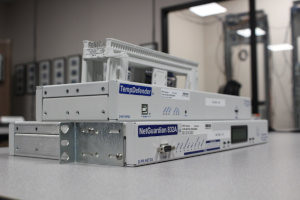
This is why it is critical for operators to look for RTUs that can support both discrete and analog alarms, as well as control relays, when deploying a SCADA system. RTU devices, such as the NetGuardian 832A, are capable of all of these functions - which eliminates inefficiencies by responding to alarms with control relays.
The NetGuardian 832A can support up to 32 discrete alarms, as well as 8 analog alarms and 8 controls. With a large capacity such as this, operators can create controls to respond to numerous alarm combinations along their network. While easily accommodating additional devices as their network expands.
To see additional information related to a SCADA Manual, please visit the SCADA Monitoring page.
Make sure your SCADA control functions align with mission controls SCADA specifications to guarantee smooth operation, security, and reliability across critical infrastructure systems. Don't wait until you face security concerns or downtime issues to upgrade your SCADA system to be the best it can be.
If you'd like to speak to a real person about how to improve your SCADA system, contact the experts at DPS by calling 1-800-693-0358, emailing sales@dpstele.com, or schedule a web meeting.