Download our free DNP3 tutorial.
An introduction to DNP3 from your own perspective.
1-800-693-0351
Have a specific question? Ask our team of expert engineers and get a specific answer!
Sign up for the next DPS Factory Training!
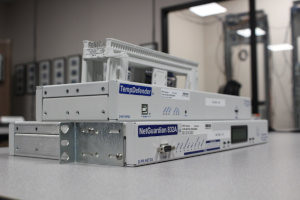
Whether you're new to our equipment or you've used it for years, DPS factory training is the best way to get more from your monitoring.
Reserve Your Seat TodayThe DNP3 or "Distributed Network Protocol" is widely used within the electrical and water utility industries. The DNP3 protocol is actually a set of communications protocols. They are used for communications between SCADA (Site Control and Data Acquisition) system components. This protocol was developed to provide for communication between SCADA system devices and Intelligent Electronic Devices (IEDs).
DNP3 enables the communication between various SCADA system components. These system components include:
The DNP3 protocol travels from the individual network devices, which feed into the RTUs (Remote Telemetry Units). Once an RTU has collected an alarm, it forwards it to a DNP3 or SCADA system master.
The master then interprets the alarm and converts it into an alert in a human readable form. The master sends these DNP3 communications to technicians instantly via email or pager. This provides them with an alarm notification transcribing the alarm described in the DNP3 message.
A DNP3 master gives you visibility to your managed devices. Deploying a DNP3 master will increase your network uptime. It will provide an alert any time there is an issue with your critical SCADA operations and equipment.
Alarm master stations are one of the most important components of a network fault management system. Your DNP3 master will work with your DNP3 RTUs to collect alarms from across your remote site network. The master will take and process alarms to inform your network techs of problems that will need some kind of response.
These notifications provide instant visibility of your remote equipment network. This increases your network uptime and reduces customer churn. With alarm information immediately available to your monitoring and field technicians, you will experience faster problem resolution and service restoration.
Prior to the development of the DNP3 protocol, the communication between SCADA devices and IEDs manufactured by different vendors was impossible. Based on IEC 60870-5, DNP3 provided for a communications medium that was usable by multiple vendors. This enabled system components to communicate with one another, and provided for DNP3 protocol communications across the SCADA stem.
SCADA system operators can monitor the DNP3 protocol within their operations to increase system reliability. This will reduce customer churn by decreasing downtime.
The DNP3 protocol was designed to avoid being distorted by legacy equipment. As as well as EMI noise and low-grade transmission channels. While it adds network reliability, the DNP3 protocol does not make provisions for communications security.
To protect your important DNP3 communications, you need to gain visibility of your network by deploying a network alarm monitoring system. Advanced DNP3 masters can monitor your DNP3 transmissions in addition to your other protocols. They will join all of your alarm notifications in a single, convenient user window.
Advanced masters will also provide you with alarm notifications through email or pager. This way you and your technicians will know the location of DNP3 protocol communication problems immediately.
As a layer 2 transmission medium, the DNP3 protocol provides for data fragmentation, multiplexing, error checking, setting priorities, and link control. The DNP3 protocol also provides addressing services for your important data.
There multiple important functions within your operations. So, the best practice is to monitor your DNP3 protocol communications with the most advanced DNP3 RTU's and master. Don't wait to achieve SCADA visibility. Seek out a DNP3 protocol monitoring solution today.
Related Products:
Related Topics: