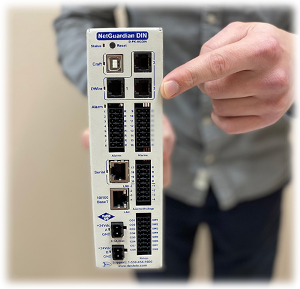
Download our free Monitoring Fundamentals Tutorial.
An introduction to Monitoring Fundamentals strictly from the perspective of telecom network alarm management.
1-800-693-0351
Have a specific question? Ask our team of expert engineers and get a specific answer!
Sign up for the next DPS Factory Training!
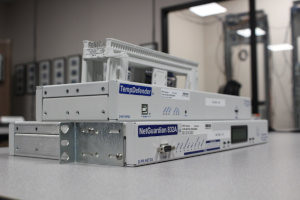
Whether you're new to our equipment or you've used it for years, DPS factory training is the best way to get more from your monitoring.
Reserve Your Seat Today
UnoTelos is a solutions provider and assistance integration company based in Nigeria. Supporting the energy and telecommunications sectors, UnoTelos helps clients and partners maintain mission-critical networks and gain clearer visibility into telecom infrastructure conditions. To support that goal, UnoTelos prioritizes alarm monitoring and operational awareness using DPS Telecom monitoring and alarm management tools.
| Industry | Telecommunications and energy |
|---|---|
| Company Type | Solutions provider and assistance integration company |
| Geography/Coverage | Nigeria (large, geo-diverse territory with remote sites) |
| Primary Challenge | Maintaining visibility and reducing high-cost dispatches for remote, often unmanned sites |
| Solution Deployed | DPS Telecom alarm monitoring and NOC alarm management approach, supported by DPS training and best practices |
| Key Result | Clearer network visibility to make better dispatch decisions and improve outage response planning |
| Products Used | NetGuardian RTU family; T/Mon platform (including T/Mon SLIM and T/Mon NOC) |
UnoTelos brings telecommunications and IT experience to projects in Nigeria, with a focus on helping operators and enterprises keep networks available and protected. With well over 30 years of combined experience in the energy and telecommunication sectors, UnoTelos has first-hand experience supporting large private networks that span wide terrain.
As Jude Egbokwu, UnoTelos CEO, puts it: "These facilities, the infrastructures have to be monitored and protected." That outlook aligns closely with DPS Telecom's monitoring philosophy: collect actionable alarms at the edge, transport them reliably, and present them in a way that helps operators make fast, correct decisions.

Telecommunications technology is constantly changing, and UnoTelos stays current by attending seminars, tradeshows, and educational events. At a recent DPS Factory Training event, UnoTelos expanded its knowledge of network alarm monitoring and reviewed advanced strategies for developing and deploying monitoring solutions.
With the deregulation of Nigeria's telecommunication sector in 2001, the Nigerian telecom markets have been growing rapidly. Since then, Nigeria has gone from a half million subscribers to well over 21 million users, roughly 17% of a population of 126 million people. Now compare that to the United States with a penetration level of 68% and it is easy to see the tremendous potential for growth Nigeria has in its telecommunication market. In 1999, out of the worlds 260 million Internet users, only 2.7 million (1.0%) were African [Over half of that being South African users].
Private investors in Nigeria have been able to lay down new infrastructure; bringing broadband and other contemporary services to the country without the limitations or drawbacks from legacy technologies. This creates an opportunity to build secure and efficient networks from the ground up.
UnoTelos also recognized a common risk in fast expansion: when growth happens rapidly, alarm monitoring can become a secondary priority compared to customer acquisition and build-out. UnoTelos plans to make network alarm monitoring a key priority for clients by stressing that after you gain a customer base, it is equally important to keep them. This forward-thinking approach positions clients for stronger operations as competition increases.
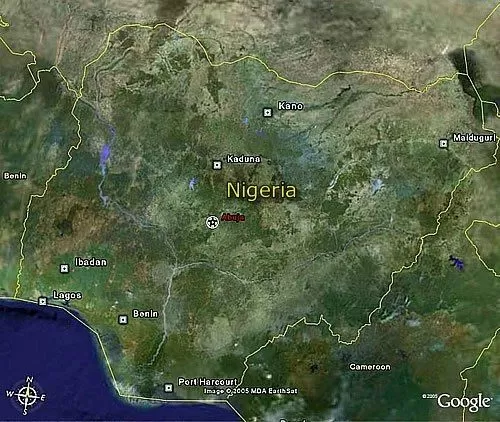
Nigeria is roughly the size of Texas, and growing networks span a large geo-diverse area. Many providers maintain networks across Nigeria with remote sites separated by long distances. Many sites are unmanned and connected via satellite or microwave, and can be virtually unreachable without great expense.
As Jude explains: "Just because you have to reboot a router on a remote oil platform, this may require a chopper ride. A chopper ride costs upwards of $800 dollars".
In operational terms, the key issue is not only dispatch cost, but uncertainty. Without accurate, real-time alarm and telemetry information, teams may have to travel simply to determine what happened, whether the issue is critical, and what tools or replacement parts are required. In remote environments, visibility is what prevents wasted trips and helps prioritize outages correctly.
UnoTelos focused on eliminating a large portion of "windshield time" costs for clients by improving alarm visibility and decision-making before dispatch. "Its not about rolling out the trucks, its knowing what's wrong. What am I going to check for? Do I even have to go there? Is this something that I can work on remotely and how critical is it?" says Jude.
To support this approach, UnoTelos relies on DPS Telecom solutions that are purpose-built for remote site alarming and centralized alarm management. Solutions like a NetGuardian RTU (for collecting and reporting site alarms and telemetry) and the T/Mon SLIM or T/Mon platform (for alarm presentation and workflow at the NOC) provide the visibility required to maintain a diverse network.
In a typical deployment, a NetGuardian-class RTU aggregates discrete alarms (for example, power plant status, rectifier alarms, generator running, door contacts, high temperature, or microwave/satellite equipment trouble), and forwards actionable events to a central alarm master. The T/Mon platform then correlates and routes alarms to the right operators, using maps, filters, escalation policies, and clear alarm context to speed triage. This "edge collection plus NOC-level management" architecture is a core DPS Telecom best practice for large networks.
UnoTelos brings value to partners through both the monitoring technology and the implementation know-how to help clients deploy and improve infrastructure. "Our key objective is to align our goals with out clients goals, we want to find out what our clients want to achieve and how they want to get there, and be able to provide quality services to meet our clients needs" proclaims Jude.
For organizations building new infrastructure quickly, DPS Telecom devices and training help teams standardize alarm points, define clear severity levels, and ensure that alarms are sent with enough detail to drive action. That is the practical difference between simply "having alarms" and having an alarm system that reduces outage duration and reduces unnecessary dispatches.
By emphasizing detailed alarm monitoring early, UnoTelos helps clients make better decisions during critical events. When operators know what failed, where it failed, and how severe it is, they can decide whether to resolve the issue remotely or dispatch the correct technician with the right equipment on the first trip.
This visibility-driven approach is especially important for remote sites connected via satellite or microwave, where access can be time-consuming and expensive. DPS Telecom monitoring supports the operational goal UnoTelos describes: improve situational awareness so response actions are based on facts, not guesswork.
The following DPS Telecom products were referenced as part of UnoTelos's monitoring approach:
During expansion, more sites and more vendors create more potential failure points. A standardized alarm monitoring system helps operations teams detect issues consistently and keep service quality high as the network grows.
If sites are unmanned and far apart, access time and cost can be high. Without reliable alarm visibility, teams may travel just to diagnose the problem. RTU-based monitoring reduces that uncertainty.
A NetGuardian RTU typically gathers discrete alarms and telemetry at the site and reports them to a central system. The T/Mon platform then organizes, displays, and routes alarms so NOC teams can triage, escalate, and document response.
Actionable detail: which device, what condition, what severity, and whether related alarms suggest a root cause (for example, a power issue triggering multiple downstream device alarms). This context improves decision-making before a truck roll or flight.
Detailed alarm monitoring makes a practical difference when problems happen, especially across a wide geography with remote sites and high dispatch costs.
Network visibility is key in making the right decision when it comes to critical network outages. Having clear and precise information at your finger tips allow you to best evaluate the problem and dispatch the right technician with the proper supplies and tools for the job.
Learn more about detailed alarm monitoring with the T/Mon platform (including T/Mon SLIM) and the NetGuardian RTU family.
Get a Free Consultation to discuss how DPS Telecom can help you design alarm collection and centralized alarm management for telecom, energy, and other mission-critical networks. Call 1-800-693-0351 to speak with a DPS expert about your project.