Download our free Monitoring Fundamentals Tutorial.
An introduction to Monitoring Fundamentals strictly from the perspective of telecom network alarm management.
1-800-693-0351
Have a specific question? Ask our team of expert engineers and get a specific answer!
Sign up for the next DPS Factory Training!
Whether you're new to our equipment or you've used it for years, DPS factory training is the best way to get more from your monitoring.
Reserve Your Seat Today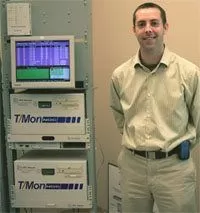
SAIC is a systems, solutions, and technical services company that helps customers solve mission-critical problems through technology and expertise. At the time of this project, SAIC was managing outsourced corporate IT services for Entergy, an integrated energy company.
For Ross Miller, a Voice Network Engineer at SAIC, reliable alarm monitoring is directly tied to keeping business communications available. His primary responsibility is monitoring Entergy's IT operations, with a focus on an Avaya call center spanning eight sites across four states.
"Any maintenance, upgrades, troubleshooting for the call center system, I support them," Miller said. For that type of responsibility, alarms need to be accurate, visible off-site, and easy to act on.
Alarm monitoring was a critical part of Miller's day-to-day work, but the existing remote monitoring equipment in the field was not meeting expectations. SAIC already had a redundant pair of DPS Telecom T/Mon NOCs operating successfully, but the RTUs feeding those NOCs were causing repeated issues.
"The reliability was one issue. We were using another RTU, and that box has a lot of problems with it."
When support was needed for the existing RTUs, Miller found it difficult to get the technical help required to keep monitoring running smoothly.
"We have a lot of legacy RTUs that interface back to our T/Mon NOC," he said. "We were looking for a replacement RTU that would interface with our current infrastructure."
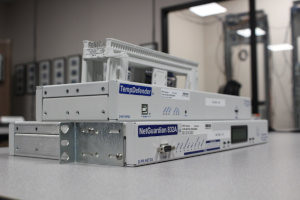
SAIC selected the DPS Telecom NetGuardian 832A as the replacement RTU platform.
For teams standardizing on centralized alarming, pairing a NetGuardian RTU with T/Mon is a practical architecture: the RTU concentrates discrete alarms, analog readings, and IP/SNMP-based events at remote sites, while T/Mon handles alarm presentation, filtering, routing, escalation, and long-term visibility at the NOC.
In environments like multi-site voice and call center infrastructure, this approach helps engineers monitor key components even when they are not physically on-site. NetGuardian RTUs are commonly used to bring together site-level telemetry such as contact closures, environmental sensors, power alarms, and network/device alarms for unified alarm management.
| Organization | SAIC (supporting Entergy) |
|---|---|
| What Needed Monitoring | Avaya call center operations across eight sites in four states |
| Existing Central Monitoring | Redundant pair of DPS Telecom T/Mon NOCs |
| Field Equipment Challenge | Legacy RTUs with reliability issues and insufficient vendor support |
| Replacement RTU Selected | DPS Telecom NetGuardian 832A |
Because Miller needed a strong base of alarm monitoring knowledge to support mission-critical communications, he traveled to DPS Telecom headquarters in Fresno, California for a week of in-depth training.
Miller described DPS Factory Training as highly valuable, noting that he learned directly from the engineers and support technicians who design and support DPS monitoring systems.
"Training was great this week," Miller said. "It was exciting to see the kind of quality that DPS is rolling out."
For teams deploying NetGuardian RTUs alongside T/Mon, this kind of training supports practical tasks that matter in production, such as:
After completing the training week, Miller planned to return to SAIC and Entergy with expanded monitoring expertise and to begin applying it to call center operations.
"One of the main things that I'll be doing when we get back is to start attaching DPS RTUs to various PBXs," he said, adding, "I'm going to try to find a way to get the NetGuardian 832A involved with the Avaya system because it's a solid box, and I'm very familiar with it now... If I can attach the monitoring system to a couple key components, that will allow me to view alarms off-site and do some alarm management."
For organizations modernizing legacy RTUs without replacing their NOC tooling, this is a common goal: keep the T/Mon alarm workflow that operators already trust, while upgrading field visibility with a current, supportable RTU platform like the NetGuardian 832A. When the monitoring design includes the right PBX and call center dependencies, teams can focus on the alarms that affect service, not just raw device events.
Miller noted that while the DPS product line was interesting to him, the client experience stood out most.
"The service DPS offers is impeccable, to say the least," he said.
He also emphasized the value of direct interaction with DPS technical staff during training and the confidence that support would continue after he returned home.
"It's very encouraging knowing that... if DPS would pay that kind of attention to us while we are here, there is no doubt that DPS will continue that relationship when we're six states away," he said. "The service at DPS is really what shines compared to our previous monitoring vendor... It really did impress us."
For distributed, mission-critical operations, monitoring hardware is only part of the solution. Successful outcomes also depend on engineering-level training and support that helps teams deploy, integrate, and maintain monitoring over the long term. That combination is central to how DPS Telecom supports customers using T/Mon and NetGuardian RTUs.
If you are supporting multi-site voice, contact center, or enterprise communications infrastructure and need to replace aging RTUs, DPS Telecom typically recommends a proven monitoring stack:
This approach is especially useful when you must keep a stable NOC environment while updating field hardware to improve reliability and maintainability.
An RTU (remote telemetry unit) collects alarms and measurements from equipment at a site and reports them to a central system. In many deployments, DPS Telecom NetGuardian RTUs bring together contact-closure alarms, analog readings, and network-based events so operators can manage them in a single monitoring workflow.
T/Mon provides centralized alarm presentation and management across many remote sites. NetGuardian RTUs act as the remote-site collectors, while T/Mon gives operators a consistent NOC view for acknowledging alarms, routing notifications, and tracking ongoing conditions.
Yes. In deployments like SAIC's, RTUs can be attached to PBXs and other key components so engineers can view alarms off-site and perform alarm management. The exact points monitored depend on the equipment and the operational priorities.
If you are maintaining an existing T/Mon NOC but need to replace unreliable legacy RTUs, DPS Telecom can help you design a practical migration path using NetGuardian RTUs and proven alarm management practices.