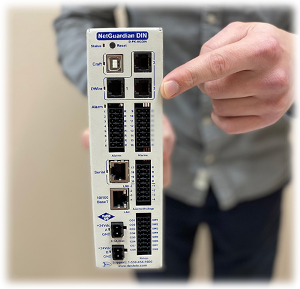
Download our free Monitoring Fundamentals Tutorial.
An introduction to Monitoring Fundamentals strictly from the perspective of telecom network alarm management.
1-800-693-0351
Have a specific question? Ask our team of expert engineers and get a specific answer!
Sign up for the next DPS Factory Training!
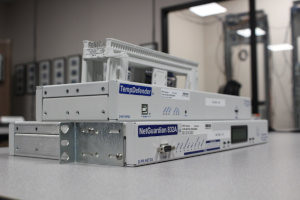
Whether you're new to our equipment or you've used it for years, DPS factory training is the best way to get more from your monitoring.
Reserve Your Seat Today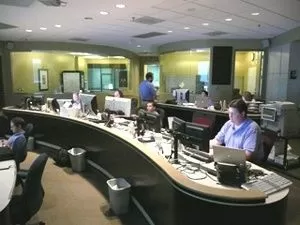
A research company needed better network visibility across a large territory of remote sites. After replacing legacy alarm monitoring that delivered hard-to-interpret numeric strings, the team deployed DPS Telecom NetGuardian remotes with T/Mon NOC to get plain-English notifications, faster troubleshooting, and remote control capabilities.
| Industry | Research and technology |
|---|---|
| Company Type | Research company operating a network with remote sites |
| Primary Challenge | Low visibility into remote-site issues due to unreadable numeric-string alarms and limited notification options |
| Solution Deployed | NetGuardian remotes integrated with T/Mon NOC for centralized alarm management, clearer notifications, and remote relay control |
| Key Result | Clearer, plain-English alarm notifications and improved ability to address issues before customers report them |
| Products Used | NetGuardian RTU (SNMP-capable) and T/Mon NOC |
Network Technician Shawn B. supported day-to-day alarm monitoring and troubleshooting across a large territory of remote sites. His job depended on quickly understanding alarms, routing issues to the right technician, and restoring service without waiting for customer reports.
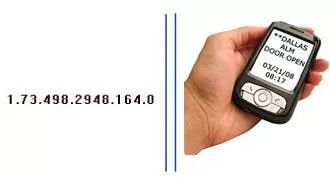
Shawn's previous alarm monitoring equipment delivered alerts as long numeric strings. That meant every alarm required memorizing syntax, correlating digits to a site and point, and then figuring out whether it represented an alarm or a clear.
As Shawn described it, the old workflow created unnecessary headaches and made it easier for important alarms to be overlooked: "You would get an alarm, not really know what it was, and disregard it." In some cases, customers calling in were the first indication of a problem: "That's really our nightmare - us not knowing about a problem until a customer calls up."
Unreadable Alerts Made Alarm Management and Training a Real Chore...
With the older monitoring system, Shawn received only strings of digits that represented remote site alarms. "With the old boxes, it took a PhD practically to understand. You had to learn the whole syntax." In practical terms, the system imposed two problems at once:
This clumsy process was the only way Shawn had to monitor his remote sites, and he wanted a system that made alarm information readable and actionable. "The Omnitronix did absolutely no alpha pager notification," he said. "With the old box, you just basically got a string of digits - it was impossible to remember."
"Now, you can bring a new person in, spend half a day with them, and they're good to go..."
Shawn upgraded to DPS Telecom NetGuardian remotes with T/Mon NOC as the alarm master. This combination made alarm monitoring easier to operate daily, while also improving the quality of alarm notifications and enabling remote troubleshooting actions.
Plain English Alarm Notifications Dramatically Improve Response Times...
With NetGuardian and T/Mon NOC, Shawn could receive clearer alarm notifications and better understand what a "major" or "minor" alarm represented at the time it arrived. "With the NetGuardian, with an email solution and an alpha pager solution, we can see what this major or minor alarm actually is."
In typical deployments, a NetGuardian remote gathers alarm points at the site (for example, discrete inputs and status points) and reports them upstream (commonly via SNMP) so the alarm master can present site/point context and deliver targeted notifications. In this case, the practical outcome was straightforward: technicians could stop decoding numeric strings and start acting on readable alarms.
Simpler Interfaces Make It Easier to Train Technicians...
Shawn also found the NetGuardian's web and command line interfaces were better and easier to teach than the old system. "Now, you can bring a new technician in, spend half a day with them, and they're good to go."
Shawn complemented the deployment by attending hands-on Factory Training at DPS Telecom headquarters in Fresno, Calif. His goal was to learn how to integrate T/Mon with their existing system and learn additional NetGuardian features. After four days of training, he left with practical guidance for his environment: "If you've got DPS products, you definitely need to get you and your people in here."
The upgraded monitoring approach improved visibility into remote site issues and made alarm response more proactive.
"For us, it's fixing the problem before our customer tells us about it..."
Less Windshield Time With Remote Relay Control...
Shawn and his technicians also reduced unnecessary truck rolls by using NetGuardian relays to perform remote actions. "We can dial in through the DPS or go through the LAN and flip that relay to make it power cycle," he said. "Relays keep you from having to jump in a truck and driving halfway across town." Previously, Shawn sometimes had to drive across town just to press a button. "It definitely decreases that," he said.
Monitoring the Network is Fast - and Now Hassle-Free...
With modern remotes and a modern alarm master, Shawn and his colleagues had the tools to keep the network online and respond to problems sooner: "For us, it's fixing the problem before the customer tells us about it."
Numeric-string alerts force technicians to translate codes into meaning under time pressure. That adds delay, increases the chance of mistakes, and makes onboarding new staff harder.
Plain-English alarm messages can identify the site, the alarm point, and the alarm severity in a readable format, helping technicians quickly decide whether an alarm is actionable and what to do next.
Relay outputs can be used to remotely trigger actions such as power cycling equipment. Shawn described using the DPS interface and LAN access to flip a relay instead of driving on-site to press a physical button.
A NetGuardian remote gathers alarms and status at each site and forwards them to the alarm master. T/Mon NOC then centralizes visibility, presents alarms in context, and supports notification workflows so staff can respond faster.
Factory training can help teams configure integrations, learn available features, and standardize response procedures so the monitoring system improves day-to-day operations.
To receive a price quote or ROI analysis, call 1-800-693-0351.
Get a Free Consultation to discuss how DPS Telecom can improve alarm visibility, notifications, and remote control for your own sites.