Check out our White Paper Series!
A complete library of helpful advice and survival guides for every aspect of system monitoring and control.
1-800-693-0351
Have a specific question? Ask our team of expert engineers and get a specific answer!
Sign up for the next DPS Factory Training!
Whether you're new to our equipment or you've used it for years, DPS factory training is the best way to get more from your monitoring.
Reserve Your Seat TodayA ping alarm can be an powerful tool when properly implemented in your network alarm monitoring system. The following list of FAQs will introduce you to important ping alarm concepts and show you how they will significantly enhance your network visibility.
What is a ping?
A ping is a signal sent from a computer to a unit, such as a server. Similar to a game of Marco-Polo, the computer sends the ping to verify that the unit in question is on. The unit will then send a response back in the form of a "pong". If a response is received, it is assumed that the unit is functioning properly. If no signal is received, either the packet was lost or the unit is down and corrective action is needed to fix the problem. Ordinarily, a ping is just a test and has to be manually entered in each time the test needs to be run. It is not automated, but it has the potential for automation. An automated ping is typically called a ping alarm.
What is a ping alarm?
A ping alarm is an automatic alert sent to you when one of your LAN connected devices fails to respond to successive pings. Modern alarm monitoring equipment, typically advanced alarm remotes or RTUs (Remote Telemetry Units), can be configured to send scheduled pings to a large number of devices every few minutes (some RTUs support ping alarming to as many as 32 distinct IP addresses simultaneously. This process ensures that all of your equipment is running as it should. If no response is received from a particular device, it is assumed that device is down and needs to be fixed. Fixing could included power cycling, new cables or perhaps the whole unit needs replacing.
How can I leverage ping alarm technology to enhance my network reliability?
If a device should fail to respond to a user-specified number of pings, an alert (a "ping alarm") is sent to you to provide notification of device failure or, at minimum, a loss of LAN connectivity. After you have configured your monitoring equipment to send pings, you will receive prompt notification of threats to each device being pinged. With this kind of early notification, you will be able to monitor your mission-critical devices much more effectively than you could without the advantage of ping alarms.
Why shouldn't I use a freeware ping alarm application to monitor my network?
If you've done your ping alarm homework, you've probably come across several freeware/shareware sites offering free ping alarm applications for your PC. While these programs certainly have some use, you should NEVER trust an industrial telecommunications network to such an untested and potentially unreliable tool. Almost all freeware authors admit that their tool is not guaranteed in any way. Making matters worse, ping alarm freeware runs on your PC, so a Windows crash would cripple your network visibility.
The only tool you should trust for ultra-reliable ping alarms in an industrial environment is one is integrated into industrial-grade dedicated monitoring hardware, such as a remote telemetry unit (RTU).With freeware, you get what you pay for. You cannot afford to trust your whole network to freeware.
Which remote telemetry units (RTUs) have ping alarm support?
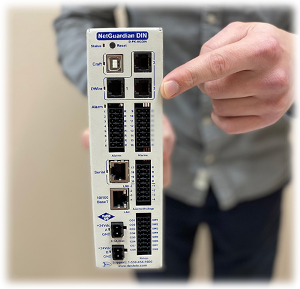
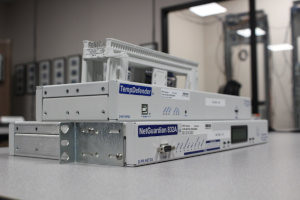
The NetGuardian family of RTUs, designed and manufactured by DPS Telecom, has broad support for ping alarms. Most devices support ping-based monitoring of 32 different IP addresses. A NetGuardian can alert you via alarm master, pager, email, cell phone, or web interface when a user-defined number of consecutive pings to a device fail. Aside from ping functionality, the NetGuardian RTU line will provide you with monitoring for other aspects of your network as well. Monitor sensors, propane tanks, batteries, doors and other devices along with your ping alarms for a complete monitoring system. For more information about the complete line of NetGuardian RTUs, view the complete list of DPS Telecom alarm collection devices.
Do alarm masters have ping alarm support?
The T/Mon NOC network alarm master is capable of pinging up to 960 different IP addresses. T/Mon has a variety of notification options to quickly alert you when several consecutive pings fail. For more information about T/Mon NOC, view the T/Mon NOC product page.
Are there any limitations on what a ping alarm can do for me?
Since pings are LAN-based, a ping alarm is only useful for checking the status of LAN-enabled devices. Still, this typically represents the majority of devices that you must monitor, so they are very useful in most environments. To monitor serial, dial-up, and other legacy devices, please view the complete list of DPS Telecom alarm collection devices.