Check out our White Paper Series!
A complete library of helpful advice and survival guides for every aspect of system monitoring and control.
1-800-693-0351
Have a specific question? Ask our team of expert engineers and get a specific answer!
Sign up for the next DPS Factory Training!
Whether you're new to our equipment or you've used it for years, DPS factory training is the best way to get more from your monitoring.
Reserve Your Seat TodayLet's start by defining infrastructure management services.
Infrastructure Management (IM) is the management of key operation parts. This includes policies, processes, gear, data, human resources, and external contacts. These all add up to overall effectiveness. Infrastructure management is sometimes divided into groups of systems management, network management, and storage management.
Among other reasons, infrastructure management solutions seek to:
All business activities depend upon the infrastructure. The infrastructure is what brings everything together into a working system.
Yet, somehow, planning to ensure its effective management are typically undervalued. This harms the organization. According to IDC, spending on IM have the largest single impact on an organization's revenue.
One of the most important aspects to IM is to know that a problem exists before it impacts vital business service. The most effective and integrated IM solutions span distributed and mainframe environments. This ensures quality service to users.
What a good IM system can achieve:
Remote site management in real-time is key. With it, you can reduce time spent on traveling and troubleshooting. At the same time, you'll increase infrastructure availability and quality.
It can also improve maintenance. This means gaining resource efficiency. It will also increase the time allocated to improvement and expansion.
This is especially true as remote site technology is on a permanent-growth path. The security and availability of these remote sites is vital. It is vital to the performance of the entire infrastructure.
Outage costs build up quickly from several potential sources. These include lost revenues, gov't fines, SLA penalties, and customer dissatisfaction.
It is also of vital importance to know and appreciate the role of these remote sites. You must know it throughout the entire organization. Remote site systems are just as critical to optimal infrastructure.
These include cell towers, small central offices, oil platforms. If ignored, failures within these systems can often be even more damaging than core system failures.
Management of these disparate systems from a lot of gear suppliers is often very complex. Newer systems are likely SNMP-based. Older telemetry systems use simple contact closures. These closures are good/bad indicators.
They provide limited, yet vital, information. Such ambiguous information often needs further digging by regional field technicians.
Maintaining vital gear in such rural sites requires significant labor costs. But this is only part of the problem. Limited connectivity options, mountainous terrain and inclement weather add to the challenge of effective IM.
For this reason, monitoring solutions are deployed at central network operations centers (NOCs) and master control stations. The personnel at these central locations maintain responsibility for the entire infrastructure. They most likely monitor remote gear only for critical failures.
However, serious problems can happen at small sites just as easily as at large ones. Issues dealing with costly dispatches and low quality of service require flexible solutions.
The solution here lies in a more efficient approach. You must deploy complete, intelligent remote site management. One that is designed carefully. It must specifically address diagnostic, recovery, and preventative maintenance.
The activities are handled by regional operations personnel and field technicians. This approach would improve operational efficiency. It would also free up resources to support new capacity expansion and service roll-outs.
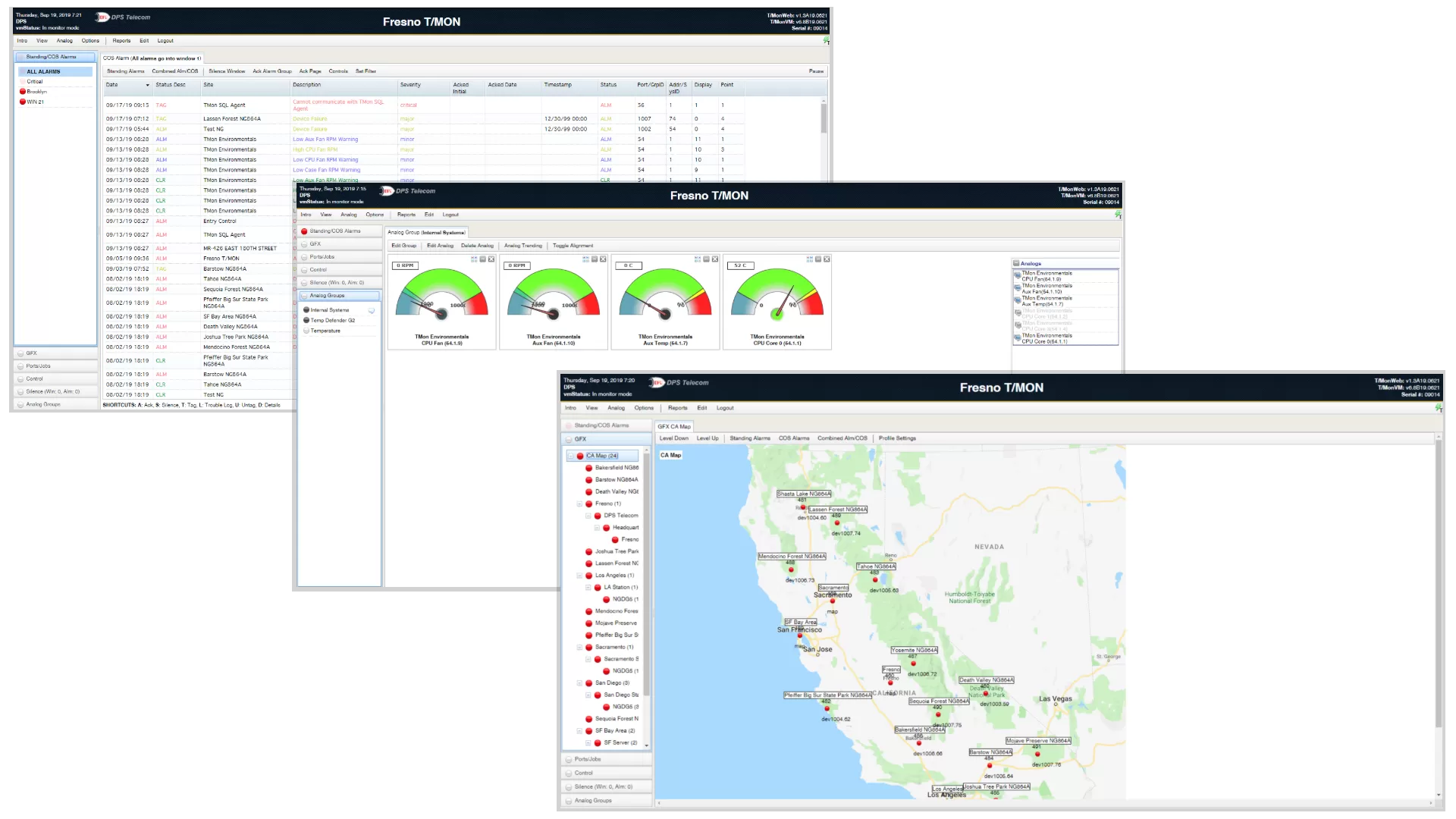
Optimize your IM by deploying T/Mon Alarm Master. This infrastructure management platform brings all of your remote alarm monitoring needs into a single centralized screen. T/Mon provides you with infrastructure management, network management and storage management.
It is a multi-protocol and multi-function device. This means that it will work with pretty much all preexisting systems by having support for over 25 protocols. It will even work with legacy devices, so don't throw them away if they're still in good working order.
Call us today to learn more about cost-effective remote site management solutions.